Canine Papillomas and Wart-Like Masses: Do Not Diagnose by Texture Alone
Overview
Papilloma describes a wart-like epithelial growth, but not every cauliflower-shaped mass is a viral papilloma. Young dogs may develop contagious oral viral papillomas that often regress, while solitary growths in older dogs have a broader differential.
Common signs
One or many frond-like or cauliflower-shaped growths, often around the mouth in young dogs; rubbing, bleeding, bad breath, reduced eating or secondary infection can occur.
Common locations
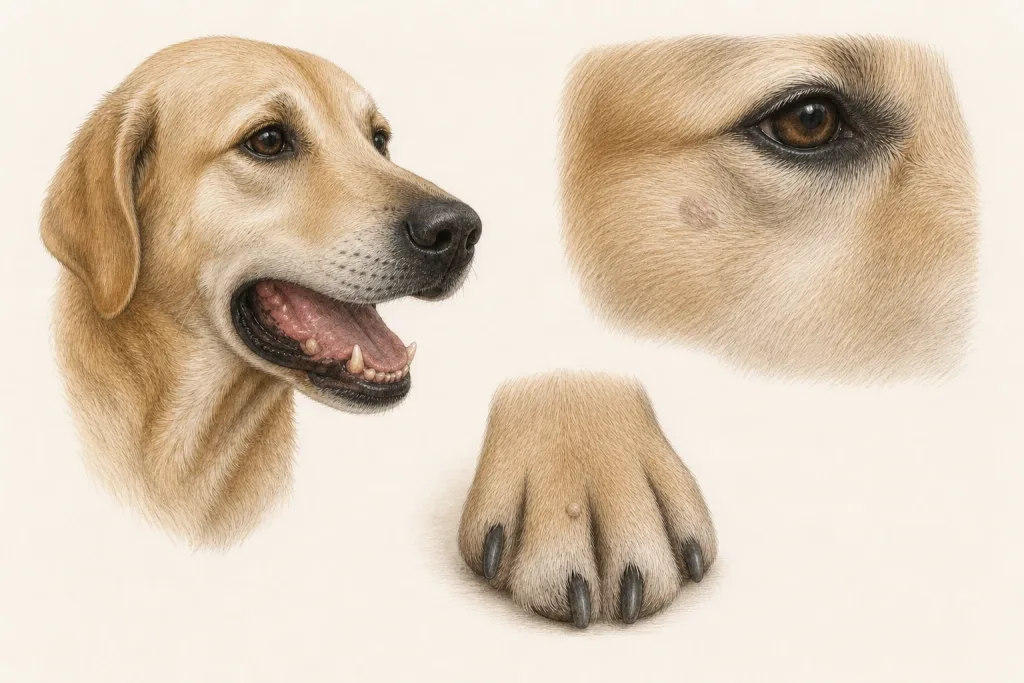
Lips, gums, oral cavity, face, eyelids, feet and other skin sites. Location, age, number of lesions and immune status help frame the differential.
Diagnosis discussion
A veterinarian combines history and examination with cytology or biopsy when the pattern is atypical, persistent, ulcerated, growing, painful or found in an older dog. Histopathology distinguishes papilloma from look-alike tumors.
Urgency and when to contact a veterinarian
Promptly assess lesions that persist, enlarge, bleed or interfere with eating, vision or walking. Breathing difficulty, inability to swallow, uncontrolled oral bleeding or severe weakness needs urgent care.
Treatment discussion
Many classic viral oral papillomas in otherwise healthy young dogs regress without tumor-directed treatment. Removal or other therapy may be considered for functional problems, infection, diagnostic uncertainty or persistent disease.
Home monitoring
Avoid shared toys or close dog-to-dog contact if the veterinarian suspects contagious oral papillomavirus. Record lesion count, eating comfort, bleeding and any new sites.
Questions to ask your veterinarian
- Does the age and distribution fit a viral papilloma pattern?
- Is biopsy needed because this lesion is atypical or persistent?
- What contact precautions are appropriate around other dogs?
- Which eating or breathing change should prompt urgent care?