Canine Inflammatory Mammary Carcinoma: Rapid Painful Swelling Is Urgent
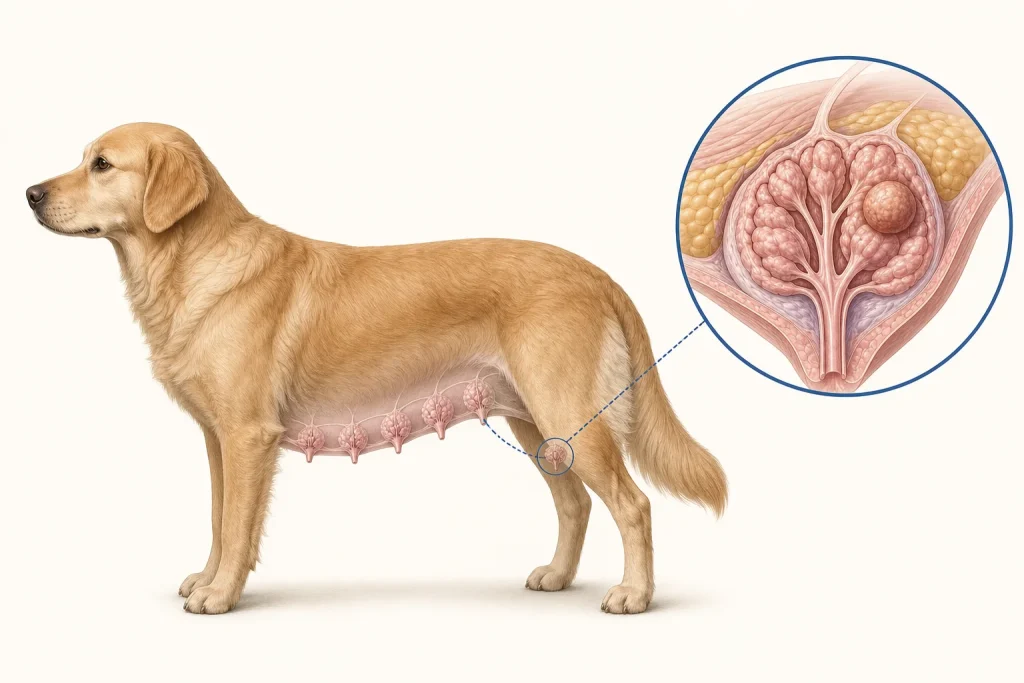
Overview
Inflammatory mammary carcinoma is an aggressive clinical presentation in which malignant cells obstruct dermal lymphatic vessels, causing diffuse heat, redness, swelling and pain. It can resemble mastitis or infection but typically occurs outside a normal nursing context and progresses quickly.
Common signs
Rapidly spreading redness, warmth, firm swelling, edema, bruised appearance and marked pain across one or more mammary glands; reduced appetite, lethargy or limb swelling may occur.
Common locations
One or several mammary glands and overlying skin, sometimes extending widely across the ventral body wall with regional lymph-node involvement.
Diagnosis discussion
Examination and carefully selected tissue sampling are needed to distinguish inflammatory carcinoma from infection and other mammary disease. Bloodwork and staging imaging assess health and extent. The team must choose biopsy technique and timing thoughtfully.
Urgency and when to contact a veterinarian
This pattern warrants an urgent veterinary visit. Emergency care is appropriate for severe pain, collapse, breathing difficulty, uncontrolled bleeding, inability to eat or rapidly worsening systemic illness.
Treatment discussion
Because disease is diffuse and biologically aggressive, routine wide surgery is often not helpful and can have healing complications. Oncology discussions may include systemic therapy, selected anti-inflammatory or radiation approaches, and early palliative pain planning.
Home monitoring
Track pain, rest, appetite, temperature only if trained, swelling boundaries, breathing, mobility and skin breakdown. Do not massage, heat or apply unapproved topical products.
Questions to ask your veterinarian
- What findings distinguish inflammatory carcinoma from mastitis or another mimic?
- What sampling approach is safest and most informative?
- Why is surgery recommended or not recommended for this pattern?
- What is the written pain, skin-care and emergency plan?