Canine Chondrosarcoma: A Cartilage Tumor With Site-Dependent Behavior
Overview
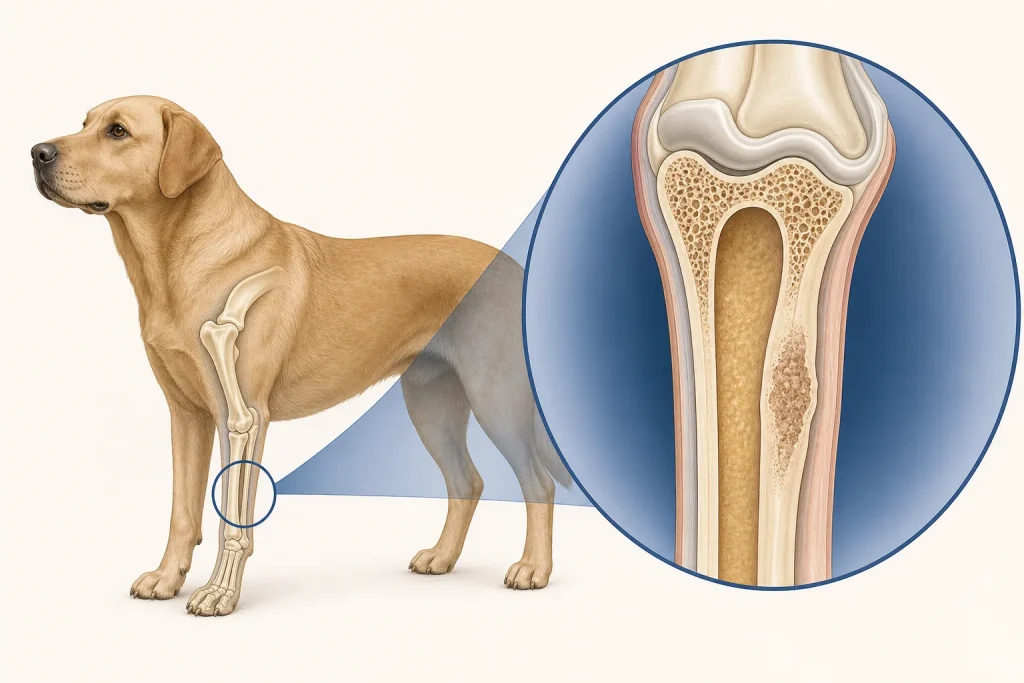
Chondrosarcoma is a malignant cartilage-producing tumor. Compared with osteosarcoma it often progresses more slowly, but behavior and treatment feasibility vary greatly with grade and whether it arises in a rib, nose, pelvis, limb or other site.
Common signs
A firm enlarging swelling, persistent lameness, localized pain, facial change, altered breathing or difficulty sitting or walking depending on location.
Common locations
Flat bones such as ribs, pelvis and nasal structures as well as limb bones and other cartilage-bearing sites. This page focuses on bone and cartilage presentations outside the nasal cavity.
Diagnosis discussion
Radiographs identify destructive or proliferative bone change; CT is valuable for complex anatomy. Biopsy should be planned with the definitive surgical route in mind. Histopathology confirms cartilage production and grade, while chest imaging may be used for staging.
Urgency and when to contact a veterinarian
Persistent focal bone pain or swelling deserves prompt evaluation. Sudden inability to bear weight, suspected fracture, severe breathing difficulty or uncontrolled pain requires urgent care.
Treatment discussion
Wide surgical removal is often the primary local-control discussion when anatomy permits. Radiation or systemic options may be considered for unresectable, incompletely removed or advanced disease, with goals tailored to site and grade.
Home monitoring
Restrict high-impact activity if bone strength is uncertain. Track pain, gait, swelling, breathing and medication effects, and use non-slip surfaces where mobility is affected.
Questions to ask your veterinarian
- Which imaging best defines bone extent and surgical options?
- How will the biopsy tract be incorporated into definitive surgery?
- What do grade and site mean for metastatic risk?
- What activity limits reduce fracture or pain risk now?