Canine Primary Lung Carcinoma: A Lung Mass Is Not Automatically Metastasis
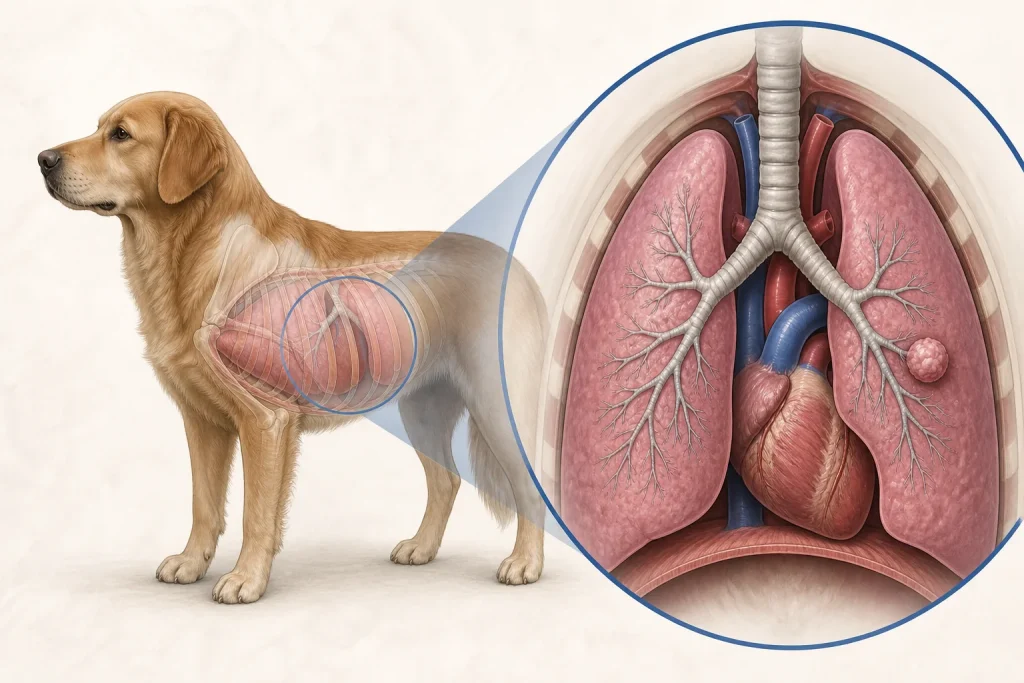
Overview
Primary lung carcinoma begins in lung tissue and is different from cancer that has spread to the lungs. Some dogs have cough or reduced stamina, while others have a solitary lung mass found incidentally on imaging.
Common signs
Persistent cough, faster or more difficult breathing, exercise intolerance, reduced appetite, weight loss or lethargy. A subset of dogs develops limb pain associated with hypertrophic osteopathy.
Common locations
One lung lobe as a solitary primary mass, multiple lung sites, regional lymph nodes or other metastatic sites. Imaging pattern alone cannot always identify origin.
Diagnosis discussion
Chest radiographs identify many masses, while CT better defines size, lobe, nodes and surgical anatomy. Cytology or biopsy may be used selectively; surgical pathology can supply the definitive diagnosis after resection. The team should distinguish a primary tumor from metastasis or noncancerous lung disease.
Urgency and when to contact a veterinarian
Promptly assess persistent cough or unexplained imaging findings. Emergency care is required for labored or open-mouth breathing, blue or very pale gums, collapse or severe distress.
Treatment discussion
Surgical removal of the affected lung lobe is a common option for a localized resectable primary tumor. Pathology, lymph-node status and stage guide discussion of systemic therapy, radiation or comfort-focused care.
Home monitoring
Count sleeping respiratory rate only as instructed, and track cough frequency, breathing effort, stamina, appetite and pain. Avoid strenuous activity until the team defines safety.
Questions to ask your veterinarian
- Does imaging favor a primary lung tumor, metastasis or another lung disease?
- Would CT change resectability or lymph-node sampling?
- How will pathology and node status guide additional therapy?
- What breathing rate or effort requires emergency care?