Doxorubicin in Veterinary Oncology: Infusion and Cumulative-Risk Profile
Quick summary
Doxorubicin is an anthracycline cytotoxic chemotherapy drug used by veterinary oncologists for lymphoma and several sarcomas and carcinomas. Companion-animal use is veterinarian-directed and generally extra-label, with drug-specific infusion and cumulative-risk safeguards.
What it is
Doxorubicin interferes with cancer-cell DNA through several mechanisms and must be administered intravenously by trained personnel. It is a vesicant: leakage outside the vein can cause severe tissue injury. This directory page does not provide a dose, interval or lifetime limit.
How it is discussed in tumor care
It may be used within a multi-agent lymphoma protocol or as part of treatment for selected hemangiosarcoma, osteosarcoma, soft-tissue sarcoma and carcinoma cases. Selection depends on diagnosis, stage, previous therapy, heart and organ health, and the intended balance of benefit and burden.
Potential role
The treatment goal may be remission, delay of recurrence, control of measurable disease or symptom benefit. The team should explain how response is measured and how cumulative exposure changes later choices.
Typical use context
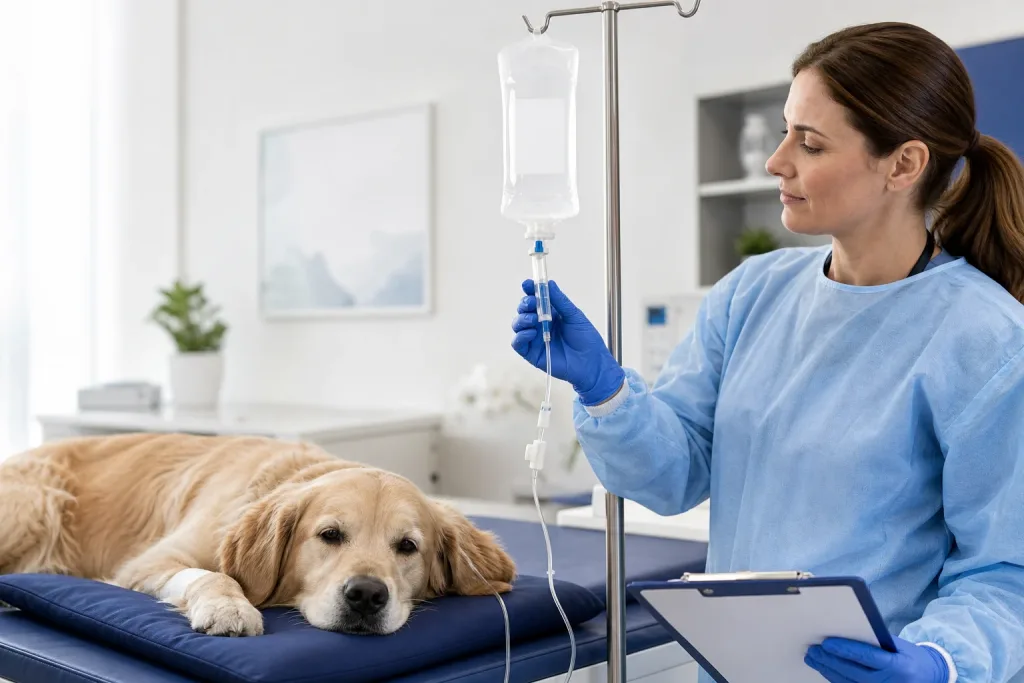
Clinic protocols commonly include examination and blood-count checks before treatment, secure intravenous access and observation during infusion. Cardiac assessment may be recommended based on the dog, breed, examination, history and cumulative exposure; cats require kidney-focused consideration.
Evidence snapshot
Merck Veterinary Manual describes veterinary indications and major toxicities, including myelosuppression, severe extravasation injury, cumulative cardiomyopathy in dogs and cumulative kidney toxicity in cats. AAHA guidance supports individualized chemotherapy monitoring and client communication.
Safety notes
Possible effects include appetite loss, vomiting, diarrhea or colitis, reduced blood-cell counts and infusion reactions. Urgent contact is warranted for fever, marked lethargy, repeated gastrointestinal signs, blood in stool, breathing change, collapse or any concern that drug escaped the vein during treatment.
Interactions / cautions
The oncology team must coordinate other chemotherapy, cardiotoxic or marrow-suppressive drugs, radiation, anesthesia and supplements. Doxorubicin is hazardous; caregivers should follow written precautions for body waste and contaminated materials rather than improvising.
Questions to ask your veterinarian
- What is doxorubicin's role in this exact protocol and how will benefit be measured?
- Does my pet need cardiac or kidney assessment before or during treatment?
- When should blood counts be checked, and what is the emergency contact plan?
- How does cumulative exposure affect future doses or alternative drugs?