Canine Histiocytic Sarcoma: Localized and Disseminated Disease
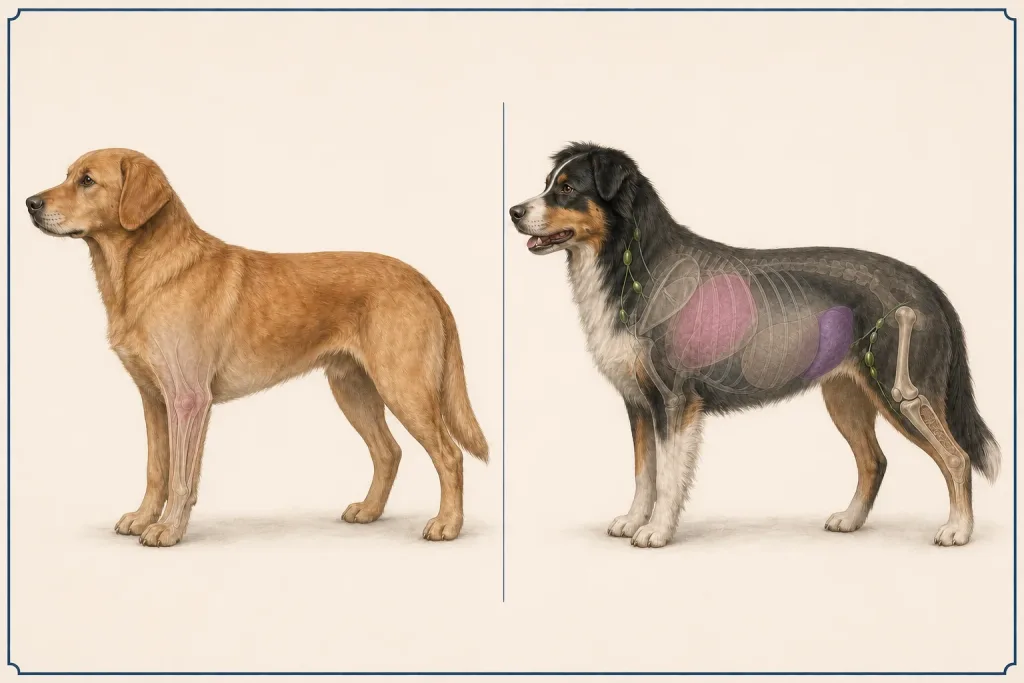
Overview
Histiocytic sarcoma is a malignant cancer arising from cells of the histiocytic lineage. It can begin as a localized lesion or present in multiple organs, and its signs vary widely with the tissues involved.
Common signs
Possible signs include a growing limb or subcutaneous mass, lameness, cough or breathing change, reduced appetite, weight loss, weakness, fever, neurologic change, or nonspecific illness. These signs are not unique to histiocytic sarcoma.
Common locations
Reported sites include periarticular tissue, limbs, skin or subcutis, spleen, lung, liver, lymph nodes, and the central nervous system. Disseminated disease involves more than one site.
Diagnosis discussion
Cytology may raise suspicion, but histopathology and immunohistochemical characterization are often important. Staging may include bloodwork and imaging selected for the presenting site, followed by sampling of lesions or nodes that will meaningfully clarify extent.
Urgency and when to contact a veterinarian
Breathing difficulty, collapse, very pale gums, sudden severe weakness, uncontrolled bleeding, or a new inability to stand is an emergency. A rapidly worsening mass or systemic decline needs an urgent veterinary call.
Treatment discussion
Localized disease may prompt surgery or radiation when anatomy allows, often alongside discussion of systemic therapy. Disseminated disease usually centers on systemic and palliative options. Prognosis and response vary, so goals and stopping rules should be explicit.
Home monitoring
Track mass dimensions, gait, respiratory rate at rest when directed, appetite, weight, temperature if instructed, energy, pain, and medication tolerance. Keep all pathology wording and imaging reports together for oncology review.
Questions to ask your veterinarian
- Is the diagnosis supported by immunohistochemistry?
- Is this localized or disseminated disease based on the staging performed?
- Would local treatment change outcome or primarily relieve symptoms?
- Which quality-of-life changes should trigger plan revision?