Canine Extramedullary Plasmacytoma: A Round-Cell Tumor Outside Bone Marrow
Overview
An extramedullary plasmacytoma is a plasma-cell tumor arising outside bone marrow. Many cutaneous forms behave locally, but oral, gastrointestinal, atypical, multiple, or recurrent lesions may require a broader evaluation to distinguish them from systemic plasma-cell disease.
Common signs
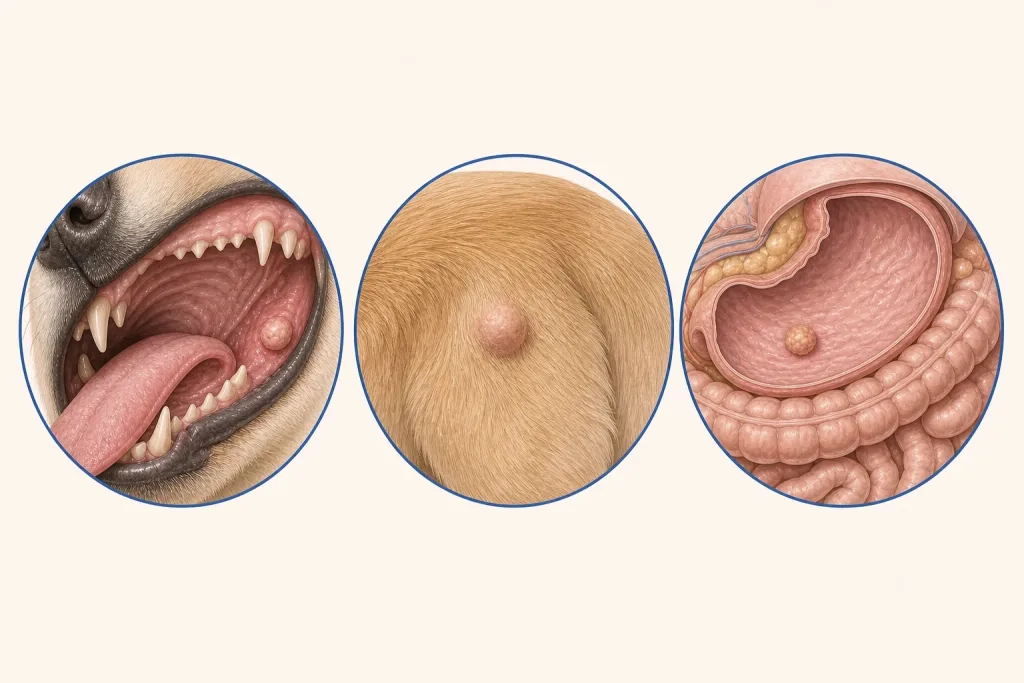
A pink or red raised skin nodule, an oral mass, bleeding, ulceration, licking, eating difficulty, or a gastrointestinal sign may occur depending on site. A round, smooth appearance is not diagnostic.
Common locations
Skin of the head, ears, limbs, and other sites and the oral cavity are commonly discussed. Less common gastrointestinal or other extramedullary sites can have different behavior.
Diagnosis discussion
Fine-needle aspiration may identify a plasma-cell population. Histopathology confirms architecture and margins and may prompt additional testing when features are atypical. Blood, urine, imaging, or bone-marrow assessment is selected only when systemic disease is a concern.
Urgency and when to contact a veterinarian
Uncontrolled bleeding, airway or swallowing difficulty, collapse, or severe GI signs needs urgent care. A stable skin nodule still needs sampling because other round-cell tumors can look similar.
Treatment discussion
Complete local excision is often discussed for accessible cutaneous lesions. Radiation or other local therapy may help selected incompletely removable sites. Systemic therapy is reserved for diagnoses and extent that justify it, not for every solitary skin lesion.
Home monitoring
Track the treated site and check for new nodules without assuming they are the same diagnosis. Record oral comfort, appetite, stool, weight, wound healing, and any recurrence at the edge of the scar.
Questions to ask your veterinarian
- Does cytology favor plasmacytoma or another round-cell tumor?
- Is histopathology needed to assess margins and atypia?
- Does this site or pathology justify systemic testing?
- What local recurrence or new-lesion check should we perform?