Veterinary Nutrition Consultation Prep for a Dog With Cancer
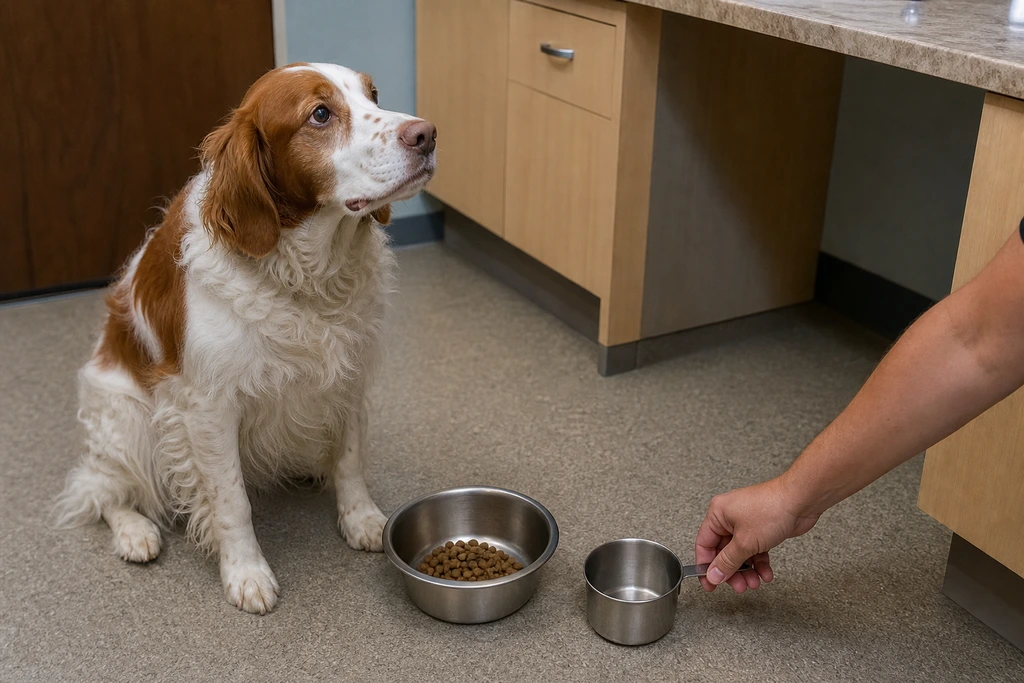
Who this guide is for
Owners seeking individualized nutrition help for a dog with cancer, treatment-related appetite or GI changes, weight loss, another disease, or a home-prepared diet.
Guide summary
There is no single cancer diet for every dog. A useful veterinary nutrition consultation starts with accurate intake, body-weight and muscle trends, treatment plan, laboratory findings, symptoms, and all supplements, then builds a complete and feasible feeding strategy.
Before you start
Record three to seven typical days of everything eaten, including exact product names, amounts, treats, table food, flavoring, pill vehicles, supplements, and refused meals. Bring current weight history, laboratory results, diagnoses, treatment schedule, and kitchen constraints.
Step-by-step guidance
- Define the immediate problem: inadequate intake, weight or muscle loss, nausea, diarrhea, swallowing difficulty, another organ disease, or diet completeness.
- Ask for body-condition and muscle-condition assessment.
- Review each supplement for evidence, dose, duplication, interaction, and quality control.
- Agree on calories or portions, texture, transition pace, and a backup plan for bad days.
- Set objective recheck measures and identify when assisted feeding or further diagnostics should be discussed.
What to monitor
Food offered and eaten, calories or measured portions when prescribed, weekly weight at a consistent scale when practical, muscle condition, nausea clues, vomiting, stool, swallowing, hydration, energy, and tolerance of any diet transition.
When to call a veterinarian
Call promptly when the dog eats far less than the team’s threshold, cannot keep water down, has repeated vomiting or diarrhea, shows swallowing difficulty, becomes weak, or loses weight rapidly. Do not force-feed a nauseated, distressed, or aspiration-risk dog.
Checklist
- Three-to-seven-day food and treat record
- Exact labels or photos of all foods and supplements
- Weight and muscle trend
- Current laboratory and treatment summary
- Household budget, preparation, and storage constraints
- Written primary diet, transition, and backup plan