Radiation Therapy: Local Control and Symptom Relief
Quick summary
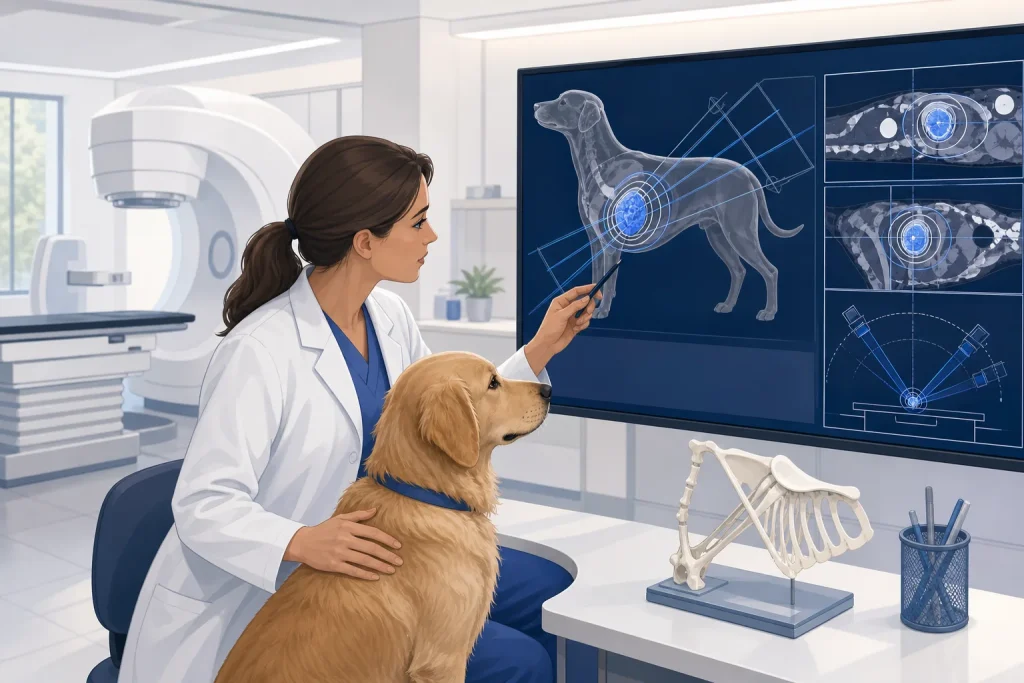
Radiation therapy uses planned ionizing radiation to damage tumor cells while limiting exposure to surrounding normal tissue. The number of visits, dose per visit, imaging, anesthesia, expected control, and side-effect pattern depend on the tumor and treatment intent.
What it is
Radiation is delivered at a specialist facility after treatment planning. Protocols may be conventionally fractionated, hypofractionated, stereotactic, or palliative; these labels describe different dose and visit patterns and should not be treated as interchangeable promises.
How it is discussed in tumor care
It may provide definitive local control, treat microscopic disease after surgery, manage a tumor that cannot be fully removed, or relieve pain and other symptoms. It does not automatically address disease outside the treatment field.
Potential role
A radiation oncologist can compare likely local benefit with anesthesia frequency, travel, acute effects, late tissue risk, cost, and the dog’s goals. Palliative protocols may prioritize symptom relief with fewer visits, while definitive plans usually require a larger commitment.
Typical use context
Common discussions include nasal, brain, oral, mast cell, soft-tissue, bone, thyroid, and other tumors, but suitability depends on exact diagnosis and anatomy. Planning imaging and immobilization are part of the process.
Evidence snapshot
Radiation is an established oncology modality with tumor- and protocol-specific evidence. Outcomes cannot be generalized from the word “radiation”; ask for the expected local-control or symptom-relief range for the proposed plan.
Safety notes
Acute skin, mucosal, eye, GI, or fatigue effects depend on the treated field. Late effects can occur months or years later. Repeated sedation or anesthesia adds patient-specific risk.
Interactions / cautions
Do not apply creams, heat, ice, or home remedies to the treatment field unless approved. Missed fractions, new illness, and changes in medications should be reported before the next visit.
Questions to ask your veterinarian
- Is the goal definitive control, postoperative control, or palliation?
- How many visits and anesthetic events are expected?
- Which acute and late effects fit this treatment field?
- How will response, recurrence, and long-term effects be monitored?