Veterinary Rehabilitation During and After Cancer Care
Quick summary
Veterinary rehabilitation uses a medically supervised assessment and individualized plan to address pain, weakness, mobility limits, deconditioning, and functional goals. In oncology it must be coordinated with the surgeon or oncologist and adapted to bone integrity, wounds, devices, blood counts, and treatment effects.
What it is
A rehabilitation evaluation reviews diagnosis, treatment, pain, gait, strength, range of motion, neurologic function, home environment, and owner goals. Interventions may include controlled exercise, mobility aids, environmental changes, therapeutic modalities, and caregiver training.
How it is discussed in tumor care
Rehabilitation may support return to function after surgery or amputation, maintain safe activity during treatment, reduce fall risk, preserve transfers and toileting, and improve comfort during long-term or palliative care.
Potential role
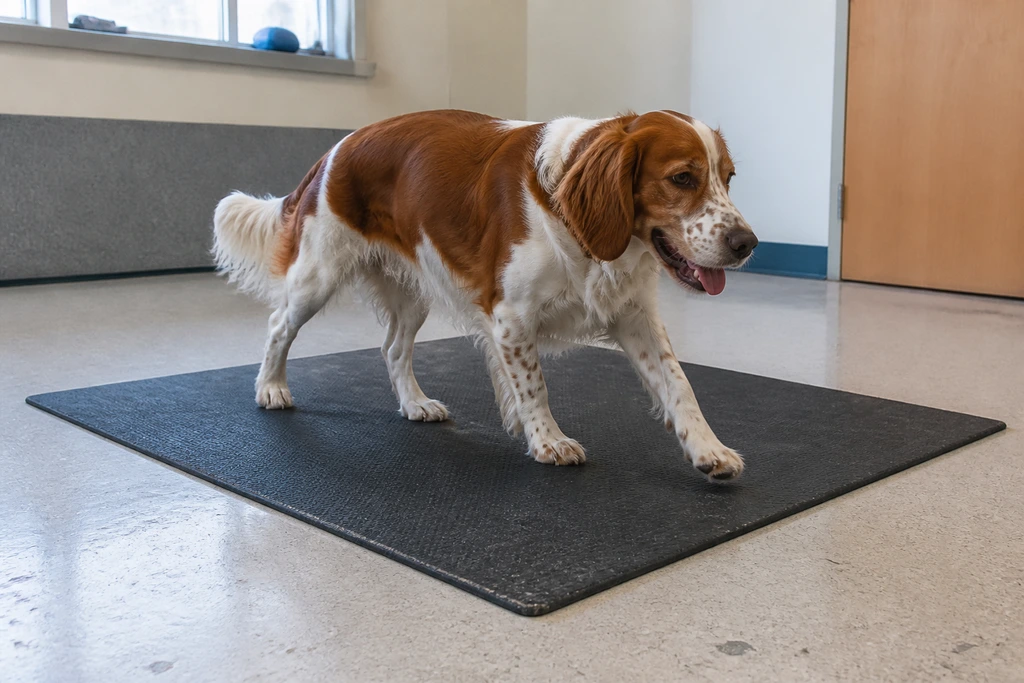
A practical plan often begins with nonslip flooring, harness or sling fit, safe routes, pacing, and measurable function. Progression is based on response rather than a generic internet exercise schedule.
Typical use context
Consider after surgical clearance, with limb or nerve tumors, deconditioning, arthritis plus cancer, amputation, radiation effects, or palliative mobility goals.
Evidence snapshot
The American Association of Rehabilitation Veterinarians’ 2026 model standards describe rehabilitation under veterinary medical oversight after diagnosis and clearance, with individualized evaluation, planning, documentation, and reassessment.
Safety notes
Fresh incisions, unstable or tumor-weakened bone, suspected fracture, severe anemia, fever, thrombocytopenia, cardiopulmonary compromise, uncontrolled pain, or neurologic decline may require restriction or a modified plan.
Interactions / cautions
Do not massage or load an undiagnosed mass or painful bone, stretch through pain, or begin swimming or strengthening without clearance. Credentials, supervision, scope of practice, and local regulation vary.
Questions to ask your veterinarian
- Has the oncologist or surgeon medically cleared rehabilitation?
- Which structures or activities must be protected?
- What measurable function is the first goal?
- What pain, fatigue, swelling, gait, or wound change means stop and call?