Mitoxantrone in Veterinary Oncology: Infusion and Blood-Count Profile
Quick summary
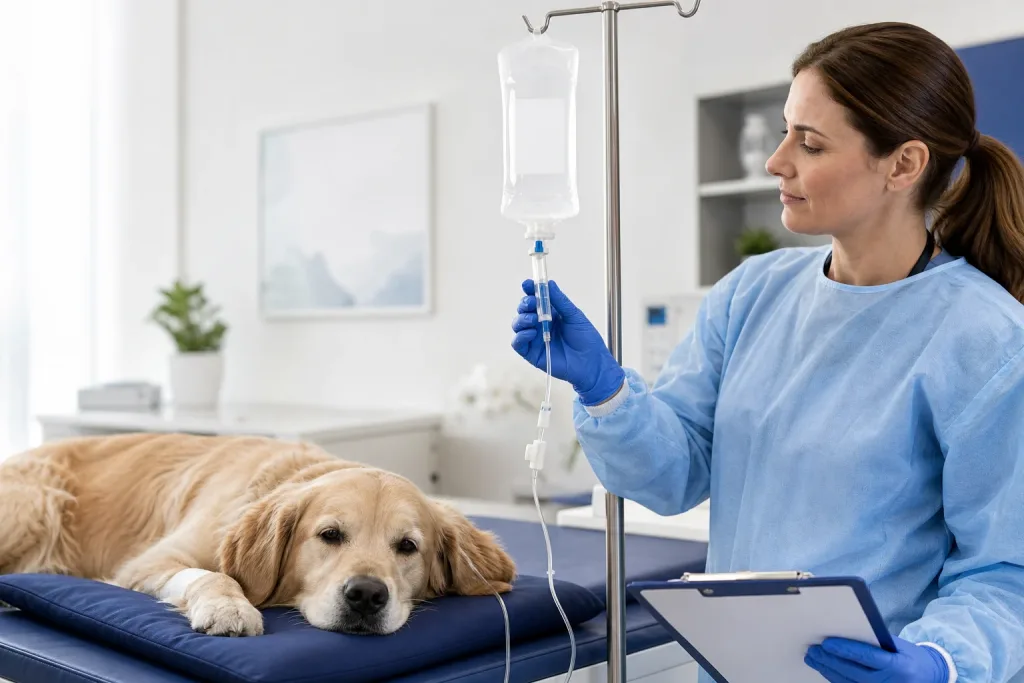
Mitoxantrone is an intravenous antineoplastic medicine used in selected canine and feline protocols, with infusion, marrow, and gastrointestinal monitoring.
What it is
This synthetic anthracenedione affects DNA processes and is administered by trained staff. It may be discussed as a component of systemic treatment for selected cancers rather than as a broadly interchangeable substitute.
How it is discussed in tumor care
Choice depends on confirmed tumor, prior therapy, expected sensitivity, comorbidities, organ and marrow status, alternatives, and the intended palliative or disease-control goal.
Potential role
When a veterinary oncologist includes this agent in a protocol, the treatment goal, schedule, combination partners, monitoring thresholds, handling instructions, and stopping rules are individualized. It should never be started, split, substituted, or adjusted from an online description.
Typical use context
The oncology team considers confirmed tumor type, grade or stage where relevant, prior treatment, organ function, concurrent medicines, household exposure risks, and the family’s quality-of-life goals. Baseline and interval examination and laboratory testing are part of the discussion.
Evidence snapshot
Veterinary drug references and clinical literature support selected uses. Evidence varies substantially between diseases, and comparisons with another agent require direct protocol- and diagnosis-specific data rather than assumed similarity.
Safety notes
Blood-cell suppression, gastrointestinal effects, hypersensitivity, and tissue injury or irritation with an infusion problem are concerns. Laboratory changes may precede visible illness, making the written recheck plan important.
Interactions / cautions
Antineoplastic medicines can be hazardous to patients, caregivers, and veterinary staff. Follow the dispensing clinic’s written instructions for storage, tablets or capsules, spills, vomit, urine, feces, laundry, missed or vomited doses, pregnancy risk, and disposal; do not improvise from generic internet advice.
Questions to ask your veterinarian
- Why is mitoxantrone preferred over the alternatives for this diagnosis and prior-treatment history?
- Which laboratory, examination, and symptom checks govern the next treatment?
- Which adverse signs require same-day or emergency contact?
- What exact handling and household-waste precautions apply to this formulation?