Harnesses, Slings, Carts, and Mobility Aids in Cancer Care
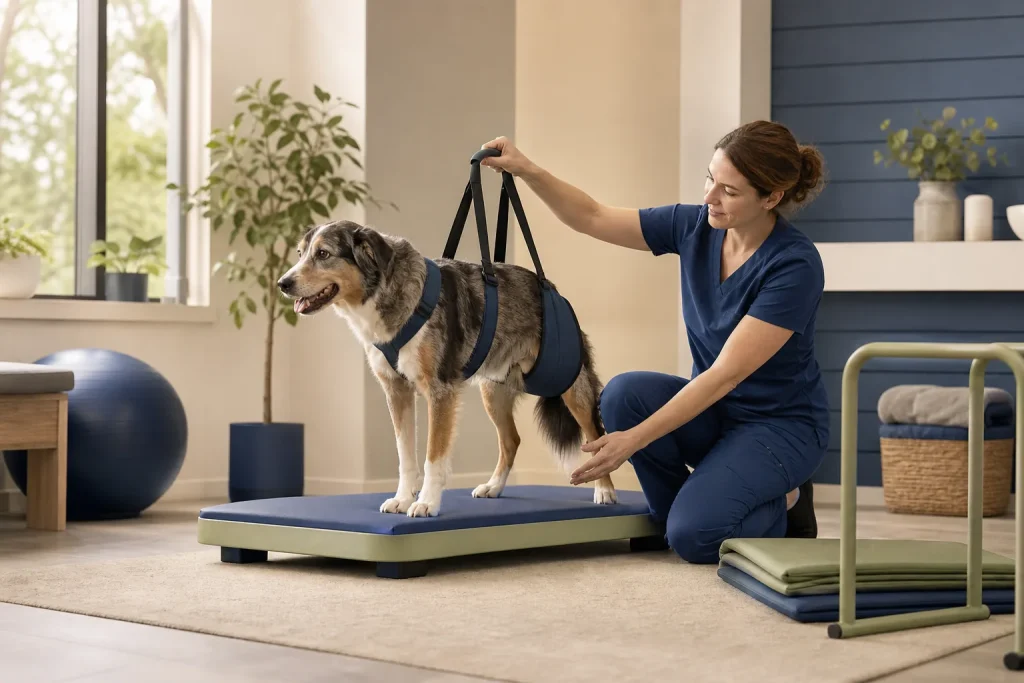
Quick summary
A properly selected and fitted aid can support transfers or walking, while a poor fit can create pain, pressure injury, falls, or caregiver strain.
What it is
Options include front- or rear-support harnesses, slings, lifting straps, boots, braces, carts, ramps, and nonslip pathways. Equipment choice depends on anatomy, neurologic and orthopedic function, tumor location, wounds, toileting, and caregiver ability.
How it is discussed in tumor care
An aid may preserve access to food, water, toileting, sleep areas, and valued activities and may make postoperative or palliative handling safer for the patient and family.
Potential role
A rehabilitation plan can support safe transfers, walking, toileting, strength, endurance, joint motion, home access, and valued activities. Goals and progression are individualized and coordinated with oncology, surgery, pain management, wound status, and bone integrity.
Typical use context
Medical clearance and a hands-on functional assessment should come before exercise or therapeutic modalities. The plan should name protected structures, measurable goals, caregiver technique, fatigue limits, home modifications, reassessment timing, and stop signals.
Evidence snapshot
Mobility aids are widely used in veterinary rehabilitation, but comparative oncology evidence is limited and commercial claims are rarely sufficient. Fit, trial observation, and ongoing skin and function checks are more important than brand popularity.
Safety notes
Pressure sores, friction, swelling, restricted breathing, altered gait, falls, device entanglement, wound contamination, and overexertion can occur. Devices should not bear on a mass, incision, painful bone, catheter, or radiation field without approval.
Interactions / cautions
Do not massage, heat, stretch, load, or exercise an undiagnosed mass, unstable or tumor-weakened bone, fresh incision, painful limb, or neurologically declining patient without clearance. New swelling, marked pain, breathing change, collapse, wound change, or loss of function requires reassessment.
Questions to ask your veterinarian
- Can the rehabilitation team observe this exact device during transfers, walking, rest, and toileting?
- Which tissue, bone, wound, device, or blood-count concern changes the plan?
- What measurable function is the first goal?
- What fatigue, pain, gait, swelling, or wound change means stop and call?