Home-Environment Adaptation for Weak or Painful Oncology Patients
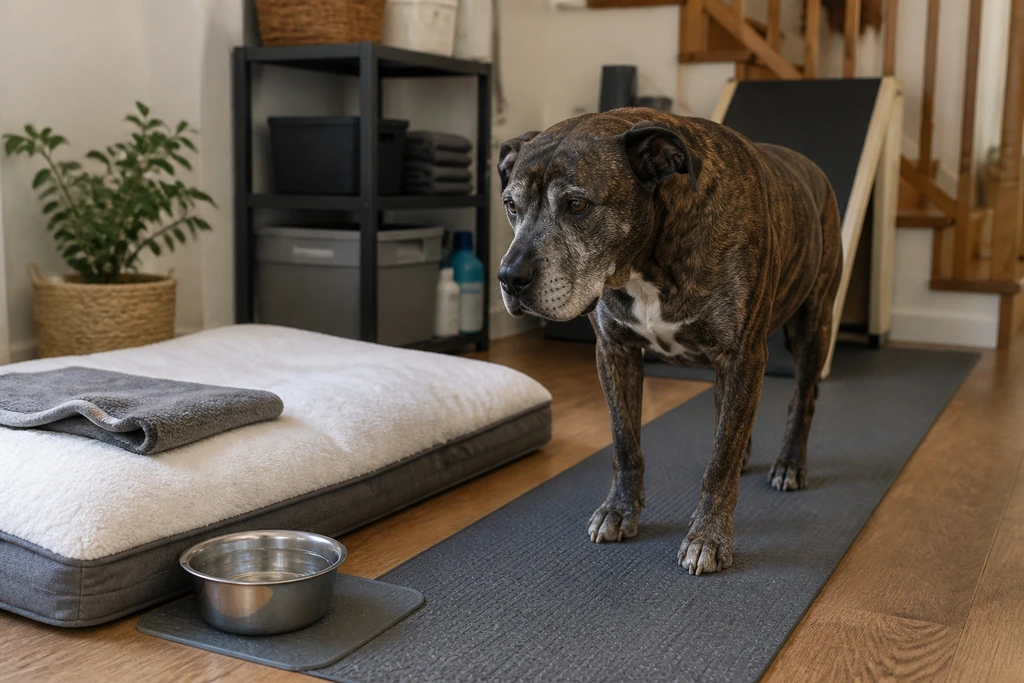
Quick summary
Small environmental changes can reduce falls, painful effort, and caregiver lifting while preserving access to basic needs and social contact.
What it is
The plan reviews flooring, stairs, thresholds, lighting, bedding, temperature, feeding height and location, litter or toileting access, vehicle entry, outdoor paths, rest areas, and separation from other animals when needed.
How it is discussed in tumor care
Adapting the environment may help a recovering, amputee, neurologic, senior, weak, or palliative patient remain engaged and independent within safe limits.
Potential role
A rehabilitation plan can support safe transfers, walking, toileting, strength, endurance, joint motion, home access, and valued activities. Goals and progression are individualized and coordinated with oncology, surgery, pain management, wound status, and bone integrity.
Typical use context
Medical clearance and a hands-on functional assessment should come before exercise or therapeutic modalities. The plan should name protected structures, measurable goals, caregiver technique, fatigue limits, home modifications, reassessment timing, and stop signals.
Evidence snapshot
Rehabilitation and end-of-life guidance support individualized environmental modification, but no single checklist fits every home or patient. Improvement should be judged by observed function, comfort, and caregiver feasibility.
Safety notes
Unstable ramps, loose mats, inaccessible water, excessive heat, pressure-prone bedding, poor hygiene, and unsafe lifting can create new harm. A setup that worked last week may fail as disease changes.
Interactions / cautions
Do not massage, heat, stretch, load, or exercise an undiagnosed mass, unstable or tumor-weakened bone, fresh incision, painful limb, or neurologically declining patient without clearance. New swelling, marked pain, breathing change, collapse, wound change, or loss of function requires reassessment.
Questions to ask your veterinarian
- Which route or daily task currently causes the most pain, slipping, fear, or caregiver strain?
- Which tissue, bone, wound, device, or blood-count concern changes the plan?
- What measurable function is the first goal?
- What fatigue, pain, gait, swelling, or wound change means stop and call?