The Nadir Appointment: Why Your Dog May Look Well but Still Need a Blood Count
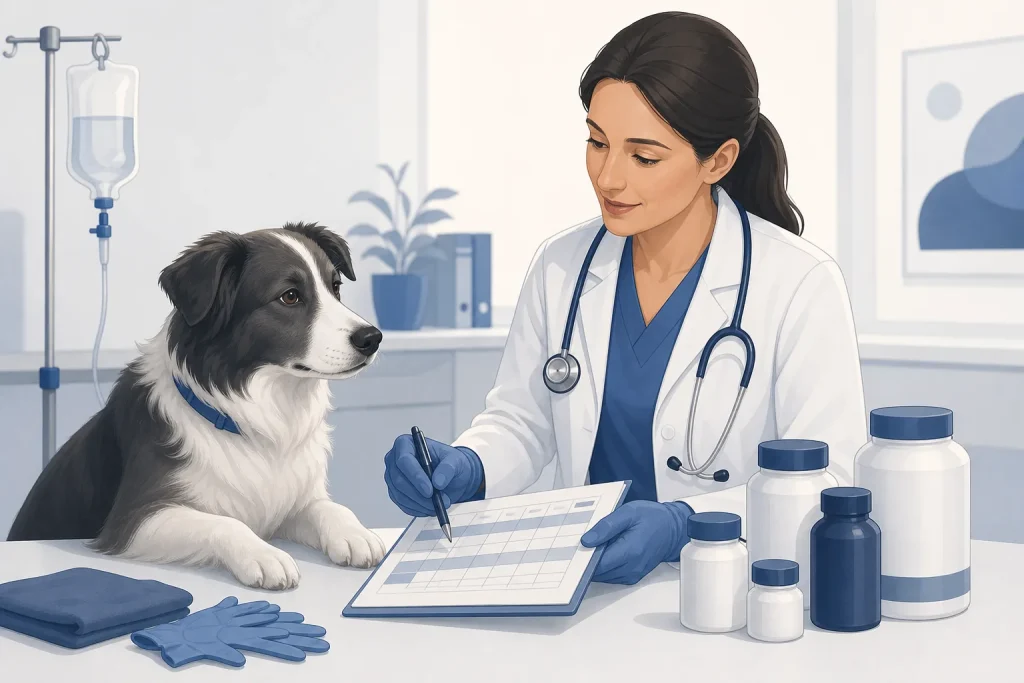
Your dog may seem normal on the day the oncology team schedules a post-chemotherapy CBC. That does not make the appointment unnecessary. Some marrow effects appear on a predictable but not exact timeline, and the team is trying to measure safety before illness develops or before the next treatment decision.
Why this deserves a plan
A CBC includes several cell lines, and each has a different meaning. Neutrophils relate to infection defense, platelets to bleeding, and red cells to oxygen-carrying capacity. A single number without treatment date, symptoms, previous results, and smear context can be misunderstood.
Prepare before the stressful moment
Confirm the appointment window when treatment is given; do not calculate it from a generic chart. Keep the drug name and treatment date available. Note appetite, stool, vomiting, water intake, urination, energy, shaking, bleeding, and any clinic-advised temperature reading. Report every unplanned medicine or supplement.
What to observe and record
At the visit, ask which cell line is expected to be lowest and whether this result is compared with a baseline or prior cycle. If another clinic runs the test, arrange direct result transfer to the oncology service. Record whether the plan is routine monitoring, closer observation, a repeat count, or a change to the next appointment.
When to call or escalate
Do not wait for the scheduled CBC if the dog becomes systemically unwell. Marked lethargy, fever concern, collapse, breathing difficulty, repeated vomiting, severe diarrhea, pale gums, unusual bruising, or bleeding needs same-day advice or emergency assessment depending on severity.
What not to improvise
Do not start leftover antibiotics because a count might be low, and do not cancel or approve the next chemotherapy visit yourself from a portal value. Laboratory reference ranges and oncology decision thresholds are not identical. A clinician must interpret the patient, drug, timing, and trend together.
Turn the CBC into a treatment decision
Ask for the result to be interpreted beside the treatment date, the specific agent, the dog’s baseline, and earlier post-treatment counts. A portal flag only shows that a value falls outside that laboratory’s reference interval; it does not state whether the oncology plan should continue, pause, or be reassessed. The useful output is a documented clinical decision and the name of the clinician responsible for making it.
Before leaving the blood-draw appointment, confirm how the oncology service will receive the report and when the family should expect contact. If no message arrives, use the agreed follow-up route rather than assuming that silence means clearance. Keep symptoms and laboratory results on the same timeline: a dog who appears bright can still need the scheduled check, while a dog who becomes unwell needs clinical assessment even before a result is available. Keep the next appointment provisional until that interpretation is documented.
Take these questions to the care team
- Why was this date selected?
- Which cell line matters most?
- Who will review the result?
- What symptom overrides waiting?
- Could this result change the next cycle?
Medical disclaimer: This article is educational and cannot diagnose, treat, or determine prognosis for an individual dog. It does not replace an examination or an individualized plan from a licensed veterinarian.
Sources and further reading
- AAHA: Chemotherapy Nadir Appointment Considerations
- AAHA: Therapeutic Modalities—Chemotherapy
- Merck Veterinary Manual: Overview of Antineoplastic Agents
- AAHA: Supportive and Symptomatic Care
