Harness, Sling, or Cart? Fit the Mobility Aid to the Job
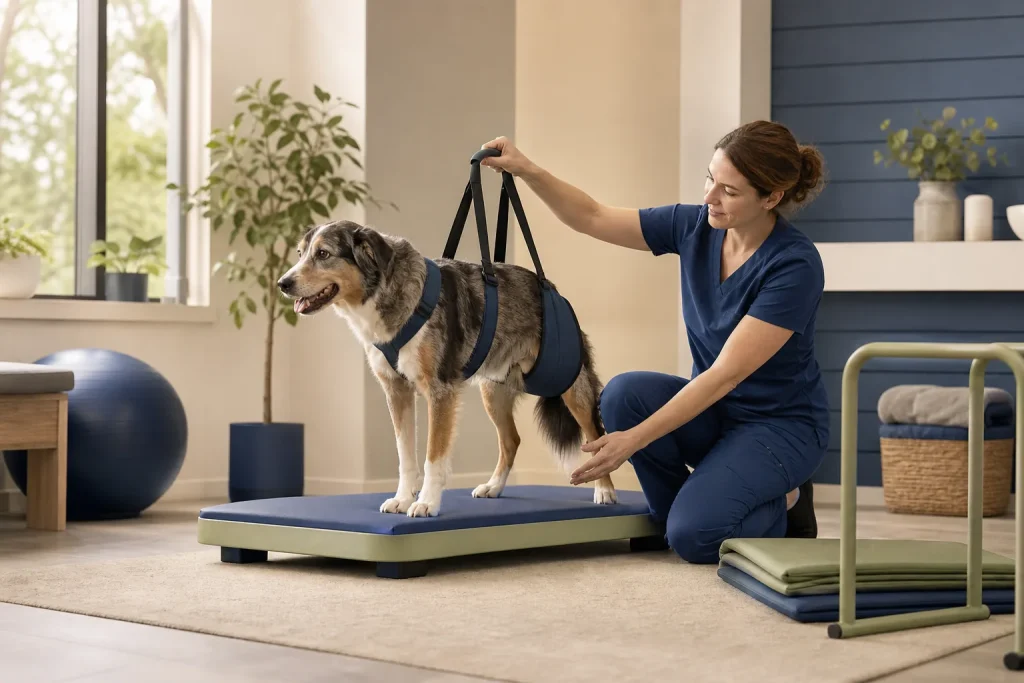
A rear-support sling, full-body harness, boot, ramp, or cart can improve a specific transfer or walking problem, but the wrong device can rub an incision, shift weight onto a painful limb, obstruct toileting, or make the caregiver lift unsafely. Start with the task, not the product.
Why this deserves a plan
Cancer-related mobility problems may come from surgery, amputation, bone weakness, neurologic disease, edema, fatigue, pain, or treatment effects. Each changes where support can be applied. A photo on a shopping page cannot assess tissue integrity, balance, body shape, or the home layout.
Prepare before the stressful moment
Ask the surgeon or rehabilitation professional to define protected areas and the first mobility goal. Measure as instructed and bring the dog if a fitting is needed. Identify stairs, thresholds, slick turns, vehicle height, narrow doors, toileting posture, and who will assist at different times of day.
What to observe and record
During a supervised trial, observe skin pressure, incision clearance, breathing, gait symmetry, paw placement, toileting, turning, sitting, rising, and caregiver posture. Start with brief use and inspect skin afterward. Record whether the device reduces effort or merely transfers strain elsewhere.
When to call or escalate
Stop use for new swelling, skin injury, marked pain, breathing change, panic, falls, dragging, wound contact, or loss of function. Sudden inability to bear weight or use a limb can indicate a fracture or neurologic emergency and should not be managed by tightening a support device.
What not to improvise
Do not attach a leash to an unapproved lifting point, suspend a dog for prolonged periods, leave a device on unattended, or use a cart before clearance. Avoid homemade pressure over tumors, drains, radiation injury, or fresh incisions. More support is not always safer.
Test the device on the task it must solve
A fitting on a level clinic floor may not reveal what happens at the car step, bathroom turn, doorway threshold, or sloped yard. With professional clearance, demonstrate the actual movement or provide a safe video of the space so handle position, support point, and caregiver stance can be reviewed. The device succeeds only if the dog and helper can complete the intended task without new pressure, panic, or loss of balance.
Fit also changes as swelling, muscle, bandages, incisions, or weight change. Mark the date and purpose of the fitting, then inspect the contact areas after use and request reassessment when the body or task changes. A sling chosen for a brief transfer may not be suitable for walking, and a cart intended for exercise may not solve indoor toileting. Keeping each aid tied to a named job reduces unsafe all-day use. Record whether one or two caregivers are needed, since a device that exceeds available help is not a workable home solution.
Take these questions to the care team
- What exact task should this aid solve?
- Which areas must avoid pressure?
- Can the dog toilet and turn safely?
- How long may the device be worn?
- Who will recheck fit as the body changes?
Medical disclaimer: This article is educational and cannot diagnose, treat, or determine prognosis for an individual dog. It does not replace an examination or an individualized plan from a licensed veterinarian.
Sources and further reading
- American Association of Rehabilitation Veterinarians: Model Standards
- American College of Veterinary Surgeons: Postoperative Care
- AAHA: 2022 Pain Management Guidelines
