Refused, Spit Out, or Vomited? Pause Before Repeating a Cancer Medication
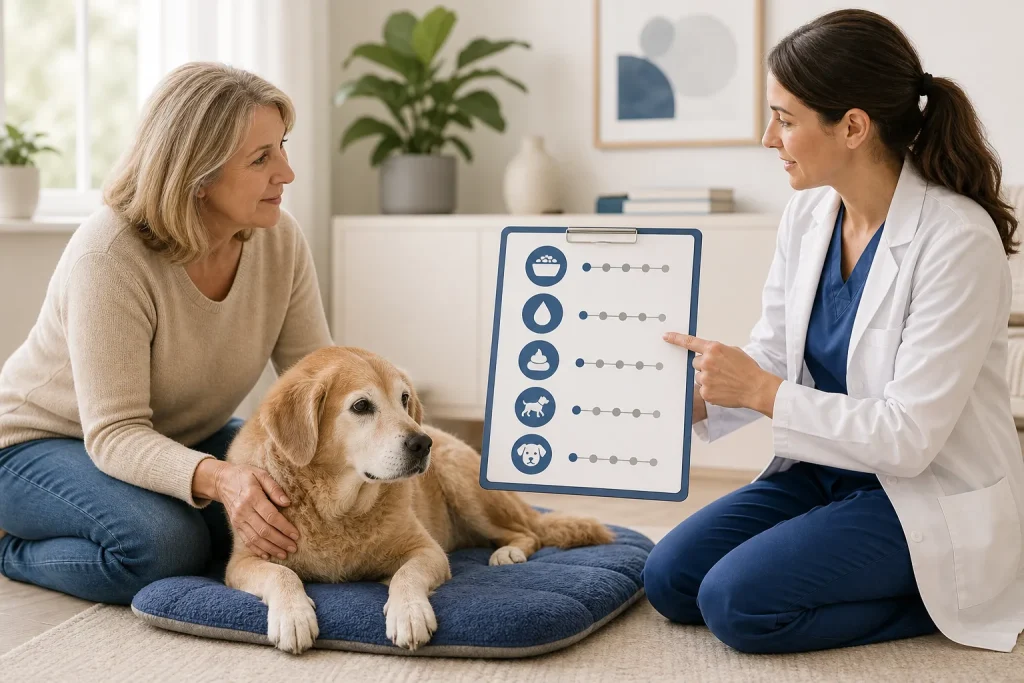
A tablet hidden in food may appear on the floor, dissolve in saliva, be chewed, or come back with vomit. It is often impossible to know how much entered the dog. The safest next action is usually to stop guessing and call the dispensing clinic with precise details.
Why this deserves a plan
Cancer and supportive medicines differ in absorption, hazard, formulation, and missed-dose instructions. Repeating a dose can produce excess exposure, while forcing a bitter or hazardous product can injure the caregiver and create food aversion. A general answer cannot safely cover every drug.
Prepare before the stressful moment
Before the first home dose, ask what to do for refusal, partial chewing, a dropped tablet, vomiting, or a missed time. Keep gloves and spill supplies if instructed. Store the medicine in its labeled container and keep the prescription label, clinic number, and after-hours pathway accessible.
What to observe and record
Record drug name and label strength, scheduled time, what food was used, whether the tablet was seen intact or damaged, how soon vomiting occurred, what was visible, symptoms, and any cleanup exposure. Place recovered material in the container or disposal system directed by the clinic; do not handle repeatedly.
When to call or escalate
Call promptly for possible overdose, caregiver or child exposure, repeated vomiting, drooling with distress, collapse, severe weakness, breathing change, seizure, or rapidly worsening signs. For hazardous drugs, report skin, eye, or needle exposure according to the clinic and product safety instructions.
What not to improvise
Do not automatically redose, double the next dose, crush a tablet, open a capsule, or mix it through an entire meal. Do not induce vomiting or use household decontamination products unless a veterinarian or poison professional instructs you. Never transfer the prescription to another animal.
Give the clinic an incident report, not an estimate
When you call, describe the sequence in plain terms: the medicine offered, whether it was swallowed willingly, what remained in the bowl or on the floor, whether the tablet looked whole or damaged, and what happened afterward. A photograph of recovered material or vomit may help if it can be taken without extra handling. Also report any other medicines given near the event and whether the dog is acting normally.
Keep uncertainty visible. “Possibly swallowed” is more useful than converting fragments into a guessed fraction of a dose. The prescribing team can then apply the instructions for that exact product and formulation. If food was used, discard or isolate it according to the hazardous-drug directions rather than offering it to another animal. Record the advice you receive, including what to do with the next scheduled administration, so a second caregiver does not independently repeat the same call or make a different choice.
Take these questions to the care team
- Was any amount definitely swallowed?
- Should this dose be skipped or replaced?
- Is the formulation safe to manipulate?
- How should recovered material be handled?
- What exposure or symptom needs emergency help?
Medical disclaimer: This article is educational and cannot diagnose, treat, or determine prognosis for an individual dog. It does not replace an examination or an individualized plan from a licensed veterinarian.
Sources and further reading
- FDA: Medications for Your Pet—Questions for Your Vet
- CDC/NIOSH: Hazardous Drugs in Veterinary Settings
- AAHA: Therapeutic Modalities—Chemotherapy
- Merck Veterinary Manual: Overview of Antineoplastic Agents
