Canine Pheochromocytoma: An Adrenal Tumor With Episodic Cardiovascular Signs
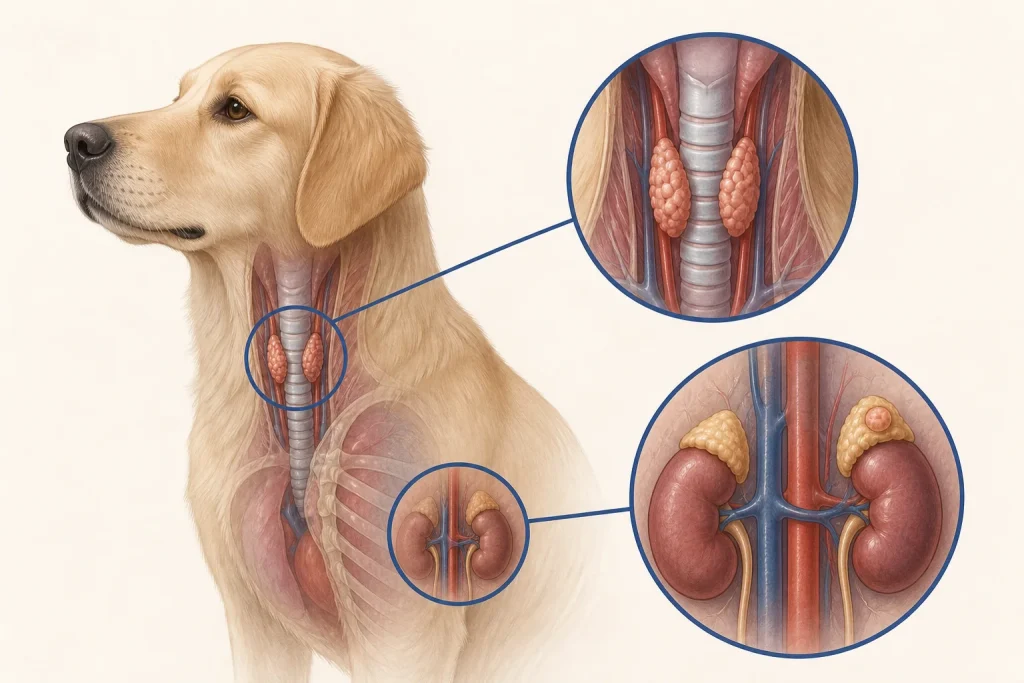
Overview
Pheochromocytoma is a neuroendocrine tumor of adrenal medullary cells that may release catecholamine hormones. Hormone release can be intermittent, and an adrenal mass can have several other diagnoses; size alone does not identify tumor type or surgical risk.
Common signs
Owners may notice episodic weakness, panting, restlessness, collapse, rapid heart rate, high blood pressure, tremors, pale gums, reduced appetite, abdominal discomfort, or an incidental adrenal mass. None of these signs is specific to pheochromocytoma, so a veterinary examination and appropriate testing are needed before naming the problem.
Common locations
One adrenal gland is usually affected, close to major blood vessels in the upper abdomen; local invasion into the vena cava or nearby vessels is a key imaging question. Anatomy affects what can be sampled safely, whether a complete first surgery is realistic, and which nearby function needs protection.
Diagnosis discussion
Blood pressure, cardiac assessment, blood and urine testing, endocrine tests in selected cases, and contrast imaging may be used. The team evaluates the opposite adrenal gland, vascular invasion, metastasis, and other hormone-producing adrenal disease. The diagnostic plan should answer a decision: whether tissue type, local extent, stage, or patient health will change the next option. An imaging impression is not the same as a histologic diagnosis.
Urgency and when to contact a veterinarian
Arrange a prompt veterinary appointment for persistent or progressive signs. Seek emergency veterinary care for any of these signs: collapse, severe weakness, breathing difficulty, a painful enlarging abdomen, very pale gums, seizures, or sustained severe restlessness. Call ahead when possible so the receiving team can prepare; do not delay emergency transport to take photographs or complete a log.
Treatment discussion
Specialist-planned adrenal surgery may be considered for selected patients after medical preparation. Systemic or palliative options may be discussed when removal is not feasible; anesthesia and blood-pressure instability require explicit planning. The team should explain the goal of each option—diagnosis, local control, systemic control, symptom relief, or emergency stabilization—along with likely burdens, costs, travel, rechecks, and alternatives.
Home monitoring
Keep one dated home record of time and duration of panting or weakness episodes, heart rate only if taught, appetite, vomiting, collapse, abdominal pain, exercise tolerance, and prescribed medication effects. Use the same measurement or observation method each time and share trends with the veterinary team. Home tracking supports planned rechecks; it cannot determine grade, margins, or metastasis.
Questions to ask your veterinarian
- Does imaging show invasion into a major vessel or evidence of spread?
- Which functional adrenal tests are appropriate before intervention?
- What preoperative medication and anesthesia plan addresses catecholamine release?
- What episode pattern should trigger emergency assessment while planning continues?