Do Not Skip the Mouth: An At-Home Oral Check for Dog Owners
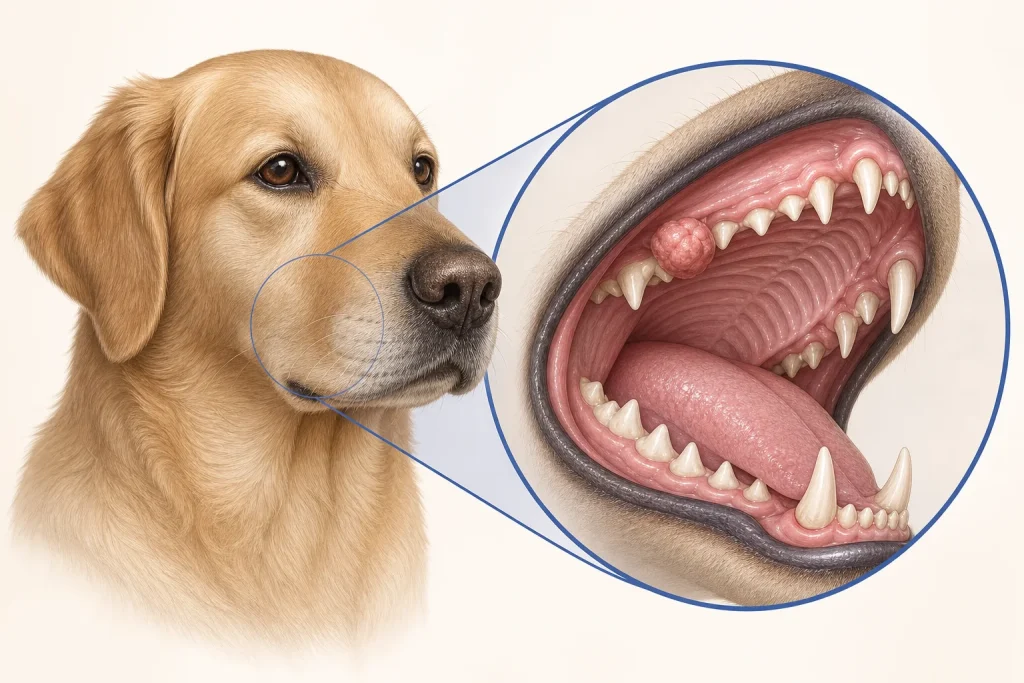
A skin lump is easy to feel. A growth beneath the tongue or behind a back tooth can remain hidden until it affects eating. A brief, gentle oral check can help you notice change earlier, but it must respect your dog’s comfort and safety. The aim is observation, not a home diagnosis and never a forced deep-mouth examination.
Start with behavior, not the lips
Changes around meals may be the first clue. Watch for approaching food and backing away, dropping kibble, chewing on one side, taking longer to finish, preferring softer food, difficulty swallowing, or reduced appetite. Also notice new drooling, blood on toys or bowls, persistent bad breath, pawing at the mouth, facial rubbing, reluctance to have the head touched, sneezing, nasal discharge, or unexplained weight loss.
These signs can result from dental disease, a foreign object, injury, infection, or other conditions as well as a tumor. They justify veterinary attention because appearance alone cannot distinguish the cause.
A safe two-minute visual check
Choose a well-lit, quiet moment when your dog is relaxed. If your dog has ever guarded food, resisted face handling, snapped, or shown mouth pain, skip the check and book a professional examination. Do not muzzle a dog that is vomiting or having breathing difficulty.
- Look at the face from the front and both sides for new asymmetry or swelling.
- Lift each outer lip gently without forcing the jaw open. Compare gum color and contour on both sides.
- Look for a raised area, thickened plaque, ulcer, unexplained bleeding, displaced or loose tooth, or tissue covering part of a tooth.
- Notice whether the tongue moves normally when the dog chooses to pant or lick. Do not pull it forward.
- Stop immediately if there is pain, struggling, coughing, gagging, or distress.
Do not probe, squeeze, scrape, brush over, or attempt to photograph a lesion deep in the mouth. Never put fingers behind the back teeth. A painful dog can bite without warning, and manipulation may cause bleeding.
When to arrange an examination
Contact a veterinarian promptly for any new oral mass, unexplained bleeding, persistent foul odor, facial swelling, loose tooth without an obvious dental explanation, eating or swallowing change, or recurring oral pain. Tell the clinic whether the dog can eat and drink, whether bleeding stops, and whether breathing is normal. Difficulty breathing, uncontrolled bleeding, collapse, or inability to swallow is an emergency.
What the veterinary workup may involve
A complete oral examination may require sedation or anesthesia to see beneath the tongue and toward the throat safely. The veterinarian may recommend dental radiographs, CT, cytology, or tissue biopsy. Biopsy is often needed because benign and malignant oral lesions can look similar. Depending on the diagnosis, regional lymph-node sampling and other staging tests may be useful.
Ask how the sample location and imaging support later surgery or radiation planning. Oral tumors can extend into bone or other deeper tissue beyond the visible surface, so simply measuring the exposed portion may underestimate the problem.
Make the habit useful
Pair a brief external face-and-lip check with regular grooming or tooth-care routines only if your dog is comfortable. Note the date and photograph facial asymmetry from outside; do not repeatedly disturb an oral lesion for images. Continue professional dental and wellness examinations, since home checks cannot visualize or assess the entire mouth.
Finding something does not mean you found cancer. It means you found a question worth asking while there may be more diagnostic and comfort options.
Medical disclaimer: This article is general education and does not diagnose oral disease or replace veterinary dental and oral examination. Do not force mouth handling or delay care for a concerning sign. Breathing difficulty, uncontrolled oral bleeding, collapse, or inability to swallow requires emergency veterinary care.
