Build a Symptom Diary Your Veterinary Oncology Team Can Actually Use
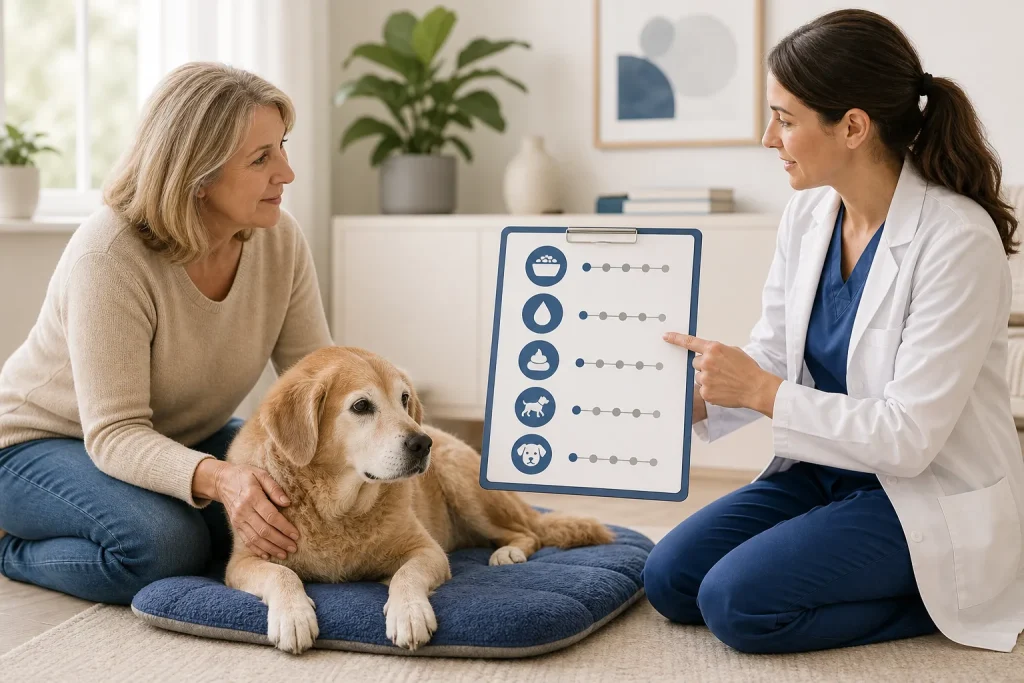
Living with an uncertain mass or a cancer diagnosis can make every yawn, skipped bite, and slow walk feel significant. A symptom diary gives that worry a useful shape. Its purpose is not to score your dog constantly or diagnose complications. It is to show patterns clearly enough that the veterinary team can decide what deserves a call, an examination, a test, or an adjustment.
Start with your dog’s baseline
Before treatment or as soon as you begin the diary, describe an ordinary good day. Record the usual food and amount eaten, water habits, number and character of stools, urination, walking tolerance, sleep, favorite activities, and social behavior. If possible, record body weight from the clinic and ask how to assess body and muscle condition. A baseline prevents normal quirks from being mistaken for new disease and makes gradual decline easier to see.
Use one brief daily entry
A diary that takes two minutes is more likely to continue than a perfect spreadsheet. Use the same time each day and record:
- Food: approximate percentage of the normal daily amount eaten, not simply yes or no.
- Water and elimination: clearly increased or decreased drinking, urine frequency, stool consistency, diarrhea, straining, or blood.
- Comfort: restlessness, panting at rest, trembling, guarding, difficulty settling, sensitivity to touch, or a changed posture.
- Function: ability to rise, use stairs, walk, toilet, groom, and reach food or water.
- Engagement: response to family, interest in a favorite activity, and whether your dog seeks or avoids contact.
- Visible lesion: only when relevant, note measured size, surface changes, discharge, and one standardized photo.
Add vomiting episodes with time and contents, not just the word vomiting. For diarrhea, note frequency and whether the stool is soft, watery, black and tarry, or visibly bloody. Black stool, significant blood, repeated vomiting, collapse, or marked weakness can require urgent care.
Make the medication record exact
List each prescription and supplement by product name, strength, amount given, and time. Mark missed, delayed, spat-out, or vomited doses rather than estimating. Never automatically repeat a vomited dose; call the clinic because absorption may be uncertain and redosing could cause an overdose. Record changes only when directed, and keep a current label photo.
For chemotherapy or procedures, make the treatment date easy to see. Patterns linked to a particular post-treatment day can help the oncology team anticipate supportive needs. AAHA advises ongoing assessment of appetite, nutrition, pain, and other symptoms throughout oncology care.
Add numbers, but keep context
A simple 0-to-3 observation scale can improve consistency: 0 normal, 1 mild change without limiting routine, 2 clear change that limits routine, and 3 severe change or inability. Define the scale once and do not change it midweek. Numbers are shorthand, not a verdict. Add one sentence explaining the change, such as ate 50% after anti-nausea medication or stopped twice on the usual five-minute walk.
Know what should bypass the diary
The diary must never become a reason to wait. Follow the oncology team’s written instructions. Contact a veterinarian promptly for signs outside the expected range, persistent poor intake, repeated vomiting or diarrhea, new bleeding or bruising, increasing pain, medication error, wound problems, or a rapid change in a mass. Use emergency care for breathing difficulty, collapse, unresponsiveness, uncontrolled bleeding, seizures, severe distress, or other rapidly worsening signs.
Send a summary, not a data dump
Before an appointment, reduce the week to five lines: the main trend, lowest food intake, vomiting or diarrhea count, functional change, and every medication deviation. Attach two or three representative photos rather than dozens. Bring the full diary for detail. Ask the team which variables matter most for your dog’s diagnosis and protocol and what thresholds should trigger a same-day call.
Protect normal life
Observation should serve the dog’s comfort, not replace companionship. Choose one family member to make the entry, keep monitoring brief, and spend the rest of the time being together. A useful record gives the veterinary team better information while giving the family permission to stop scanning for danger every minute.
Medical disclaimer: This diary method is educational and cannot diagnose pain, dehydration, infection, treatment toxicity, or cancer progression. Obtain individualized monitoring and emergency instructions from the treating veterinarian. If your dog appears seriously ill or deteriorates quickly, seek veterinary care rather than waiting to complete or send a diary.
Sources and further reading
- AAHA: Supportive and Symptomatic Care
- AAHA: Post-Treatment Monitoring and Follow-Up
- Merck Veterinary Manual: Caring for a Pet With Cancer
