Considering a Canine Cancer Clinical Trial? Bring This Consent Checklist
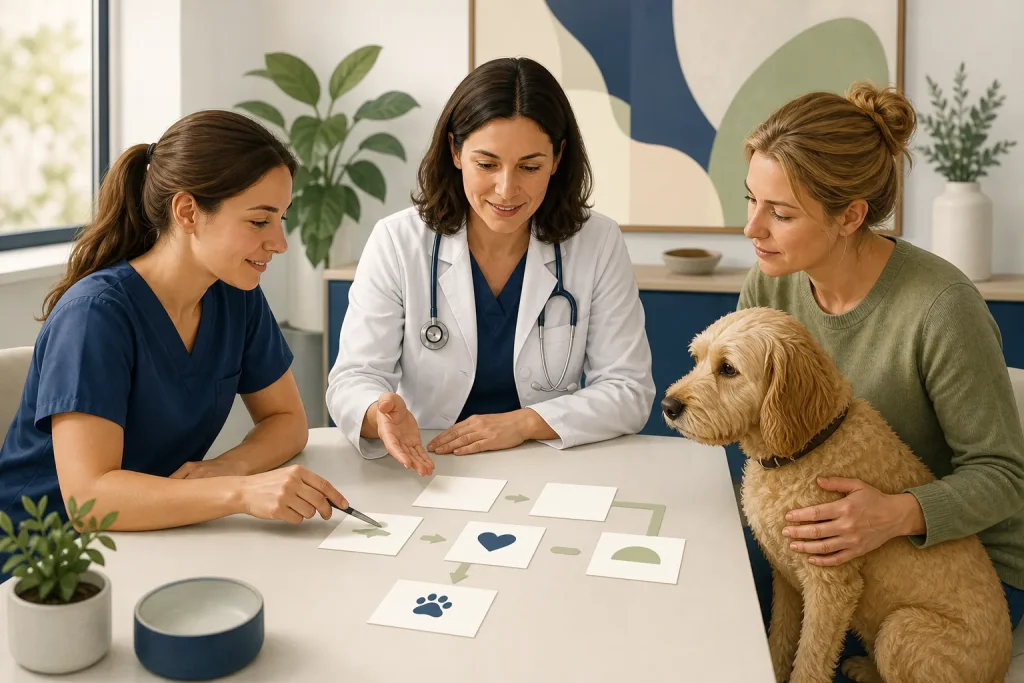
A clinical trial may be worth exploring, but a listing is not a recommendation and the newest option is not automatically the best fit. The study exists to generate knowledge. Your dog’s welfare, ordinary care options, travel tolerance, comorbidities, and your ability to follow the protocol remain central.
Why this deserves a plan
Recruitment pages are summaries. The consent document and study team should explain randomization, masking, control or placebo, required biopsies or imaging, standard treatment allowed or restricted, who pays, and what happens if the dog worsens. You may ask for time and involve your usual veterinarian.
Prepare before the stressful moment
Collect the confirmed diagnosis, pathology, stage, prior treatments, current medicines, laboratory and imaging records, and realistic travel schedule. Ask whether screening tests create costs or risks even if the dog is ineligible. Write down the reasonable non-trial choices before comparing them.
What to observe and record
Separate routine care from research-only procedures. Record study contact, sponsor, oversight body, arm assignment process, visit calendar, emergency pathway, covered and uncovered costs, adverse-event reporting, tissue and data use, withdrawal terms, and whether results or incidental findings will be shared.
When to call or escalate
Report new signs through the protocol, but seek emergency care first when the dog is unstable. Ask whether outside emergency treatment could affect eligibility and how records will transfer. Participation should not depend on hiding symptoms, medicines, supplements, or care received elsewhere.
What not to improvise
Do not assume enrollment means the dog receives the investigational treatment or will benefit. Do not delay an urgent standard intervention while waiting for an email about eligibility. Never change medication to fit criteria without both the study team and treating veterinarian.
Compare the trial with the real alternative
Make parallel columns for trial participation and the most reasonable non-trial plan. Compare purpose, required visits, travel, examinations, imaging or sampling, medicines allowed or restricted, likely time burden, direct costs, emergency access, and what happens if the cancer progresses. This keeps “research” from being compared with an empty space and helps reveal burdens that a short recruitment notice may omit.
On the trial side, label which procedures are required for the dog’s ordinary care and which exist mainly to answer the study question. Ask who reviews safety information, who receives adverse-event calls outside business hours, and how records reach the regular veterinarian. The consent discussion should also cover voluntary withdrawal, removal by investigators, care after withdrawal, and any effect on access to other options. Keep a copy of the signed document and current contact details; if the protocol is amended, ask what changed before agreeing to continue.
Take these questions to the care team
- What question is the study designed to answer?
- Which arm could my dog receive?
- What is research-only?
- Who pays for complications?
- What happens if we withdraw?
Medical disclaimer: This article is educational and cannot diagnose, treat, or determine prognosis for an individual dog. It does not replace an examination or an individualized plan from a licensed veterinarian.
Sources and further reading
- Veterinary Oncology Trial Conduct and Ethics Workshop
- CTSA One Health Alliance: Veterinary Clinical Study Review
- AAHA: What’s New in Veterinary Oncology
- FDA: My Dog Has Cancer—What Do I Need to Know?
