Nausea Without Vomiting: Subtle Signs to Record During Canine Cancer Care
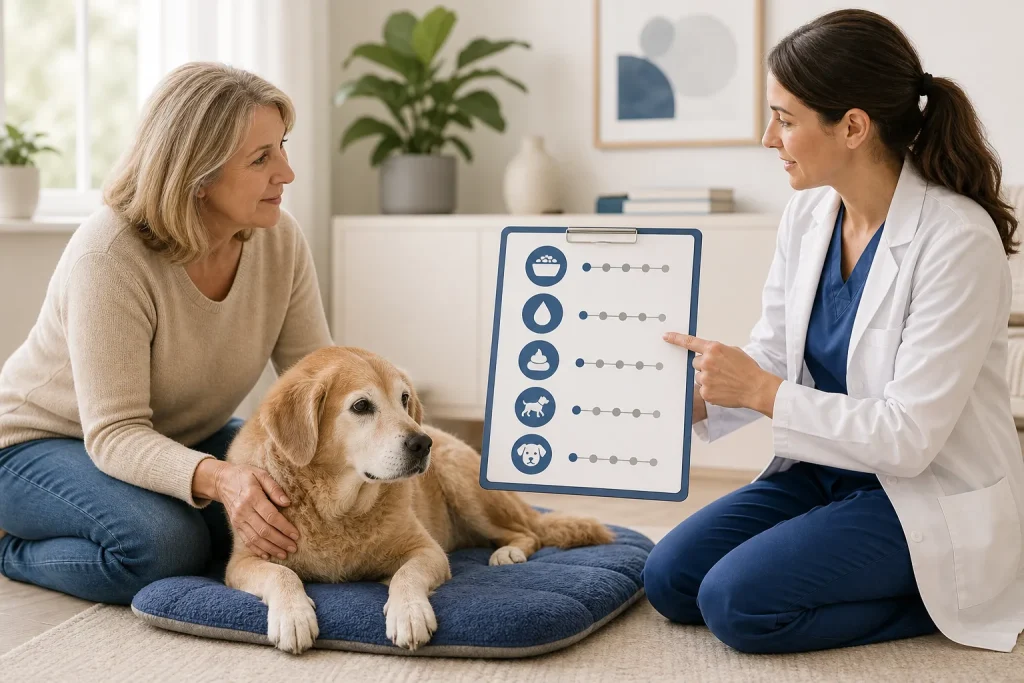
Waiting for vomiting can miss nausea. A dog may walk to the bowl, sniff, turn away, lick the lips, drool, swallow repeatedly, seek grass, hide, or become restless. These signs are not specific to chemotherapy, so the veterinary team still needs to consider pain, oral disease, obstruction, medication effects, and other illness.
Why this deserves a plan
Untreated nausea can reduce intake, create food aversion, worsen hydration, and make caregivers conclude that the dog has lost all interest in life. Early reporting gives the team a chance to identify the cause and decide whether anti-nausea treatment, examination, diagnostics, diet adjustment, or protocol review is appropriate.
Prepare before the stressful moment
Ask before treatment which signs to watch for, when preventive or rescue medicine may be used, and what counts as breakthrough nausea. Keep prescribed medicines in their original containers. Record the last meal eaten normally and whether the dog refuses all food or only a food associated with treatment.
What to observe and record
Offer a calm observation rather than a parade of new foods. Note time relative to treatment and medication, interest in food, amount swallowed, lip licking, drooling, posture, abdominal discomfort, vomiting, stool, and water intake. A short video of a safe, spontaneous behavior may help the clinic recognize a pattern.
When to call or escalate
Repeated vomiting, a distended or painful abdomen, inability to keep water down, blood, profound weakness, collapse, or rapid deterioration needs prompt assessment. Persistent reduced intake also deserves early contact because dehydration and muscle loss can develop before the next scheduled appointment.
What not to improvise
Do not force food, syringe-feed an unwilling dog, repeat a vomited dose, or combine antiemetics, appetite stimulants, antacids, cannabis products, or human medicines without instructions. Stimulating appetite without addressing nausea or obstruction can increase distress and delay diagnosis.
Protect familiar foods from a nausea association
When a dog repeatedly encounters a favorite food during a nauseated period, refusal can persist even after the immediate episode improves. Tell the care team which food was offered near treatment, which items the dog approached and rejected, and whether interest returned at another time or location. That pattern is more useful than labeling the dog “picky,” because it separates willingness to approach food from comfort while eating.
Ask the team which complete diet or texture should remain the dependable option and whether a different food should be reserved for medication or treatment days. Avoid cycling rapidly through every high-value food in the home. The goal is not to win one meal at any cost, but to preserve safe choices while the cause of nausea is assessed and the prescribed prevention or rescue plan is reviewed. Record which foods remain accepted so the team can plan without sacrificing every familiar option.
Take these questions to the care team
- Could this behavior represent nausea?
- What other causes need examination?
- Which prescribed medicine is preventive or rescue?
- When should intake trigger a recheck?
- How can we prevent food aversion?
Medical disclaimer: This article is educational and cannot diagnose, treat, or determine prognosis for an individual dog. It does not replace an examination or an individualized plan from a licensed veterinarian.
Sources and further reading
- AAHA: Supportive and Symptomatic Care
- AAHA: Therapeutic Modalities—Chemotherapy
- Merck Veterinary Manual: Drugs That Affect Appetite
- FDA: Medications for Your Pet—Questions for Your Vet
