Bring a Supplement Inventory to Oncology—Not a Bag of Promises
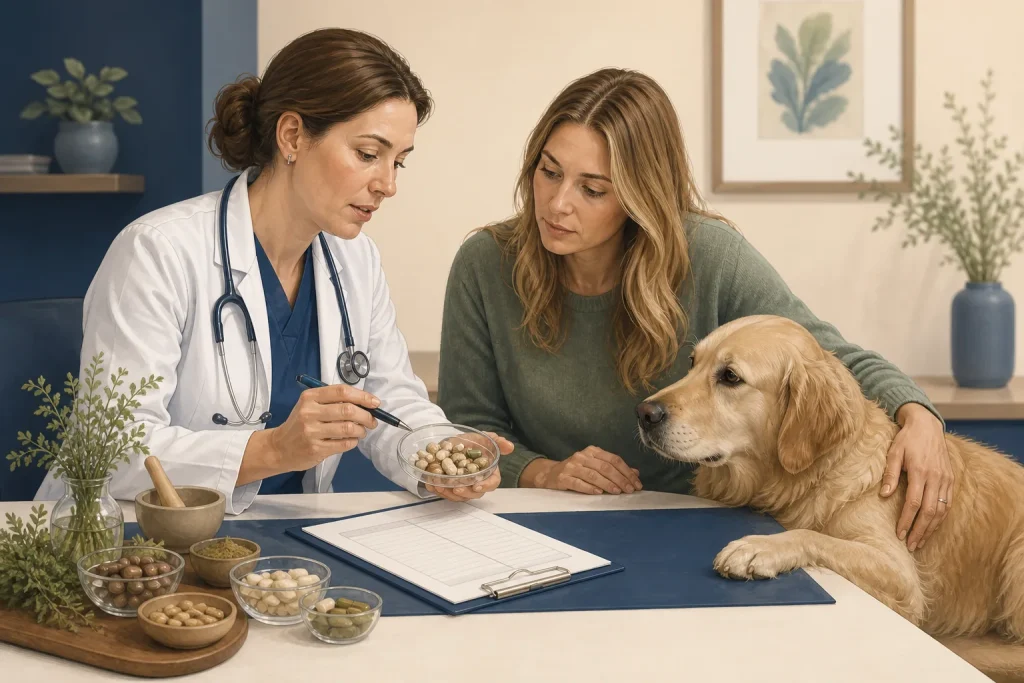
Powders, chews, oils, mushrooms, herbs, vitamins, and combination products can feel separate from medicine, but they can affect the stomach, liver, kidneys, bleeding, sedation, appetite, laboratory interpretation, or drug exposure. Brand families change formulas, so the exact label matters more than the category name.
Why this deserves a plan
The goal is not to reject every product or accept every natural claim. It is to protect the veterinary plan from hidden duplication, interactions, contamination, and financial burden. A supplement deserves the same clear purpose and follow-up question as any other intervention.
Prepare before the stressful moment
Photograph front and back labels, ingredient panel, amount per unit, directions, lot, expiration, country of sale, and quality-testing claims. Record who recommended it, when it started, the intended outcome, cost, and any change since use. Include treats and topical or cannabis products.
What to observe and record
At the visit, sort products into continue, stop, hold around a procedure, replace, or insufficient information. Ask whether evidence applies to the exact ingredient and species, whether the dose form is standardized, and which medicine or laboratory value could be affected. Set one measurable supportive goal and review date.
When to call or escalate
Report vomiting, diarrhea, bleeding, bruising, sedation, agitation, weakness, appetite change, skin reaction, or a new laboratory abnormality. For severe signs, collapse, breathing difficulty, seizure, or suspected overdose, use urgent veterinary or poison-control guidance rather than waiting for an oncology appointment.
What not to improvise
Do not start several products together, copy a human cancer regimen, hide use to avoid disagreement, or treat online testimonials as clinical evidence. Do not claim a supplement shrinks tumors or boosts immunity without product- and outcome-specific canine data. Natural does not mean interaction-free.
Separate product identity from the marketing claim
The front label may name a mushroom blend, calming oil, immune formula, or joint chew while the ingredient panel reveals multiple active substances, flavorings, vitamins, minerals, or proprietary amounts. Record the exact manufacturer, product name, formulation, lot, and full panel so the team reviews what is actually used. A study of one ingredient does not automatically support a mixed product, a different extract, or the claim printed on the package.
Give every proposed supplement a written question: what specific problem is it intended to address, what observable change would count as useful, what adverse signs or laboratory changes matter, and when will it be reconsidered? Track start and stop dates separately from cancer medicines so timing is interpretable. If the composition changes between purchases, treat it as a new review rather than assuming continuity. Cost and administration burden also belong in the record; a product that displaces food, complicates medication, or consumes the household’s care capacity has consequences even when no interaction is immediately visible.
Take these questions to the care team
- What exact goal does this product serve?
- Is evidence specific to this formulation?
- Which interactions or organ risks matter?
- How is quality verified?
- When will we stop if the goal is not met?
Medical disclaimer: This article is educational and cannot diagnose, treat, or determine prognosis for an individual dog. It does not replace an examination or an individualized plan from a licensed veterinarian.
Sources and further reading
- AAHA: Supportive and Symptomatic Care
- FDA: Medications for Your Pet—Questions for Your Vet
- FDA: Animal Food Labeling and Pet Food Claims
- WSAVA: Global Nutrition Guidelines
