Diarrhea During Cancer Treatment: Build a Decision Log, Not a Home Pharmacy
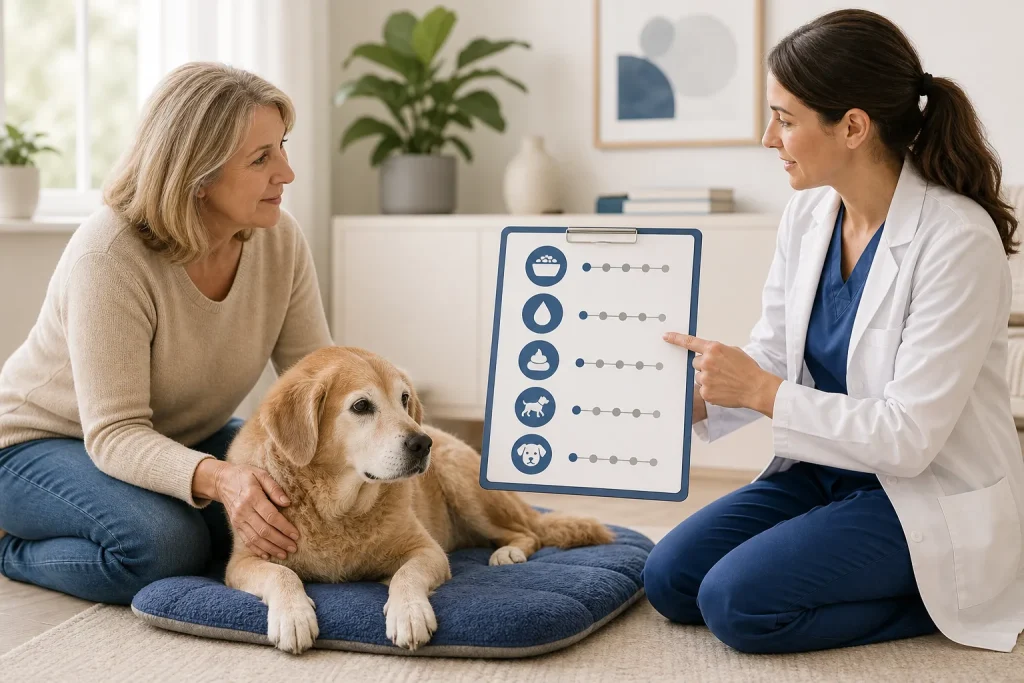
Diarrhea after chemotherapy may be treatment-related, dietary, infectious, inflammatory, medication-associated, or unrelated to the cancer plan. One loose stool in a bright dog is not the same problem as repeated watery stool with vomiting and weakness. A concise log helps the clinic triage without encouraging self-treatment.
Why this deserves a plan
Caregivers often have leftover antibiotics, probiotics, anti-diarrheals, or special foods, but using several at once can obscure the course, add adverse effects, and undermine antimicrobial stewardship. The safest first step is to describe severity and ask which elements of the existing rescue plan apply.
Prepare before the stressful moment
Before treatment, obtain written guidance for mild, persistent, and severe signs. Keep a simple stool scale if the clinic uses one. Record the exact chemotherapy and date, all supportive medicines, diet changes, scavenging, other affected animals or people, and any recent travel or boarding.
What to observe and record
For each episode, note time, consistency, approximate volume, urgency, straining, mucus or visible blood, vomiting, appetite, water intake, urination, energy, and abdominal discomfort. Save a sample only if the clinic requests it and gives storage instructions. Report whether the dog can rest and keep water down.
When to call or escalate
Repeated watery stool, substantial blood, black stool, vomiting, fever concern, marked weakness, abdominal pain, dehydration, collapse, or rapid decline warrants prompt assessment. A dog in a predicted marrow-suppression period may need earlier evaluation even when gastrointestinal signs seem modest.
What not to improvise
Do not give human anti-diarrheals, start leftover antibiotics, or stack probiotics and herbal products without review. Do not withhold water or apply a prolonged fast from generic advice. The tumor, comorbidities, medicines, and size of the dog can change what is safe.
Build a timeline the clinic can triage
Place treatment, new medicines, food changes, scavenging, boarding, travel, and the first abnormal stool on one line in time. Then record whether episodes are becoming more frequent, more watery, more urgent, or accompanied by vomiting, pain, poor intake, or reduced activity. A photograph may help describe appearance if it can be obtained without delaying care, but it does not replace reporting the dog’s overall condition.
Ask the clinic to document the next checkpoint as well as the current instruction: what improvement should look like, when another update is due, and what change ends home observation. If testing or a sample is requested, confirm collection and storage instructions before acting. This approach lets the team choose diagnostics and supportive care deliberately and avoids turning leftover antibiotics or multiple over-the-counter products into an uncontrolled experiment. Include the name of the person who reviewed the update so later advice is not separated from its clinical context.
Take these questions to the care team
- How severe is this episode for this dog?
- Does treatment timing suggest marrow risk?
- Is diagnostic testing or a sample needed?
- Which part of the written rescue plan applies?
- What sign means emergency care?
Medical disclaimer: This article is educational and cannot diagnose, treat, or determine prognosis for an individual dog. It does not replace an examination or an individualized plan from a licensed veterinarian.
Sources and further reading
- AAHA: Supportive and Symptomatic Care
- AAFP/AAHA: Antimicrobial Stewardship Guidelines
- AAHA: Therapeutic Modalities—Chemotherapy
- FDA: Medications for Your Pet—Questions for Your Vet
