Your Dog’s First Chemotherapy Visit: Build a Safe Handoff Before You Leave
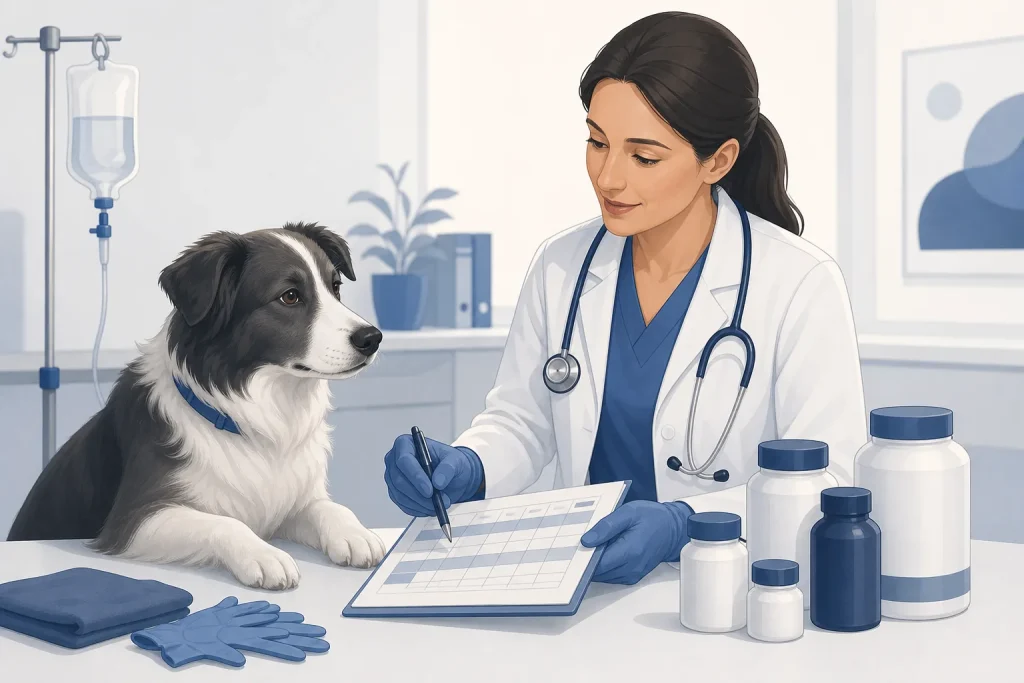
A chemotherapy appointment is more than an infusion or injection. It is a handoff between the oncology team and the household. Before leaving, you should understand what was given, what the treatment is meant to accomplish, what changes are expected, and which changes should trigger a call.
Why this deserves a plan
Dogs often tolerate veterinary chemotherapy differently from people, but that does not make treatment risk-free. Gastrointestinal effects, appetite change, marrow suppression, drug-specific organ effects, and infusion-site problems vary by agent. Clear instructions reduce delay, double dosing, unsafe household exposure, and avoidable anxiety.
Prepare before the stressful moment
Bring every medication and supplement name, label strength, last administration time, prior reaction, and current symptom. Confirm who can answer the phone during treatment and who will collect the dog. Ask whether laboratory results are final, which drug and route are planned, and whether a same-day change is possible.
What to observe and record
Write down the exact agent, date, clinic contact, prescribed home medicines, and when each may be started. Record appetite, water intake, vomiting, stool, urination, energy, breathing, pain, and temperature only if the clinic has taught a safe method. Keep the nadir or laboratory appointment and next treatment decision on the same page.
When to call or escalate
Ask for a symptom threshold, not just the phrase call if worried. Repeated vomiting, significant diarrhea, refusal of food or water, fever concern, marked weakness, breathing change, bleeding, painful swelling at the infusion site, or rapid decline needs prompt contact. Use the emergency service when the dog is unstable.
What not to improvise
Do not give a just-in-case medicine unless the discharge plan says when and how to use it. Never repeat a vomited dose, split or crush a hazardous tablet, or use another pet’s medicine. Follow the clinic’s instructions for gloves, spills, laundry, urine, feces, vomit, storage, children, pregnancy, and disposal.
Make the discharge sheet operational
A useful handoff names today’s drug, route, treatment purpose, laboratory result reviewed, medicines given in clinic, and any home prescription that replaces or overlaps something already in the cabinet. Ask the team to mark the first permitted time for each home medicine and identify which instructions apply only to this agent. If the plan changes at a later visit, retire the old sheet so two conflicting versions are not used.
Household precautions should also be written for the formulation actually used. Ask where contaminated disposable material goes, how to handle an accident in the house, and whom to call after a spill or accidental exposure. The person collecting the dog should be able to repeat the urgent signs and after-hours route in their own words. That brief read-back can reveal missing details before the clinic closes.
Take these questions to the care team
- What exact drug and intent are recorded today?
- Which signs are expected versus urgent?
- When is the blood-count check and why?
- What household precautions apply?
- Who answers after hours?
Medical disclaimer: This article is educational and cannot diagnose, treat, or determine prognosis for an individual dog. It does not replace an examination or an individualized plan from a licensed veterinarian.
Sources and further reading
- AAHA: Therapeutic Modalities—Chemotherapy
- FDA: My Dog Has Cancer—What Do I Need to Know?
- FDA: Medications for Your Pet—Questions for Your Vet
- CDC/NIOSH: Hazardous Drugs in Veterinary Settings
