Oral Targeted Therapy at Home: Monitor the Dog, Not Just the Tumor
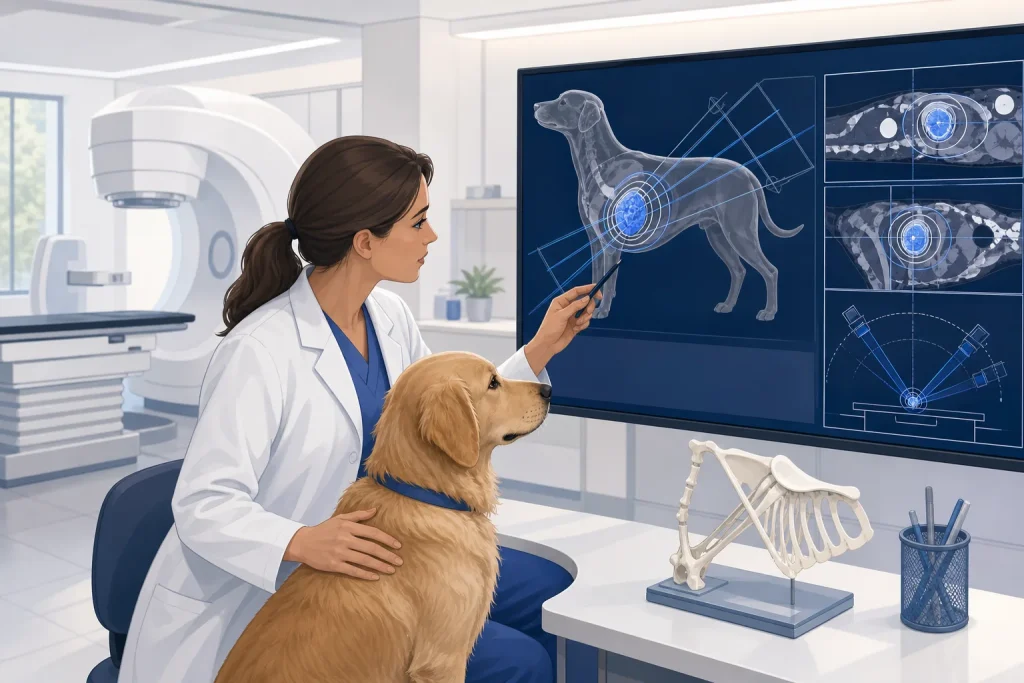
The word targeted can sound as though a medicine affects only cancer cells. Targeted drugs also interact with normal pathways, and adverse effects differ by agent. A home plan should name the exact drug and its required checks instead of relying on a generic tyrosine-kinase-inhibitor checklist.
Why this deserves a plan
Many targeted medicines are given at home, which makes caregivers part of monitoring and hazardous-drug safety. Subtle appetite, stool, skin, energy, or bleeding changes can matter before the next scan. Laboratory and blood-pressure checks may reveal problems that are not visible.
Prepare before the stressful moment
Confirm the current label or extra-label rationale, formulation, food instruction, storage, missed-dose rule, and every interaction reviewed by the prescriber. List NSAIDs, steroids, heart medicines, supplements, and topical products. Put laboratory, blood-pressure, urine, and imaging dates on one calendar.
What to observe and record
Record doses actually given, appetite, vomiting, stool, weight, energy, skin and paw changes, bleeding, bruising, urination, thirst, breathing, and any new pain. Bring the log and labeled medicine to rechecks. Ask which tumor measurement or symptom represents the intended benefit.
When to call or escalate
Severe vomiting or diarrhea, bleeding, collapse, breathing difficulty, profound weakness, painful or extensive skin change, inability to eat or drink, or rapid decline requires prompt contact. Do not wait for the next scheduled laboratory visit when the dog is clearly unwell.
What not to improvise
Do not split, crush, open, double, or repeat a dose unless the dispensing team has given that exact instruction. Do not add an NSAID or supplement because it is marketed as anti-inflammatory. Follow hazardous-drug precautions for tablets, spills, vomit, urine, feces, laundry, and disposal.
Separate treatment tolerance from tumor response
A scan or tumor measurement answers a different question from the daily log. The dog can appear stable at the tumor site while developing a medicine-related problem, or have a few difficult days without evidence that the cancer has changed. Keep these streams separate: one section for doses and possible adverse signs, another for the symptom or measurement the oncology team uses to judge the cancer.
Ask the prescriber which findings are expected to be reported immediately, which can be summarized at the next contact, and which scheduled checks remain necessary even when the dog looks well. When a change occurs, note its timing relative to the medicine, other prescriptions, meals, and recent procedures without deciding at home that the drug caused it. That chronology helps the clinic decide whether the next step is an examination, laboratory work, supportive care, a treatment hold, or another drug-specific action.
Take these questions to the care team
- What exact drug and evidence support this plan?
- Which home signs matter for this agent?
- What tests and blood-pressure checks are scheduled?
- Which interactions were reviewed?
- What defines benefit or a stop rule?
Medical disclaimer: This article is educational and cannot diagnose, treat, or determine prognosis for an individual dog. It does not replace an examination or an individualized plan from a licensed veterinarian.
Sources and further reading
- AAHA: What’s New in Veterinary Oncology
- AAHA: Therapeutic Modalities—Chemotherapy
- FDA: Medications for Your Pet—Questions for Your Vet
- FDA: My Dog Has Cancer—What Do I Need to Know?
