After Radiation: Keep a Site-Specific Skin and Mouth Diary
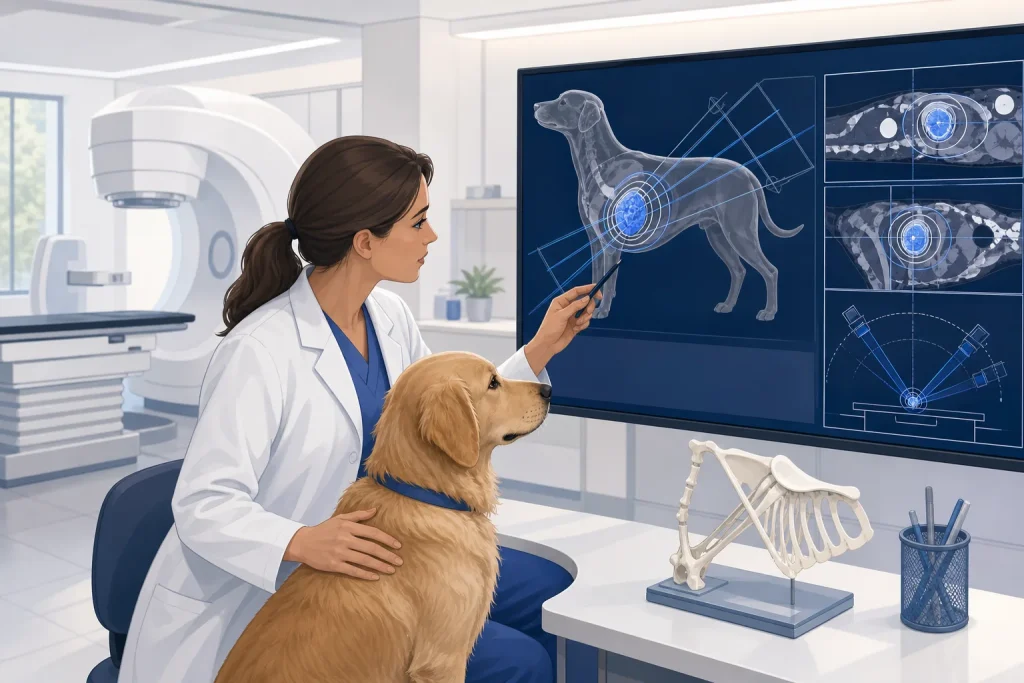
A dog may leave a radiation appointment looking unchanged, while tissue reactions develop later. Skin, mouth, eye, nasal, brain, lung, bladder, and other treatment sites have different expected effects. Ask for a field-specific timeline instead of applying another patient’s experience to your dog.
Why this deserves a plan
A diary helps separate a predictable mild change from pain, infection, dehydration, inability to eat, or another complication. It also prevents caregivers from starting products that can irritate treated tissue. The radiation service should remain the source of instructions even when primary care helps with monitoring.
Prepare before the stressful moment
Before the first session, photograph the treatment area only if the team says it is useful and safe. Write down baseline skin color, hair, saliva, chewing, swallowing, eye comfort, nasal discharge, urination, stool, gait, and neurologic function relevant to the field. Gather only approved cleaning or protective supplies.
What to observe and record
At the same time each day, note color, warmth, swelling, moisture, discharge, odor, licking, pain, and function. For head or neck fields, track food texture, amount swallowed, drooling, mouth odor, and coughing. Label photos by date and avoid repeated handling just to produce an image.
When to call or escalate
Call promptly for severe pain, wet or open skin, uncontrolled bleeding, inability to eat or drink, breathing or swallowing change, marked eye pain, repeated vomiting, neurologic decline, or rapid worsening. Delayed effects can occur after treatment ends, so keep the long-term follow-up plan.
What not to improvise
Do not shave, scrub, rub off markings, use peroxide, essential oils, sunscreen, adhesive, ice, heat, or human wound cream on the field unless the radiation team approves it. Do not stop prescribed pain or anti-inflammatory medicine because the skin initially looks normal.
Make the diary match the treated field
A useful entry links appearance to function. For a skin field, record whether the surface remains dry and intact or has become moist, open, painful, or difficult to protect from rubbing. For an oral field, connect visible changes with chewing, swallowing, drooling, willingness to approach food, and the textures the dog can manage. If an eye or nasal passage lies near the field, note comfort, discharge, and any change in normal use without repeatedly manipulating the area.
Keep the same camera angle, lighting, and distance when photographs are requested, but let the written description carry information that a picture cannot show: odor, warmth, tenderness, sleep disruption, and loss of function. Continue entries after the final appointment for the period specified by the radiation service, because the end of treatment is not necessarily the end of tissue change. Send a concise trend and the most representative images rather than waiting to assemble a perfect album.
Take these questions to the care team
- Which tissues are in the treatment field?
- When can effects appear?
- What local care is approved?
- Which photo or function change matters?
- How long does follow-up continue?
Medical disclaimer: This article is educational and cannot diagnose, treat, or determine prognosis for an individual dog. It does not replace an examination or an individualized plan from a licensed veterinarian.
Sources and further reading
- American College of Veterinary Radiology: Types of Imaging and Therapy
- AAHA: Therapeutic Interventions
- AAHA: Supportive and Symptomatic Care
- AAHA: Post-Treatment Monitoring and Follow-Up
