Radiation Treatment Day: What Happens Before, During, and After the Beam
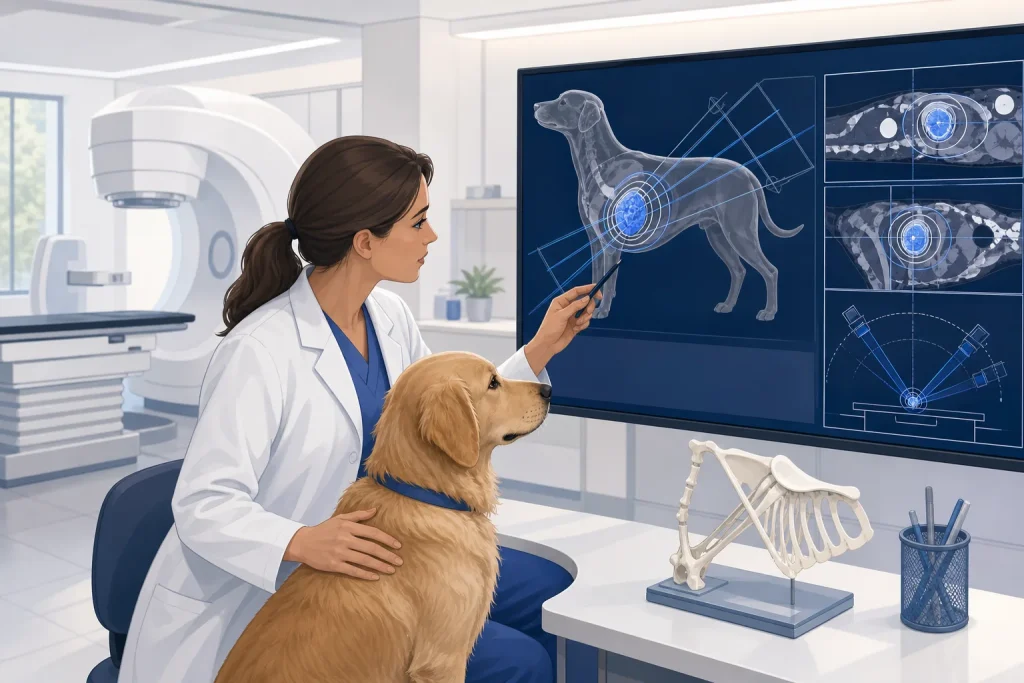
Families sometimes imagine a dog lying awake for a long treatment. In veterinary radiation, precise immobility commonly requires anesthesia or deep sedation, and much of the appointment is devoted to safe preparation, positioning, verification, and recovery. The exact process differs by center, site, and protocol.
Why this deserves a plan
Understanding the workflow helps you ask better questions about fasting, medications, repeated anesthesia, transport, pickup, and delayed effects. It also prevents a technically completed session from being treated as the end of monitoring. Recovery and home observations are part of the treatment day.
Prepare before the stressful moment
Follow only the radiation and anesthesia team’s written food, water, and medication instructions. Report cough, vomiting, diarrhea, appetite change, new neurologic signs, prior anesthesia problems, and every medicine or supplement. Confirm whether bloodwork, imaging, or a treatment-plan change affects arrival time.
What to observe and record
At intake, repeat the target site and current symptoms. Ask whether image guidance is used and which clinician will provide an update. At pickup, obtain written instructions for food, water, activity, medications, skin or mouth care, expected drowsiness, result timing, and both acute and delayed site-specific effects.
When to call or escalate
Breathing difficulty, repeated vomiting, collapse, severe agitation, uncontrolled pain, marked neurologic change, inability to eat or drink, or failure to recover as described needs prompt contact. Radiation reactions may appear after a delay, so keep scheduled checks even when the treatment day seemed uneventful.
What not to improvise
Do not apply creams, wash products, heat, ice, or bandages to the treatment field unless instructed. Do not use a generic midnight fasting rule or adjust seizure, steroid, insulin, or pain medicine yourself. Instructions may differ between appointments as the patient changes.
Keep one timeline across repeated treatment days
Use a single record for arrival instructions, medicines actually given, anesthesia recovery, food and water after discharge, and any change in the treated area. Repeated appointments can feel identical, yet appetite, bowel signs, skin or mouth comfort, neurologic function, and recovery may evolve. Bringing the prior entry allows the radiation and anesthesia teams to see what changed between sessions rather than evaluating each day in isolation.
Ask the center to name the body area whose effects should be watched and the expected channel for photographs or updates. Continue only the field care they prescribe; a product that seems gentle can interfere with assessment or irritate treated tissue. If another clinic provides urgent care, tell it that radiation and repeated anesthesia are underway and arrange record transfer back to the treatment center before the next session. Record who issued any revised instruction and replace the earlier version in the household folder before leaving the clinic.
Take these questions to the care team
- What anesthesia is expected today?
- How is position verified?
- Which effects are early versus delayed?
- What can touch the treatment field?
- Who should receive our home update?
Medical disclaimer: This article is educational and cannot diagnose, treat, or determine prognosis for an individual dog. It does not replace an examination or an individualized plan from a licensed veterinarian.
Sources and further reading
- American College of Veterinary Radiology: Types of Imaging and Therapy
- AAHA: Therapeutic Interventions
- AAHA: Preanesthesia Guidance
- AAHA: Post-Treatment Monitoring and Follow-Up
