From Tumor Surgery to Pathology Results: A Safer Home-Recovery Checklist
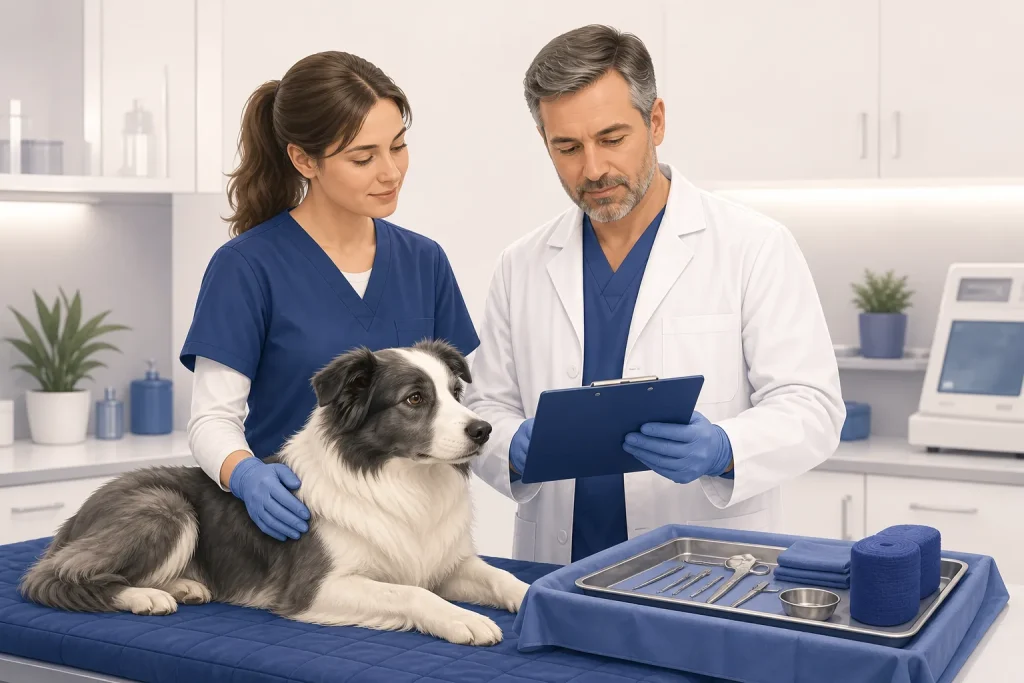
Tumor surgery has two connected outcomes: how the dog recovers and what the removed tissue teaches the veterinary team. A smooth incision is important, but it does not reveal whether a mass was benign, malignant, low or high grade, or completely excised. Plan for both the home-care period and the pathology conversation before surgery day.
Before surgery: close the information gaps
Confirm the procedure, anatomical site, expected incision, and whether reconstruction or a drain is possible. Ask whether cytology, biopsy, staging, or advanced imaging should occur first. In oncologic surgery, AAHA emphasizes that the first planned excision often offers the best chance for complete removal, so margin intent and future options matter.
Give the clinic a complete list of prescriptions, preventives, foods, and supplements with the last dose time. Follow fasting and medication instructions exactly; do not create your own fasting period. Arrange nonslip flooring, an appropriately sized protective collar, a quiet recovery space, transport help, and separation from playful pets.
At discharge: use teach-back
Ask the team to watch you explain the plan in your own words. Confirm:
- each medication’s name, strength, amount, timing, food instructions, and purpose;
- what to do after a missed, spat-out, or vomited dose;
- activity and leash restrictions and when they change;
- incision, drain, bandage, and protective-device instructions;
- expected appetite, energy, bowel, and behavior changes;
- daytime and after-hours contact thresholds;
- recheck date, suture or staple plan, and pathology turnaround process.
Use the original medication containers and a written check-off log. Never add human pain medicine or leftover medication.
The first 24 to 72 hours
Sleepiness, reduced appetite, mild disorientation, or slower movement can occur after anesthesia, but the discharge instructions for this dog take priority over general expectations. Provide a safe, warm, low-traffic area and assist only as directed. Prevent running, stairs, jumping, rough play, and off-leash activity for the prescribed period even if the dog seems energetic.
Offer food and water according to the clinic’s instructions. Report repeated vomiting, persistent poor appetite beyond the expected period, swallowing difficulty, inability to urinate, worsening weakness, or concern about hydration. Do not force-feed or syringe water into a resistant or drowsy dog.
Incision and bandage checks
Look at the incision at least as often as instructed, with clean hands and without pressing it. A standardized photo can show change. ACVS notes that a clean, dry, closed incision with limited early redness or bruising may be expected, while increasing heat, redness, swelling, opening, thick discharge, pus, or foul odor warrants contact. Do not apply peroxide, alcohol, ointment, spray, or herbal product unless the surgeon directs it.
Keep the protective collar on as instructed; a few minutes of licking can damage a closure. Keep bandages dry and do not trim or reposition them yourself. Report slipping, moisture, odor, sores, cold or swollen toes, or sudden discomfort.
Urgent and emergency signs
Call promptly for worsening pain, persistent vocalization, rapidly increasing swelling, ongoing bleeding, incision opening, repeated vomiting or diarrhea, medication error, or any change listed in the discharge sheet. Collapse, difficulty breathing, uncontrolled bleeding, seizures, unresponsiveness, pale gums, or severe distress requires emergency care.
Complete the pathology loop
Set a date to ask for results if the clinic has not called. Request the complete report and ask about exact diagnosis, grade if applicable, mitotic or invasion features, margin status and orientation, and whether additional stains are pending. Discuss whether staging, re-excision, radiation, systemic treatment, or a monitoring plan is indicated. A report of complete margins reduces but does not erase recurrence risk; incomplete margins require a case-specific decision rather than panic.
Medical disclaimer: This checklist is educational and cannot replace the surgeon’s discharge instructions or assess a postoperative complication. Contact the veterinary team whenever recovery differs from the written plan. Use emergency care for collapse, breathing difficulty, uncontrolled bleeding, severe distress, or rapid deterioration.
Sources and further reading
- ACVS: Postoperative Care After Surgery
- AAHA: Therapeutic Modalities—Surgery
- AAHA: Histopathology and Staging
