After Limb Amputation: Prepare the Home Before Discharge
Who this guide is for
Families preparing for a dog to return home after tumor-related forelimb or hindlimb amputation.
Guide summary
Create nonslip routes, safe toileting and lifting plans, controlled access, incision protection, pain observation, and scheduled reassessment of the remaining limbs.
Before you start
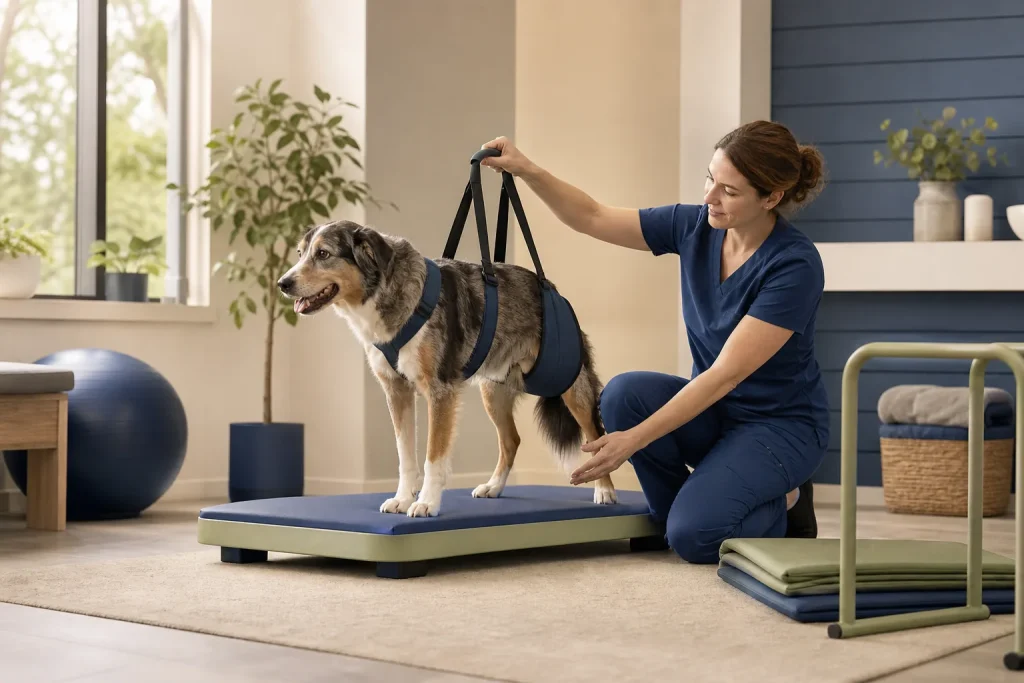
Ask the surgical team to assess the other limbs, spine, body condition, and home layout. Have them demonstrate the approved harness or sling, stair plan, transfer into a vehicle, protective device, and activity limit. Improvised lifting can injure the dog or caregiver. If instructions conflict, pause and ask the treating clinic to reconcile them; do not choose the instruction that seems easiest.
Step-by-step guidance
- Block stairs and slippery areas; place stable nonslip runners from bed to water and toilet exit.
- Use a firm low bed with room to turn and no need to jump.
- Follow the clinic’s assisted-standing and leash-toileting technique, keeping sessions short.
- Record prescribed medicines from the label and pair each entry with comfort and alertness observations.
- Check the incision without touching it and keep the protective device on as directed.
- Attend rechecks for incision, pain, gait, body weight, remaining-limb load, and rehabilitation planning.
What to monitor
Ability to rise, balance, falls, toileting posture, breathing after effort, incision, phantom-limb or neuropathic-type behaviors, sleep, appetite, pain at rest, medication sedation, and strain in the remaining limbs. Write observations in neutral terms with date and time. A home log supports clinical decisions but does not authorize a medication change or replace examination, laboratory testing, imaging, or emergency triage.
When to call a veterinarian
Call for repeated falls, inability to toilet, increasing incision change, uncontrolled pain, persistent vomiting, or excessive sedation. Emergency care is appropriate for collapse, breathing difficulty, uncontrolled bleeding, very pale gums, or sudden inability to stand. When urgent transport is advised, bring the current medication list and call ahead if that does not delay departure.
Checklist
- Nonslip route installed
- Stairs and jumping blocked
- Approved harness or sling
- Low stable recovery bed
- Medication and comfort log
- Recheck and rehabilitation dates