Chemotherapy at Home: Side-Effect and Handling Checklist
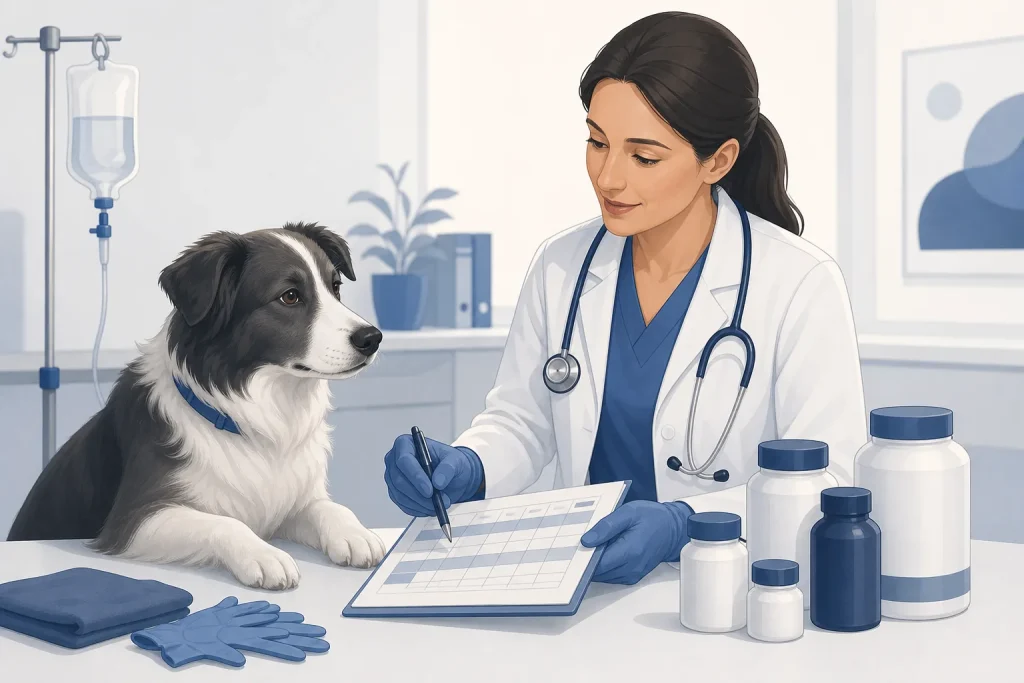
Who this guide is for
Households caring for a dog receiving injectable or oral chemotherapy under veterinary supervision. Drug-specific discharge instructions take priority.
Guide summary
Keep a daily symptom and medication log, follow drug-specific exposure precautions, complete scheduled laboratory monitoring, and use agreed call thresholds early.
Before you start
Save oncology and emergency numbers. Obtain written directions for supportive medicines, temperature checks, oral-drug handling, waste precautions, missed or vomited doses and the expected low-white-cell window. Identify any household member who is pregnant, nursing, trying to conceive, a child or immunocompromised so the team can tailor handling advice.
Step-by-step guidance
- Record treatment and all home doses.
- Observe food intake, nausea behaviors, vomiting, stool, energy and comfort daily.
- Use designated gloves and disposal methods exactly as instructed.
- Do not split, crush or open hazardous dosage forms without authorization.
- Give supportive medicines according to the written plan rather than waiting for severe signs.
- Complete bloodwork and rechecks before the next treatment when scheduled.
What to monitor
Appetite percentage, drooling or lip licking, vomiting count, stool consistency and blood, hydration, urination, energy, pain and temperature only with training. Note the time of each sign relative to treatment.
When to call a veterinarian
Use the clinic's exact thresholds. Common urgent reasons include fever, repeated vomiting or watery diarrhea, inability to keep water down, black or bloody stool, marked lethargy, unusual bruising or bleeding, breathing difficulty, collapse or any accidental human ingestion or exposure.
Checklist
- Treatment date, drug and next laboratory date recorded
- Food intake, vomiting, stool and energy logged daily
- Chemotherapy gloves and disposal supplies available
- Supportive medicines labeled and understood
- Missed/vomited-dose instruction posted
- Oncology and emergency contacts saved