Prepare for a Veterinary Oncology Consultation
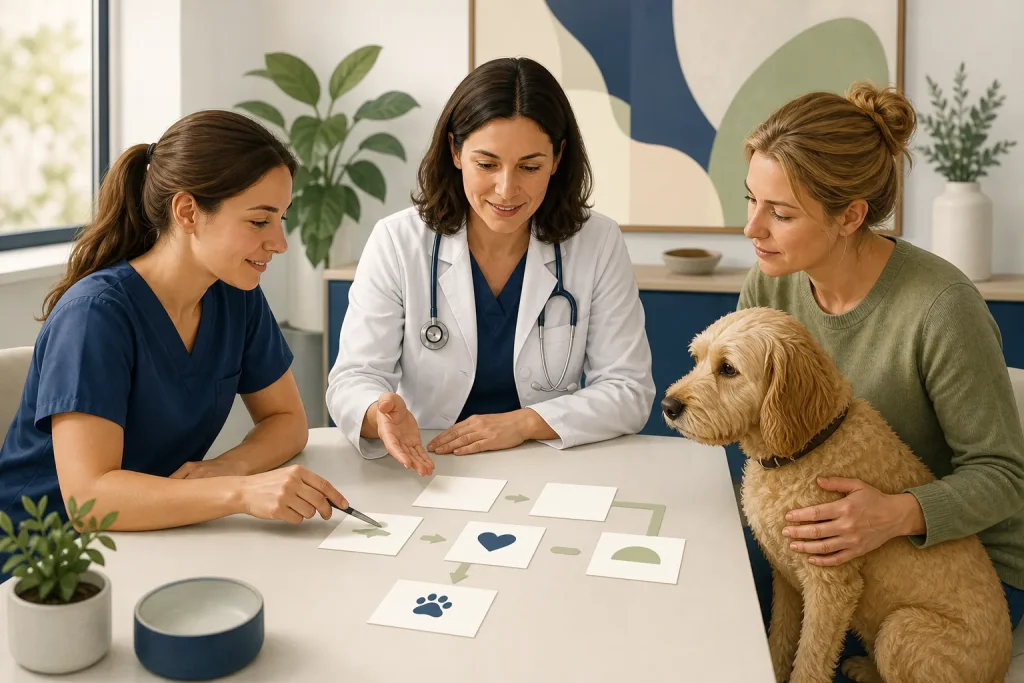
Who this guide is for
Families with a confirmed or strongly suspected tumor who are preparing for a medical, surgical or radiation oncology opinion.
Guide summary
Provide complete records, define practical goals, compare options on the same criteria, and leave with a coordinated written plan. A consultation does not obligate treatment.
Before you start
Confirm whether the service requires a referral and diagnosis. Ask where records and images should be sent and whether food or medication instructions apply that day. Do not fast a diabetic or medically fragile dog without explicit instructions.
Step-by-step guidance
- Prepare a one-page timeline from first sign through tests and treatments.
- List medicines, supplements, allergies and prior adverse reactions.
- Name the dog's favorite activities and current limitations.
- Ask the clinician to separate diagnosis, grade and stage.
- For each option, compare goal, chance and duration of benefit, risks, visits, anesthesia, home tasks and total estimated cost.
- Identify a reassessment date and stopping or changing criteria.
What to monitor
Before the visit, track appetite, weight, pain, mobility, breathing, sleep, toileting and engagement. During the discussion, note uncertainties, prerequisites and which test result would actually change the plan.
When to call a veterinarian
Contact the referring or oncology clinic before the appointment if the dog deteriorates, a medicine changes, an emergency visit occurs or new test results arrive. Use emergency care for collapse, severe breathing difficulty, uncontrolled bleeding, prolonged seizures or severe distress.
Checklist
- Pathology/cytology report and slides location
- Imaging reports and original image files
- Laboratory results and surgery/anesthesia notes
- Medication and supplement list with doses and timing
- Family goals, constraints and top five questions
- Written next step, coordinator and after-hours contact