Supplements and Cancer Care: Build a Label-and-Interaction Inventory
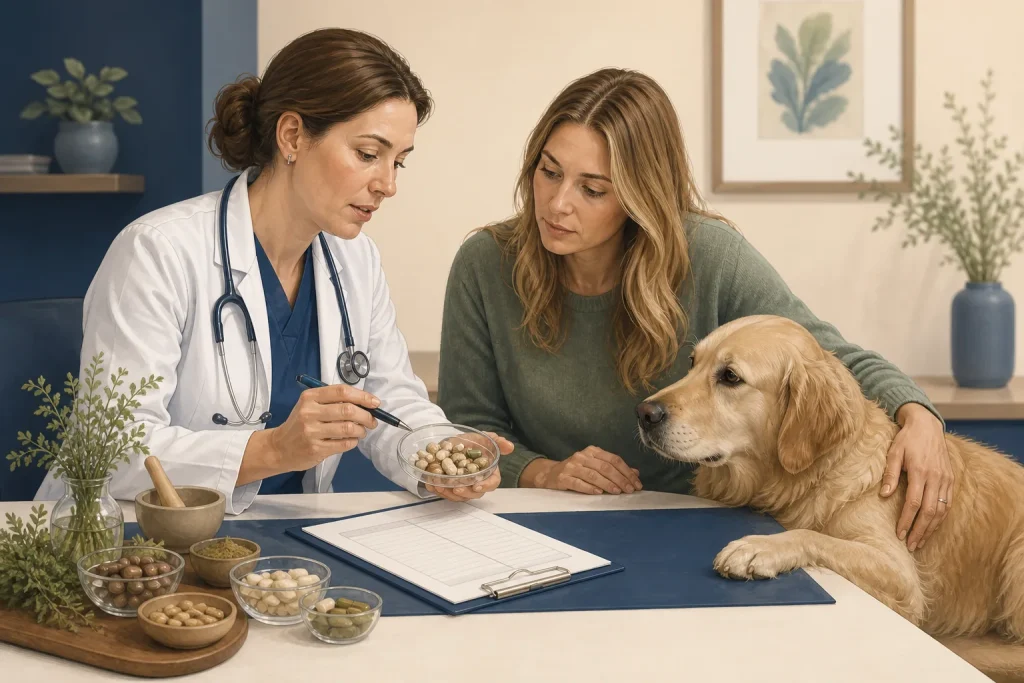
Who this guide is for
Caregivers using or considering vitamins, herbs, mushrooms, oils, powders, traditional formulas, probiotics, treats, or other supplements during canine tumor care.
Guide summary
Photograph complete labels, record actual use, identify duplicates and uncertain ingredients, and review the inventory with the veterinary team before surgery, anesthesia, radiation, or systemic treatment.
Before you start
Collect every container and online order record, including products described as food, calming aids, joint support, immune support, or natural remedies. Do not rely on the front label or brand name. Do not stop a prescribed medicine or replace cancer treatment with a supplement. If instructions conflict, pause and ask the treating clinic to reconcile them; do not choose the instruction that seems easiest.
Step-by-step guidance
- Photograph front, ingredient panel, guaranteed analysis, lot, expiration, manufacturer, and directions.
- Record who gives it, the actual amount and frequency, start date, reason, perceived effect, and any reaction.
- Group duplicate ingredients across foods, treats, powders, and multicomponent formulas.
- Flag proprietary blends, missing amounts, unclear species, contaminant concerns, and products without a traceable manufacturer.
- Ask the veterinarian or pharmacist to review bleeding, liver, kidney, gastrointestinal, anesthesia, and drug-interaction concerns.
- Write “continue,” “pause,” “stop,” or “insufficient information” only after professional review and set a recheck.
What to monitor
Appetite, vomiting, diarrhea, stool color, bruising or bleeding, itching, facial swelling, breathing, energy, urine change, jaundice, and laboratory trends after any authorized change. A temporal association does not prove benefit or harm. Write observations in neutral terms with date and time. A home log supports clinical decisions but does not authorize a medication change or replace examination, laboratory testing, imaging, or emergency triage.
When to call a veterinarian
Contact the veterinary team for suspected reaction, accidental ingestion, a changed formula, or uncertainty before a procedure. Facial swelling, breathing difficulty, collapse, seizures, uncontrolled bleeding, or severe repeated vomiting requires emergency care. When urgent transport is advised, bring the current medication list and call ahead if that does not delay departure.
Checklist
- Complete label photographs
- Actual-use inventory
- Duplicate-ingredient review
- Procedure and medicine timeline
- Veterinary continue-pause-stop decision
- Reaction and recheck plan