Long-Distance Oncology Care: Build a Travel Plan That Protects the Dog
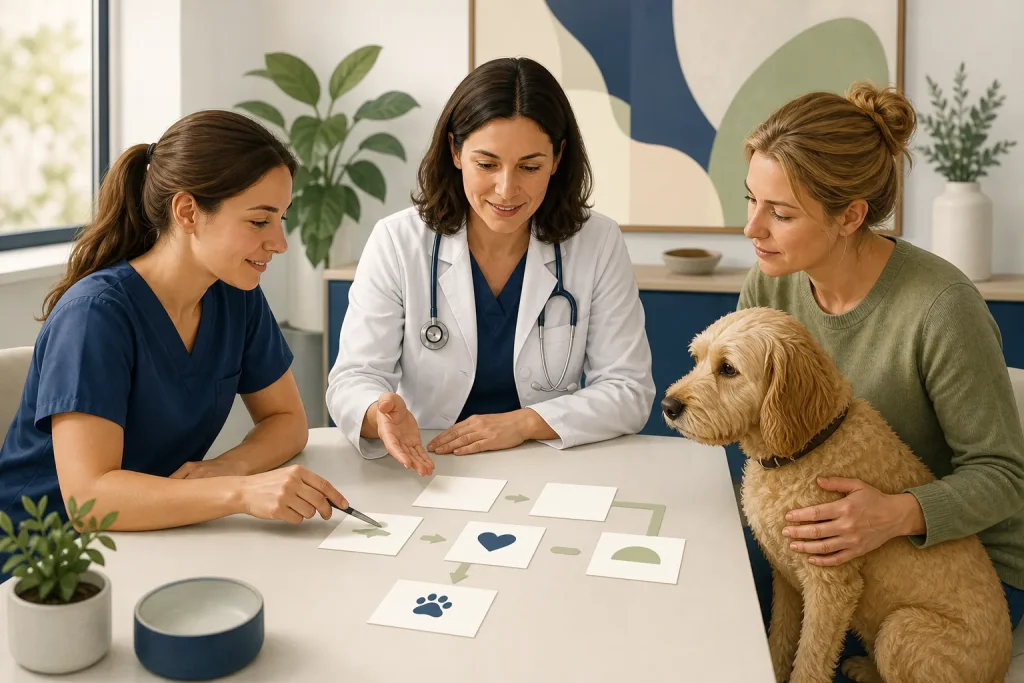
Educational medical disclaimer: This article offers general coordination ideas, not a determination that travel is safe for a particular dog. The local and specialty teams should assess stability and provide patient-specific medication, feeding, and emergency instructions.
A specialty oncology visit may require hours on the road, an overnight stay, or repeated trips. Distance becomes part of the medical plan because it affects stress, fasting, medication timing, monitoring, and access to urgent care. A strong travel plan is not simply a packed bag. It is an agreement about which clinic owns each decision before, during, and after the visit.
Decide what the trip must accomplish
Write one primary question for the appointment: confirm a diagnosis, obtain imaging, review surgery, start treatment, manage an adverse effect, or seek a second opinion. Ask the specialty center what can be completed in one visit and what requires separate scheduling, anesthesia, a pathology review, or an additional estimate. Confirm whether the dog should arrive fasted and whether a procedure is only possible if records and images arrive beforehand.
AAHA referral guidance encourages conversations about goals, likely timelines, costs, and the role of each veterinary team. Travel burden belongs in that discussion. An option with more visits is not automatically wrong, but the family should know how frequency may affect the dog and household.
Create a complete mobile record
Carry a concise summary and make the full record available electronically. Include the current problem, diagnosis and certainty, tumor location, pathology and cytology reports, laboratory trends, original imaging files, procedure notes, allergies, previous drug reactions, and a reconciled medication list. Record the most recent dose times and any medication held for travel. Add the primary veterinarian, specialty center, and nearby emergency hospital contacts.
Do not depend on a portal login working at midnight or on poor cellular service. Keep a downloaded or printed backup of the essentials. The receiving clinic should know who can authorize treatment if the primary owner becomes unreachable.
Ask whether the dog is fit to travel
New breathing difficulty, uncontrolled pain, repeated vomiting, active bleeding, inability to urinate, collapse, prolonged seizure, severe weakness, or rapidly enlarging abdominal distension can make a planned trip unsafe. Call a veterinarian before departure; the closest emergency service may be more appropriate than the distant destination. For a stable dog, ask about motion sickness, previsit anxiety, mobility assistance, oxygen or temperature concerns, and the timing of food, water, and medicine.
Engineer the vehicle setup
- Use a secured carrier or crash-appropriate restraint that does not press on a tumor or incision.
- Provide nonslip support and enough space for the instructed position.
- Control temperature and never leave the dog unattended in a parked vehicle.
- Pack labeled medication, water, cleanup supplies, spare bedding, leash, harness, and any prescribed rescue medicine.
- Plan quiet breaks only as medically appropriate; protect an immunocompromised or painful dog from crowded areas and unfamiliar animals.
Do not sedate a dog for travel with leftover or borrowed medication. A pretravel drug must be prescribed for that dog and compatible with the day’s procedures.
Map emergency options before moving
Identify 24-hour hospitals along the route and near lodging, then verify availability directly. Know the signs that mean stop driving and seek the nearest care. Keep the specialty team aware of estimated arrival if the dog is fragile. FDA emergency guidance directs owners to a veterinarian, emergency animal hospital, or animal poison-control resource depending on the problem; a general online search is not a substitute during deterioration.
Close the loop after the visit
Before leaving, obtain the discharge instructions, updated medication list, pending-test list, recheck timeline, and emergency thresholds. Ask which clinic will call with final results, refill each drug, run interim bloodwork, manage overnight concerns, and decide whether the next treatment proceeds. The specialty report should return promptly to the local veterinarian, and the family should report any change to both teams when responsibilities overlap.
A practical plan can also include a stop rule. If travel stress, symptoms, finances, or function change, the team revisits whether local monitoring, teleconsultation between veterinarians, a modified protocol, or comfort-focused care better serves the dog. Coordination is not a one-time referral; it is the safety net that makes distance manageable.
Sources and further reading
- AAHA client conversations before referral
- AAHA responsibilities before referral
- FDA: who to call in a pet emergency
