Canine Spinal Cord Tumors: Progressive Pain or Weakness Needs Neurologic Localization
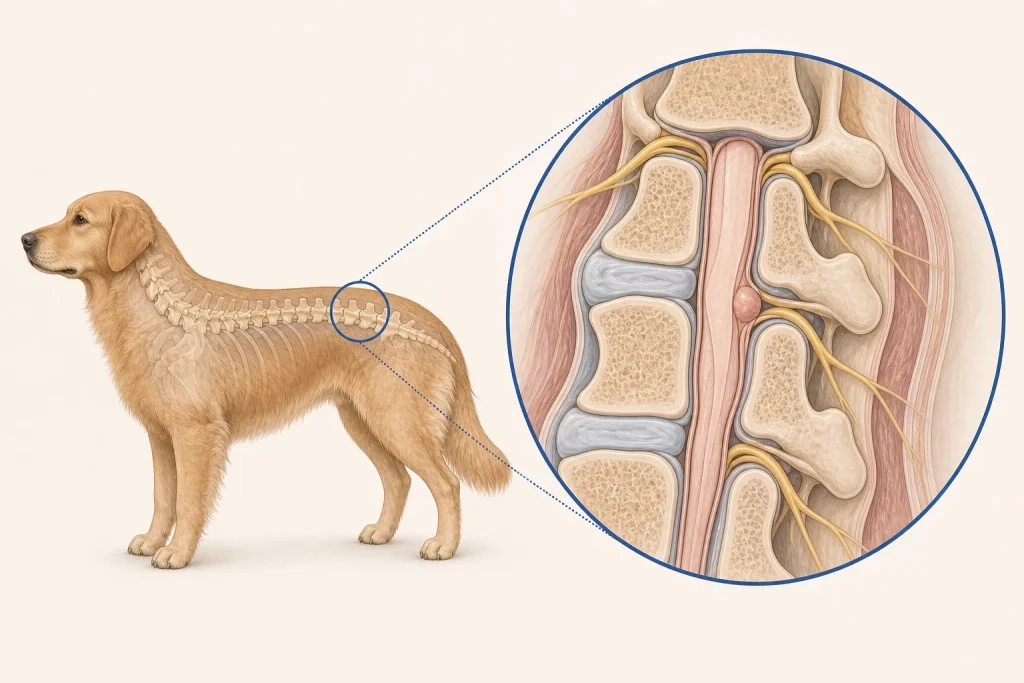
Overview
Spinal Cord Tumors are neoplasms located outside, within the coverings of, or inside the spinal cord. Tumor is only one cause of spinal pain and weakness, and the relation to the cord—extradural, intradural-extramedullary, or intramedullary—changes sampling and treatment options.
Common signs
Owners may notice persistent neck or back pain, reluctance to jump, weakness, scuffing nails, incoordination, one-sided lameness, muscle loss, urinary difficulty, or progressive inability to walk. None of these signs is specific to spinal cord tumors, so a veterinary examination and appropriate testing are needed before naming the problem.
Common locations
Any spinal segment can be affected; neurologic examination helps localize cervical, thoracolumbar, lumbosacral, or nerve-root disease before imaging. Anatomy affects what can be sampled safely, whether a complete first surgery is realistic, and which nearby function needs protection.
Diagnosis discussion
A full neurologic examination, MRI or CT, bloodwork, and biopsy or surgery in selected cases may be needed. Imaging also looks for vertebral disease, disc disease, infection, and tumors extending from surrounding tissue. The diagnostic plan should answer a decision: whether tissue type, local extent, stage, or patient health will change the next option. An imaging impression is not the same as a histologic diagnosis.
Urgency and when to contact a veterinarian
Arrange a prompt veterinary appointment for persistent or progressive signs. Seek emergency veterinary care for any of these signs: sudden paralysis, inability to urinate, loss of deep pain response as assessed by a veterinarian, uncontrolled pain, breathing weakness, or rapid progression. Call ahead when possible so the receiving team can prepare; do not delay emergency transport to take photographs or complete a log.
Treatment discussion
Surgery, radiation, systemic therapy for selected histologies, pain control, mobility support, rehabilitation, or palliative care may be considered. Spinal stability and the dog’s ability to urinate and move safely are immediate planning priorities. The team should explain the goal of each option—diagnosis, local control, systemic control, symptom relief, or emergency stabilization—along with likely burdens, costs, travel, rechecks, and alternatives.
Home monitoring
Keep one dated home record of pain at rest, ability to rise, paw placement, falls, nail scuffing, toileting, urine stream, sleep, appetite, and medication sedation using short dated videos. Use the same measurement or observation method each time and share trends with the veterinary team. Home tracking supports planned rechecks; it cannot determine grade, margins, or metastasis.
Questions to ask your veterinarian
- Where is the lesion localized relative to the cord and vertebrae?
- Which differentials cannot be separated by imaging alone?
- Would surgery improve stability, diagnosis, decompression, or all three?
- What mobility or bladder change requires immediate reassessment?