Canine Appendicular Osteosarcoma: Persistent Limb Pain Is a Diagnostic Signal
Overview
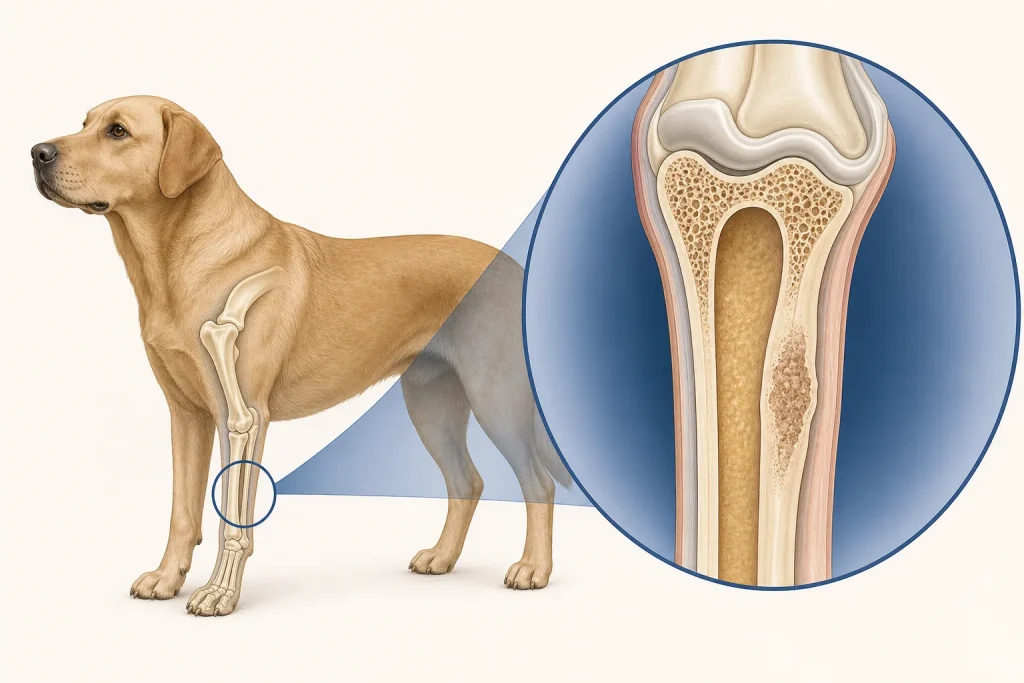
Osteosarcoma is the most common primary bone tumor in dogs. Limb tumors are painful and biologically aggressive, with a substantial risk of microscopic spread even when staging images do not show metastasis.
Common signs
Progressive or recurrent lameness, firm swelling over a bone, pain on movement or touch, reluctance to use the limb and, occasionally, a pathologic fracture after minimal trauma.
Common locations
Long bones of the limbs are common sites; osteosarcoma can also arise in the jaw, skull, ribs, spine or pelvis, where signs and treatment options differ.
Diagnosis discussion
Orthogonal radiographs of the affected area are a usual first test. Bloodwork, chest imaging and sometimes additional bone imaging assess general health and detectable spread. Fine-needle sampling or a carefully planned bone biopsy may be recommended to confirm tumor type while preserving later surgical options.
Urgency and when to contact a veterinarian
New persistent lameness and focal bony swelling need a prompt visit. Sudden non-weight-bearing lameness, severe pain or suspected fracture is urgent; restrict movement and call a veterinarian or emergency hospital.
Treatment discussion
Options can include amputation or selected limb-sparing procedures for local control, chemotherapy for metastatic risk, radiation and multimodal pain management. A comfort-focused plan is also active care. Suitability depends on tumor site, orthopedic and neurologic status, other illnesses and family goals.
Home monitoring
Use nonslip flooring and follow activity restrictions. Record pain behaviors, sleep, ability to rise and toilet, appetite and medication effects. Do not massage the swelling or let the dog jump, and never use human NSAIDs unless specifically prescribed by a veterinarian.
Questions to ask your veterinarian
- How likely is a pathologic fracture, and what activity limits are needed now?
- Is tissue confirmation recommended before choosing local treatment?
- What local-control and systemic options fit this dog's mobility and medical status?
- What written pain and emergency plan should we use at home?