Canine Bladder Tumors: When Urinary Signs Persist or Recur
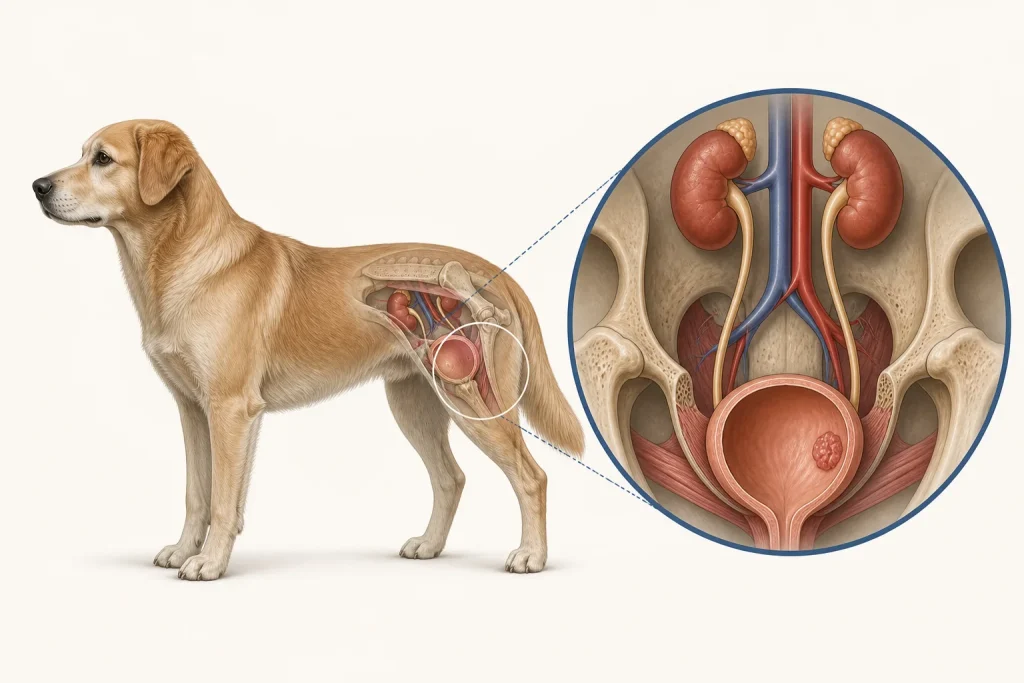
Overview
Tumors of the canine urinary bladder are often epithelial cancers such as urothelial carcinoma, but infection, stones, inflammation, and other disorders can cause similar signs. Repeated treatment without a diagnostic plan can delay clarification.
Common signs
Straining, frequent attempts to urinate, blood in urine, accidents indoors, discomfort, or recurrent apparent urinary infections may be seen. Some dogs have both infection and a mass, so a positive culture does not automatically settle the whole question.
Common locations
Bladder tumors may develop near the trigone, urethra, or ureter openings, where even a modest lesion can affect urine flow. Regional lymph nodes and other organs may be assessed when staging would change treatment.
Diagnosis discussion
A veterinarian may use urinalysis, culture, ultrasound or other imaging, and selected urine-based molecular testing. Cytology or histopathology may be needed, but sampling method is planned carefully because location and seeding risk can matter. The diagnostic pathway should be individualized.
Urgency and when to contact a veterinarian
Repeated straining with little or no urine, a painful distended abdomen, vomiting, profound weakness, or collapse may indicate obstruction or another emergency. Persistent blood or recurrent urinary signs need a prompt appointment even when the dog still seems comfortable.
Treatment discussion
Depending on diagnosis and anatomy, discussion may include anti-inflammatory medication, chemotherapy or targeted therapy, radiation or intervention at selected centers, surgery for selected locations, urinary-flow procedures, and palliative care. None is appropriate without veterinary assessment and monitoring.
Home monitoring
Keep a daily record of urine stream, number of attempts, urine color, accidents, pain, water intake, appetite, vomiting, stool, and all medications. A sudden fall in urine output should not wait for the next scheduled recheck.
Questions to ask your veterinarian
- Could infection, stones, and a tumor be present together?
- Which sampling approach is safest for this location?
- What staging information would change the treatment choice?
- What specific urine-flow change means we should seek emergency care?