Canine Cutaneous Lymphoma: Persistent Red, Scaly, or Nodular Skin Disease
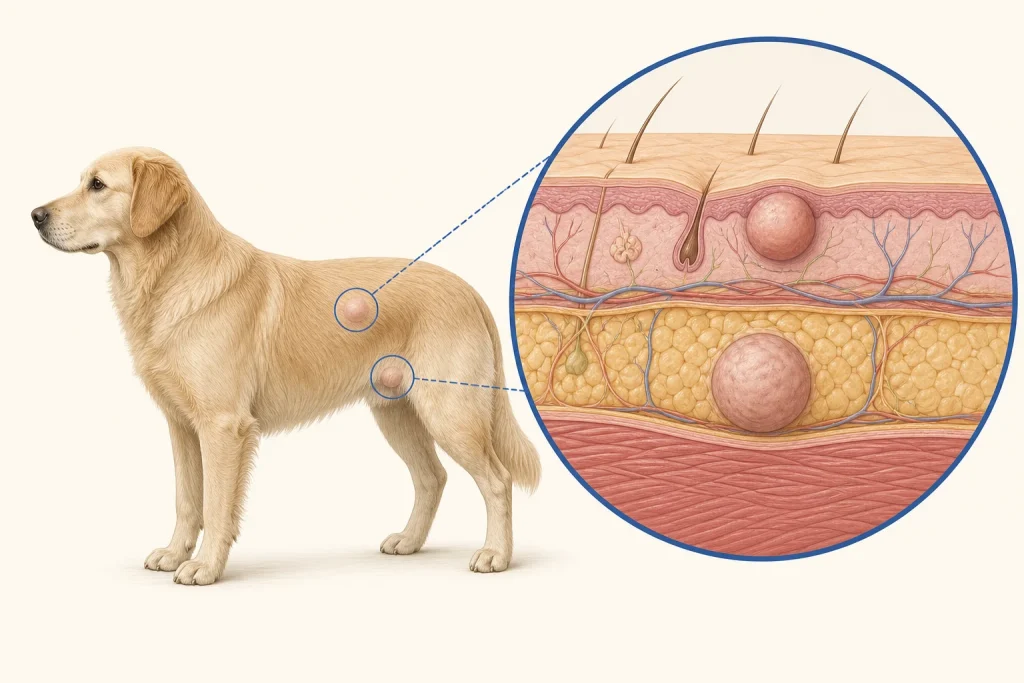
Overview
Cutaneous lymphoma is a cancer of lymphocytes involving the skin. It can produce diffuse redness and scaling, plaques, nodules or ulcers and may resemble allergy, infection or autoimmune disease for some time.
Common signs
Progressive redness, scaling, crusting, loss of pigment, plaques, nodules, ulcers, itching or pain. The mouth, lips or footpads may also be affected.
Common locations
Skin may be affected at one site or many; mucocutaneous junctions, oral tissues and footpads can be involved. Internal disease assessment depends on subtype and clinical findings.
Diagnosis discussion
Multiple, adequately deep biopsies from representative untreated lesions are commonly needed. Histopathology plus immunophenotyping helps classify the disease. Bloodwork, lymph-node sampling and imaging may be selected to assess extent and treatment fitness.
Urgency and when to contact a veterinarian
Arrange a prompt visit for progressive skin disease that is atypical or fails standard therapy. Same-day care is appropriate for severe pain, widespread infection-like illness, inability to eat, dehydration or rapidly worsening lesions.
Treatment discussion
Treatment is individualized by subtype, distribution and health status and may include systemic therapy, selected local treatment and aggressive symptom control. The care team should define goals, expected response and stop rules.
Home monitoring
Track skin comfort, sleep, appetite, lesion distribution, footpad pain, oral involvement and medication effects. Use photos of the same sites and avoid starting new topical agents before biopsy unless directed.
Questions to ask your veterinarian
- Which lesions are best to biopsy, and should medications be paused first?
- What subtype and immunophenotype does pathology support?
- Is disease limited to skin or is additional staging useful?
- How will itch, pain, infection and treatment effects be separated?