Canine Axial Osteosarcoma: Bone Cancer Beyond the Limbs
Overview
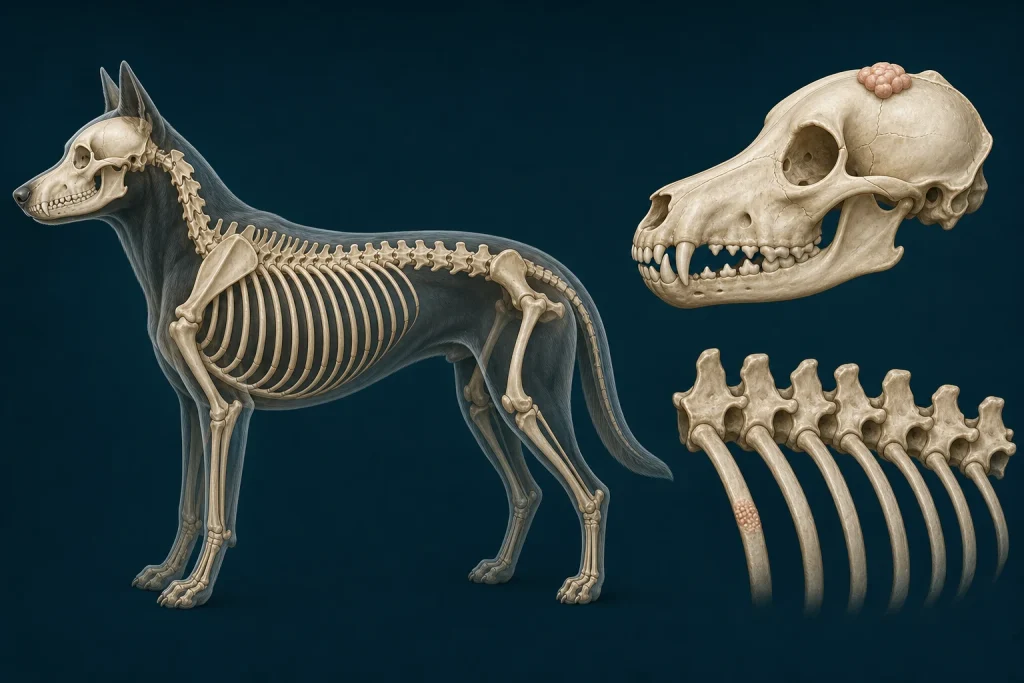
Axial osteosarcoma arises in bones of the skull, jaw, ribs, spine or pelvis rather than the limbs. Its local effects and surgical options differ by site, while malignant potential and the need for staging remain important.
Common signs
A hard enlarging swelling, oral pain, loose teeth, altered breathing, back pain, weakness, difficulty toileting or reduced activity depending on the involved bone.
Common locations
Jaw and skull, ribs, vertebrae and pelvis. Each site has distinct neurologic, respiratory, eating or mobility risks.
Diagnosis discussion
Radiographs and CT or MRI define anatomy; biopsy confirms tumor type and should be planned with definitive local treatment in mind. Chest imaging and other staging tests assess detectable spread and general health.
Urgency and when to contact a veterinarian
Promptly assess persistent focal bone pain or a hard swelling. Urgent care is needed for breathing difficulty, sudden neurologic loss, inability to stand, suspected fracture, uncontrolled pain or inability to urinate or defecate.
Treatment discussion
Surgery may be possible for selected jaw, rib or other accessible tumors; radiation can support local control or pain relief when complete surgery is not feasible. Systemic therapy discussions depend on pathology, stage and goals.
Home monitoring
Record pain, appetite, breathing, gait, toileting and sleep. Restrict activity according to fracture or spinal risk and never add human pain medicine.
Questions to ask your veterinarian
- Which imaging is needed to understand the local anatomy?
- Is tissue confirmation required before radiation or surgery?
- What local functions are at risk from tumor or treatment?
- How are metastatic risk and pain being addressed separately?