Canine Intestinal Adenocarcinoma: Persistent Gastrointestinal Signs Need Localization
Overview
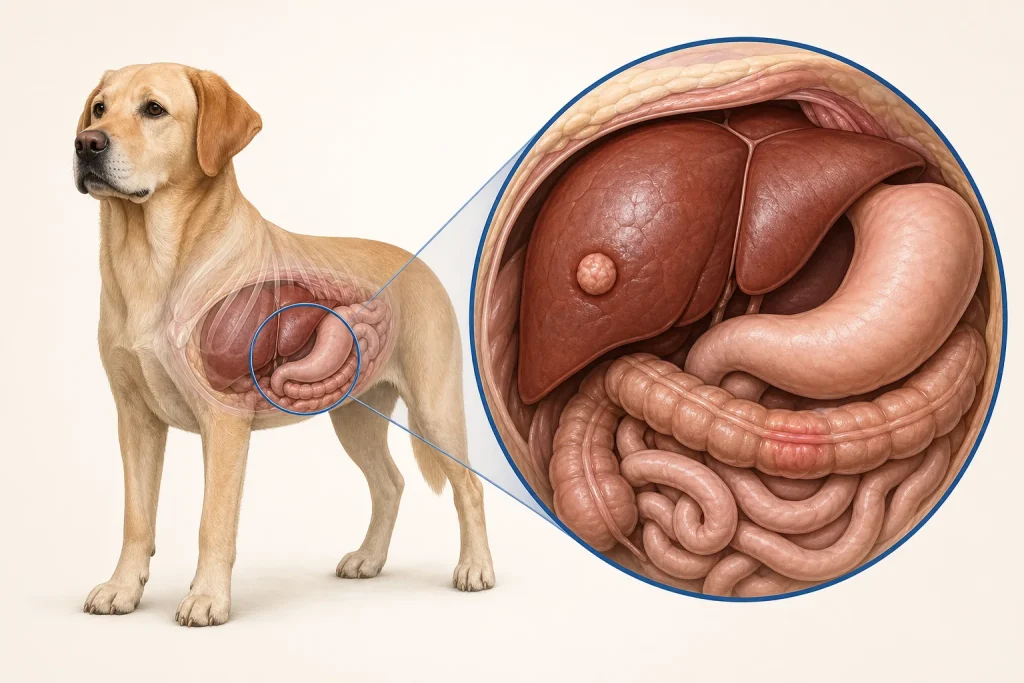
Intestinal adenocarcinoma is a malignant epithelial tumor of the bowel. It can narrow the intestinal lumen, invade the wall and spread to lymph nodes or other organs; chronic inflammation and other cancers can cause similar signs.
Common signs
Vomiting, diarrhea, weight loss, reduced appetite, abdominal discomfort, dark or bloody stool, straining or intermittent obstruction. Blood protein or red-cell changes may occur.
Common locations
Small intestine or large intestine, with possible regional lymph-node, abdominal or distant spread. Exact segment affects signs and surgical options.
Diagnosis discussion
Bloodwork and fecal or other tests evaluate consequences and mimics. Ultrasound or CT localizes wall thickening and nodes. Endoscopic biopsy may reach some lesions, while full-thickness surgical biopsy or resection can be required for a definitive diagnosis.
Urgency and when to contact a veterinarian
Persistent gastrointestinal signs merit prompt assessment. Repeated unproductive vomiting, a painful distended abdomen, collapse, pale gums, black stool or inability to keep water down requires urgent care.
Treatment discussion
Surgical removal is often the main local-control option for a localized resectable lesion or obstruction. Histopathology, margins, node findings and stage guide systemic-treatment and follow-up discussions.
Home monitoring
Track food and water intake, vomiting, stool frequency and color, body weight, abdominal comfort and medication effects. Follow postoperative diet and activity instructions precisely.
Questions to ask your veterinarian
- Where is the lesion, and is obstruction present or imminent?
- Which biopsy route is most likely to give a full-thickness diagnosis?
- Will regional lymph nodes be sampled at surgery?
- What feeding and emergency plan should we use before treatment?