Canine Prostate Tumors: Urinary, Bowel, and Gait Clues
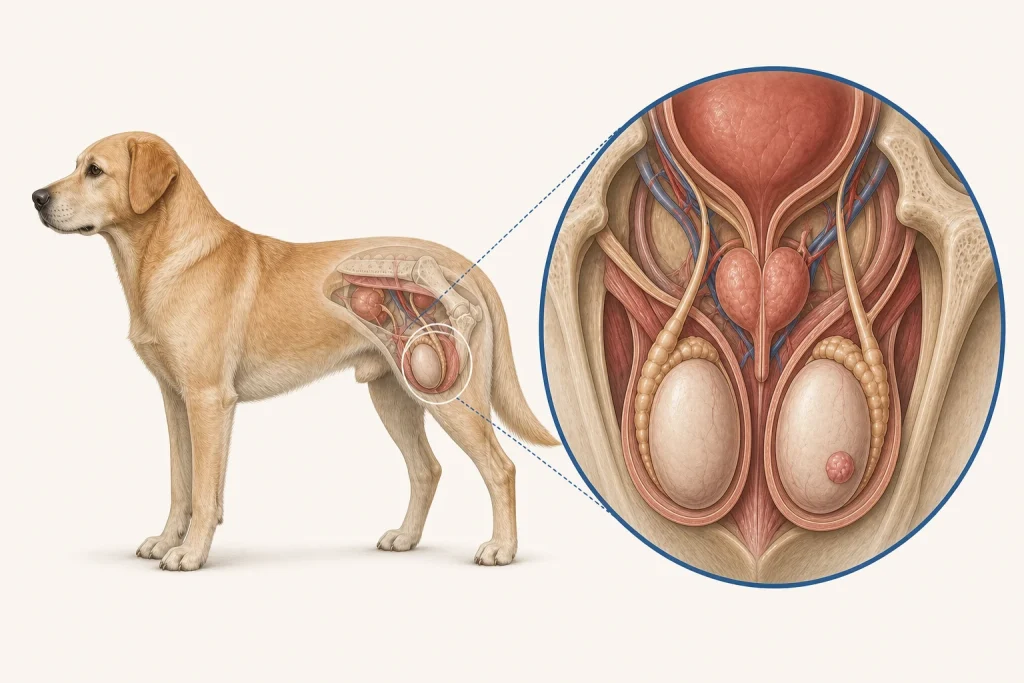
Overview
Canine prostatic neoplasia is uncommon but can be locally invasive and may spread. Benign prostatic enlargement, prostatitis, cysts, and urinary disease can produce overlapping signs, so prostate size or neuter status alone does not establish the diagnosis.
Common signs
Owners may notice straining to urinate or defecate, blood in urine, ribbon-like stool, recurrent urinary infection, abdominal or pelvic discomfort, weight loss, or stiffness and pain in the hind end. Signs can reflect local pressure, infection, or metastatic disease.
Common locations
The prostate surrounds the proximal urethra below the bladder. Local extension can involve the urethra, bladder neck, colon, or regional tissues; lymph nodes, lungs, and bone may be considered in staging.
Diagnosis discussion
Rectal examination, urinalysis and culture, bloodwork, ultrasound or CT, and carefully selected cytology or biopsy may be discussed. Imaging describes extent but tissue or validated cytologic evidence is needed to classify disease. Sampling route and risks should be planned by the veterinary team.
Urgency and when to contact a veterinarian
Inability to pass urine, repeated unproductive straining, severe pain, collapse, or rapidly worsening weakness requires urgent care. Persistent urinary or defecation difficulty deserves a prompt examination.
Treatment discussion
Treatment is individualized and may involve medical therapy, radiation, chemotherapy, interventional procedures to preserve urine flow, surgery in selected circumstances, or palliative pain management. The conversation should distinguish tumor control from relief of obstruction and comfort.
Home monitoring
Track urine stream, frequency, straining, stool shape, pain, gait, appetite, weight, temperature if directed, and medication tolerance. Do not add human pain relievers or anti-inflammatory drugs.
Questions to ask your veterinarian
- What noncancer conditions still fit these signs?
- How can we obtain a diagnosis without compromising later options?
- Is bone or lymph-node staging likely to change the plan?
- How will we protect urine flow and manage pain if local disease progresses?