Canine Renal Tumors: A Kidney Mass Needs Context and Staging
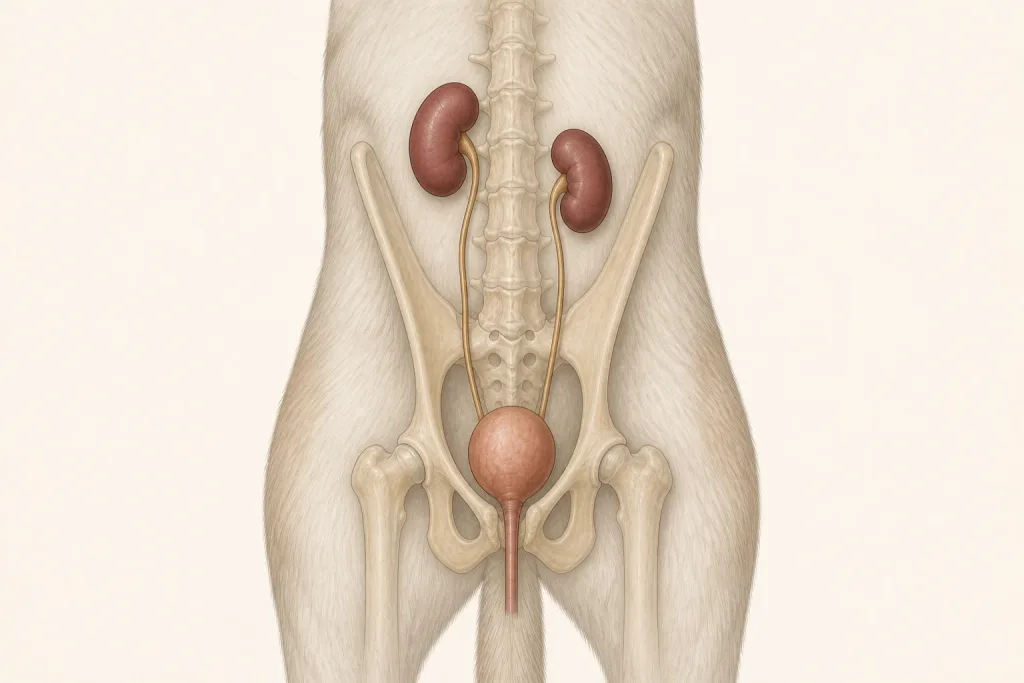
Overview
Primary kidney tumors are uncommon in dogs, and a renal mass can also represent a cyst, abscess, hematoma, benign growth, or cancer that has spread from elsewhere. Imaging findings must be interpreted with kidney function and the whole patient.
Common signs
Blood in urine, abdominal discomfort, reduced appetite, weight loss, vomiting, lethargy, increased thirst or urination, or an abdominal mass may occur. Some kidney masses are incidental and cause no obvious signs.
Common locations
Disease may involve one kidney, both kidneys, the renal pelvis, nearby vessels, ureter, regional lymph nodes, or distant sites. The function of the opposite kidney is particularly important when surgery is considered.
Diagnosis discussion
The workup may combine blood pressure, bloodwork, urinalysis and culture, abdominal ultrasound or CT, chest imaging, and selected sampling. Not every renal mass should be aspirated; the team weighs bleeding, seeding, and whether a sample will change management.
Urgency and when to contact a veterinarian
Collapse, very pale gums, severe abdominal pain, inability to urinate, repeated vomiting with weakness, or rapid deterioration needs urgent care. Visible blood in urine or progressive systemic signs need a prompt examination.
Treatment discussion
Removal of an affected kidney may be discussed for a localized operable mass when the other kidney functions adequately. Systemic treatment, management of hypertension or kidney impairment, or palliative care may be considered according to diagnosis and spread.
Home monitoring
Track urine color and volume, thirst, appetite, vomiting, weight, energy, pain, and prescribed medication effects. Follow the clinic’s schedule for kidney values, blood pressure, urinalysis, and imaging rather than relying on outward appearance.
Questions to ask your veterinarian
- How well is each kidney functioning?
- Does imaging suggest vessel invasion or disease elsewhere?
- Would sampling change the plan, and what are its risks?
- If nephrectomy is considered, how will kidney function be monitored afterward?