Canine Cardiac and Heart-Base Tumors: When a Mass Affects Circulation
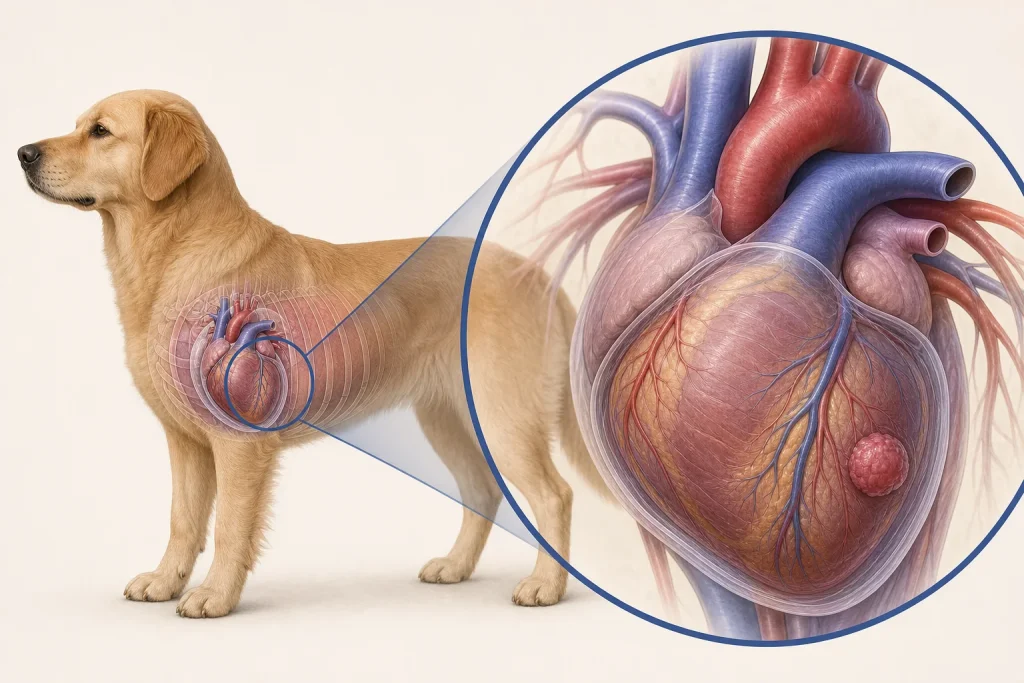
Overview
Tumors can arise within the heart, from the heart base, or nearby structures. Hemangiosarcoma, chemodectoma and other diagnoses differ in behavior, but any mass can affect filling, rhythm, blood flow, or cause fluid around the heart.
Common signs
Weakness, exercise intolerance, fainting or collapse, rapid or labored breathing, cough, reduced appetite, abdominal swelling, pale gums, or an abnormal rhythm may occur. Some masses are found incidentally.
Common locations
Lesions may involve the right atrium, heart base, pericardium, valves, myocardium, or adjacent mediastinum. Location often guides the differential and whether a procedure is feasible.
Diagnosis discussion
Emergency stabilization may precede diagnosis. Echocardiography is central for a heart mass or pericardial effusion; chest imaging, CT, ECG, bloodwork, fluid analysis, or selected tissue sampling may add information. Fluid cytology can be nondiagnostic.
Urgency and when to contact a veterinarian
Collapse, fainting, labored breathing, very pale or blue gums, a distended abdomen with weakness, or inability to settle is an emergency. Transport instructions should come from an emergency clinic when possible.
Treatment discussion
Pericardial drainage may be lifesaving but does not treat the underlying tumor. Surgery, pericardiectomy, radiation, systemic therapy, monitoring, or palliative care may be discussed according to location, diagnosis, recurrence of fluid, and patient stability.
Home monitoring
When the clinic recommends it, record sleeping respiratory rate, episodes of weakness or collapse, appetite, gum color, abdominal size, activity tolerance, and medication effects. Do not exercise a dog with unexplained fainting.
Questions to ask your veterinarian
- Is there fluid around the heart and does it need immediate drainage?
- Which mass locations are most likely based on echocardiography?
- Would CT, surgery, or tissue sampling change treatment?
- What home sign means we should go directly to emergency care?