Canine Multiple Myeloma: Bone Marrow, Abnormal Protein, and Organ Effects Connect the Diagnosis
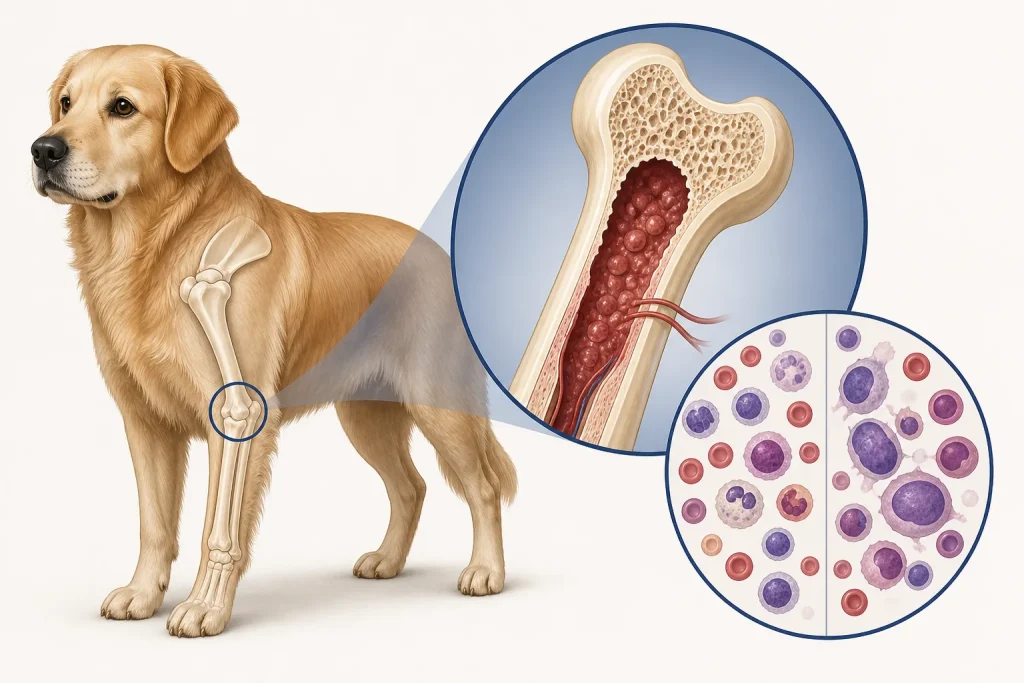
Overview
Multiple Myeloma is a plasma-cell cancer involving bone marrow and often producing an abnormal monoclonal immunoglobulin. It can affect blood viscosity, kidneys, bones, immunity, clotting, and calcium; no single elevated protein value is enough to establish the diagnosis.
Common signs
Owners may notice weakness, lameness or bone pain, recurrent infection, bleeding, vision change, increased thirst or urination, weight loss, neurologic change, or abnormal blood protein found during testing. None of these signs is specific to multiple myeloma, so a veterinary examination and appropriate testing are needed before naming the problem.
Common locations
Bone marrow is central, with possible lytic bone lesions and effects in kidneys, eyes, nervous system, spleen, liver, or blood vessels from abnormal protein. Anatomy affects what can be sampled safely, whether a complete first surgery is realistic, and which nearby function needs protection.
Diagnosis discussion
CBC and chemistry, serum protein electrophoresis, urine protein testing, imaging for bone lesions, marrow sampling, eye examination, and tests that distinguish other monoclonal gammopathies may be recommended. The diagnostic plan should answer a decision: whether tissue type, local extent, stage, or patient health will change the next option. An imaging impression is not the same as a histologic diagnosis.
Urgency and when to contact a veterinarian
Arrange a prompt veterinary appointment for persistent or progressive signs. Seek emergency veterinary care for any of these signs: sudden blindness, seizures, collapse, uncontrolled bleeding, suspected fracture, inability to stand, very pale gums, or breathing difficulty. Call ahead when possible so the receiving team can prepare; do not delay emergency transport to take photographs or complete a log.
Treatment discussion
Systemic therapy and supportive care for pain, kidneys, infection, high calcium, anemia, bleeding, or hyperviscosity are individualized. Treatment response is followed with both clinical function and objective protein and marrow-related measures. The team should explain the goal of each option—diagnosis, local control, systemic control, symptom relief, or emergency stabilization—along with likely burdens, costs, travel, rechecks, and alternatives.
Home monitoring
Keep one dated home record of pain and gait, vision, bruising or bleeding, thirst, urine volume, appetite, weight, infection signs, medication effects, and scheduled protein and blood-count trends. Use the same measurement or observation method each time and share trends with the veterinary team. Home tracking supports planned rechecks; it cannot determine grade, margins, or metastasis.
Questions to ask your veterinarian
- Which criteria support multiple myeloma rather than another monoclonal gammopathy?
- Are kidneys, bones, eyes, calcium, or blood viscosity currently affected?
- Which marker will be used to measure treatment response?
- What pain, vision, or bleeding change requires immediate assessment?