Canine Oral Fibrosarcoma: A Subtle Gum Mass Can Extend Beyond Its Surface
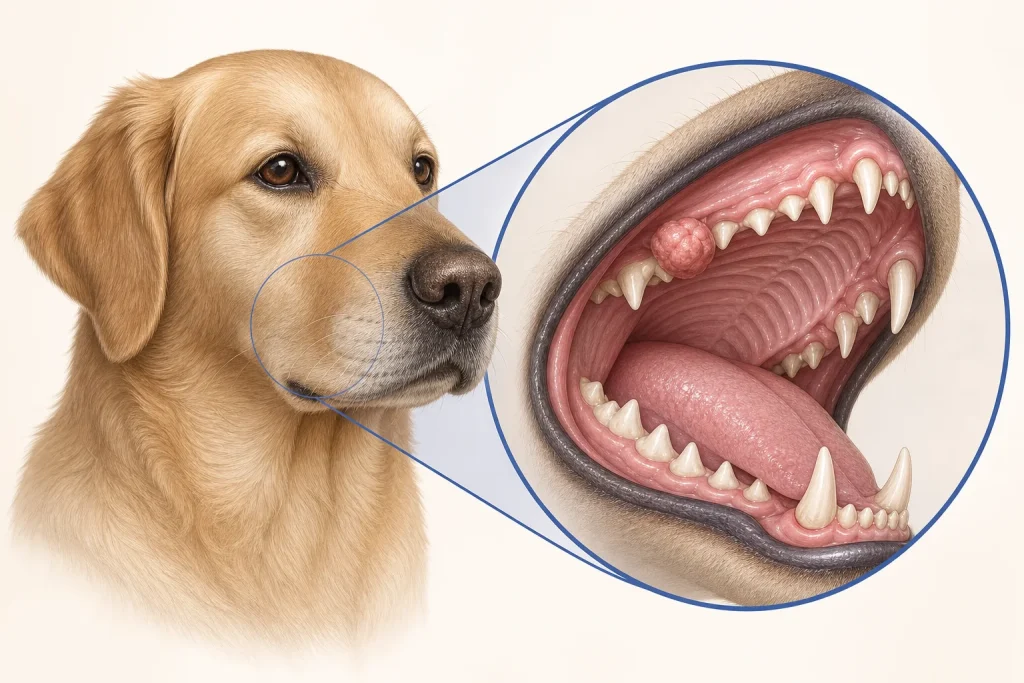
Overview
Oral fibrosarcoma is a connective-tissue cancer that may look smooth and relatively small while extending into deeper oral tissues or bone. A benign-looking surface therefore does not establish low risk.
Common signs
A firm gum or palate mass, bad breath, drooling, oral bleeding, loose teeth, facial asymmetry, reluctance to chew or weight loss.
Common locations
Gums, hard palate and other connective tissues of the mouth, with possible invasion of jaw or facial structures.
Diagnosis discussion
Incisional biopsy is often used to establish the diagnosis before definitive treatment. CT and dental imaging define bone and soft-tissue extent; chest imaging and regional-node assessment may be included in staging.
Urgency and when to contact a veterinarian
Arrange prompt assessment for a persistent oral swelling or unexplained loose tooth. Heavy bleeding, breathing difficulty, inability to eat or drink, or severe pain needs urgent care.
Treatment discussion
Wide surgery is commonly considered for local control when anatomy allows. Radiation may be recommended for difficult sites or residual disease; systemic treatment is a case-specific oncology discussion.
Home monitoring
Track appetite, chewing side, meal time, drooling, bleeding, facial contour and body weight. After treatment, watch the scar and mouth only as the clinician demonstrates.
Questions to ask your veterinarian
- Is the biopsy deep and representative enough for diagnosis?
- What does CT show beyond the visible edge?
- What functional and cosmetic changes are expected from surgery?
- Would radiation be planned before or after surgery?