Treatment, Medication & Supplement Directory
A comprehensive encyclopedia of medicines, chemotherapy protocols, targeted and immune therapies, supplements, Chinese herbal formulas, Traditional Chinese Veterinary Medicine (TCVM) approaches, and supportive-care options used or discussed in canine and feline tumor care. Directory entries explain what each option is, where it may fit, its evidence and safety boundaries, and what to discuss with a veterinarian; they are references, not individualized prescriptions or rankings.
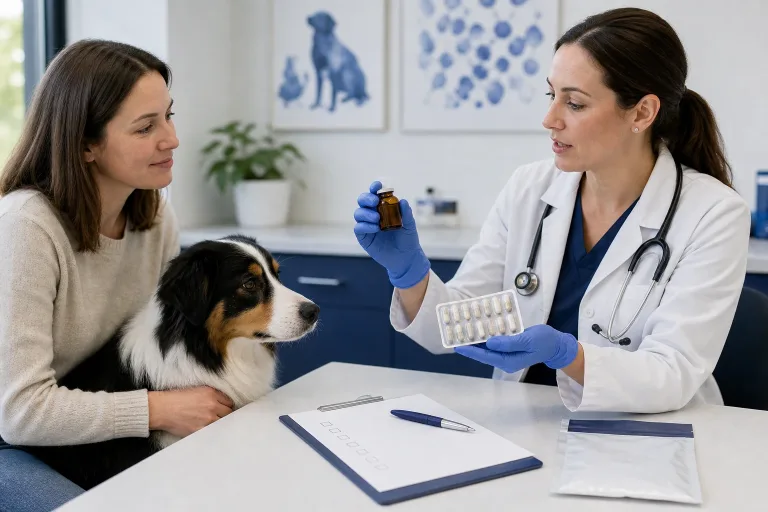
Lomustine (CCNU) in Veterinary Oncology: Delayed-Toxicity Safety Profile
Lomustine, also called CCNU, is an oral nitrosourea chemotherapy drug used by veterinary oncologists for selected cancers. Use in dogs and cats is generally extra-label and requires a…
Read more
Cyclophosphamide in Cancer Protocols: Bladder and Marrow Safety
Cyclophosphamide is an alkylating chemotherapy used in selected veterinary protocols, with blood-count, urinary, gastrointestinal, and household-safety considerations.
Read moreChlorambucil: Oral Chemotherapy Is Still Hazardous Medicine
Chlorambucil is an oral alkylating chemotherapy used in selected slow-growing blood cancers and other protocols, with cumulative marrow and handling considerations.
Read moreMelphalan in Veterinary Oncology: Cumulative Marrow-Risk Discussion
Melphalan is an alkylating antineoplastic medicine used in selected veterinary cancers and requires individualized blood-count, gastrointestinal, and handling plans.
Read moreMetronomic Chemotherapy: Goal, Evidence, and Handling Boundary
Metronomic therapy uses regularly scheduled cytotoxic medication in selected plans; it remains prescription hazardous-drug treatment and is not simply gentle chemotherapy.
Read moreHome Handling of Oral Chemotherapy and Patient Waste
Families need drug-specific written instructions for receiving, storing, administering, cleaning, laundering, and disposing of chemotherapy and contaminated patient waste.
Read more
Maropitant for Nausea and Vomiting Support in Cancer Care
Maropitant is a prescription antiemetic used for selected dogs and cats, but controlling vomiting does not identify or resolve every cause of nausea or gastrointestinal disease.
Read moreOndansetron for Persistent Nausea: Role and Interaction Review
Ondansetron is a serotonin-receptor antiemetic used by veterinarians for selected nausea and vomiting, often when one pathway or medicine is not enough.
Read moreMirtazapine for Appetite Support: Nausea-First and Interaction Boundary
Mirtazapine may support appetite in selected dogs or cats, but nausea, pain, obstruction, oral disease, diet, organ function, and serotonergic interactions need attention first.
Read moreCapromorelin for Appetite Support: Cause, Species, and Monitoring
Capromorelin is a ghrelin-receptor agonist used in species- and product-specific veterinary appetite settings; it does not replace evaluation of why intake fell.
Read more
Antibiotic Use in Immunocompromised Oncology Patients
Cancer or chemotherapy can increase infection concern, but fever, low cell counts, wounds, diarrhea, and urinary signs do not justify automatic or leftover antibiotic use.
Read moreChemotherapy-Associated Diarrhea: Support Without Automatic Antibiotics
Diarrhea after cancer treatment needs severity, hydration, blood-count, infection, diet, medicine, and obstruction review rather than a one-size-fits-all remedy.
Read more