Treatment, Medication & Supplement Directory
A comprehensive encyclopedia of medicines, chemotherapy protocols, targeted and immune therapies, supplements, Chinese herbal formulas, Traditional Chinese Veterinary Medicine (TCVM) approaches, and supportive-care options used or discussed in canine and feline tumor care. Directory entries explain what each option is, where it may fit, its evidence and safety boundaries, and what to discuss with a veterinarian; they are references, not individualized prescriptions or rankings.
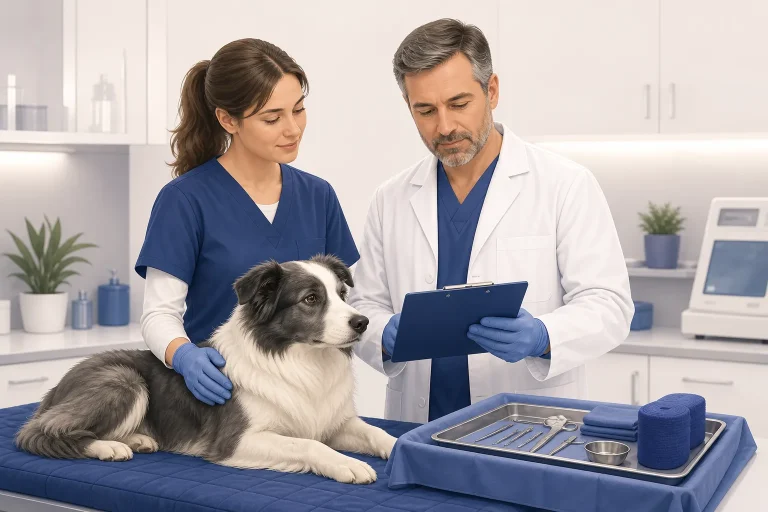
Cancer Surgery: Biopsy, Excision, and Margin Planning
Surgery may obtain a diagnosis, remove a localized tumor, relieve obstruction or pain, or reduce complications. The first operation can determine later options, so biopsy route, intended margins,…
Read more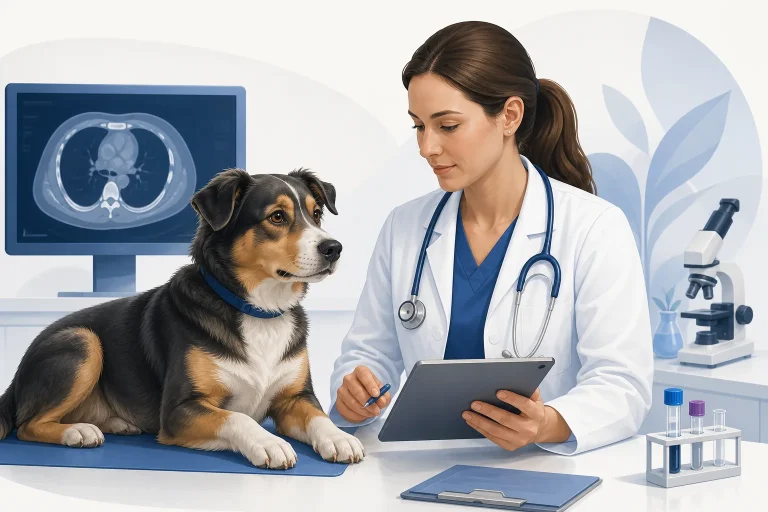
Cytology: A Cell-Level First Look at a Mass
Cytology examines individual cells collected from a lump, organ, fluid, or lymph node. It is often minimally invasive and fast and can identify inflammation or a broad tumor…
Read moreHistopathology: Tumor Type, Grade, and Surgical Margins
Histopathology examines fixed tissue architecture and usually provides more specific tumor classification than cytology. Depending on tumor type and specimen, the report may include grade, mitotic activity, invasion,…
Read moreUltrasound in Canine Tumor Care
Ultrasound uses sound waves to show moving cross-sectional images without ionizing radiation. It is widely used for abdominal organs, fluid, some superficial structures, and image-guided sampling, but gas,…
Read moreCT and MRI: Cross-Sectional Imaging for Tumor Decisions
CT and MRI create cross-sectional datasets that can map tumors beyond what is visible or palpable. CT uses x-rays and is fast and strong for many chest, bone,…
Read moreCoagulation Testing Before Biopsy, Surgery, or Invasive Care
Coagulation testing is selected when history, examination, disease, medication, or a planned procedure raises a bleeding or clotting question.
Read moreRegional Lymph Node Sampling for Cancer Staging
Lymph node size and feel are unreliable on their own, so selected nodes may be sampled when metastatic status would change a treatment plan.
Read moreImmunohistochemistry in Veterinary Tumor Diagnosis
Immunohistochemistry uses labeled antibodies on tissue sections to help classify tumors or investigate specific markers after morphology has been reviewed.
Read moreBiopsy-Tract Planning Before Definitive Tumor Surgery
The route used to sample a suspicious mass can affect later surgery or radiation, so the diagnostic and definitive teams should plan it together when anatomy is complex.
Read moreTumor Specimen Orientation, Margin Inking, and Pathology Handoff
Clear communication between surgeon and pathologist helps connect microscopic margin findings to the exact patient anatomy and next decision.
Read moreSentinel Lymph Node Mapping Before Node Biopsy or Removal
Sentinel-node mapping aims to identify the first draining node, which may not be the nearest or largest node, before sampling or surgery.
Read moreLimb Amputation for Tumor Control or Pain Relief
Amputation may be discussed for selected limb tumors or uncontrollable limb pain after staging, mobility, comorbidity, and family goals are reviewed.
Read more