Treatment, Medication & Supplement Directory
A comprehensive encyclopedia of medicines, chemotherapy protocols, targeted and immune therapies, supplements, Chinese herbal formulas, Traditional Chinese Veterinary Medicine (TCVM) approaches, and supportive-care options used or discussed in canine and feline tumor care. Directory entries explain what each option is, where it may fit, its evidence and safety boundaries, and what to discuss with a veterinarian; they are references, not individualized prescriptions or rankings.

Splenectomy for a Splenic Mass: Diagnosis, Stabilization, and Next Steps
Removing the spleen may be diagnostic and therapeutic for selected splenic masses, but imaging cannot reliably determine benign versus malignant disease before pathology.
Read moreMandibulectomy and Maxillectomy for Oral Tumors
Partial removal of the lower or upper jaw can pursue local control for selected oral tumors, with explicit discussion of margins, appearance, eating, airway, and aftercare.
Read moreMammary Tumor Surgery: Extent, Staging, and Pathology
The extent of mammary surgery depends on species, number and location of masses, tissue diagnosis, nodal questions, patient health, and reconstructive needs.
Read moreUrinary Tract Stenting for Tumor-Related Obstruction
A urinary stent may restore flow for selected tumor-related obstruction, but it is a palliative or enabling procedure rather than treatment of the underlying cancer.
Read moreFeeding Tube Placement During Cancer Treatment or Recovery
A feeding tube can provide measured nutrition, water, and selected medicines when safe voluntary intake is insufficient, with device choice matched to duration and anatomy.
Read moreImage-Guided Tumor Ablation and Embolization: Emerging Veterinary Options
Image-guided local procedures may be discussed at specialist centers for selected tumors, but indications, access, evidence, and follow-up remain technique- and diagnosis-specific.
Read more
Cyclophosphamide in Cancer Protocols: Bladder and Marrow Safety
Cyclophosphamide is an alkylating chemotherapy used in selected veterinary protocols, with blood-count, urinary, gastrointestinal, and household-safety considerations.
Read more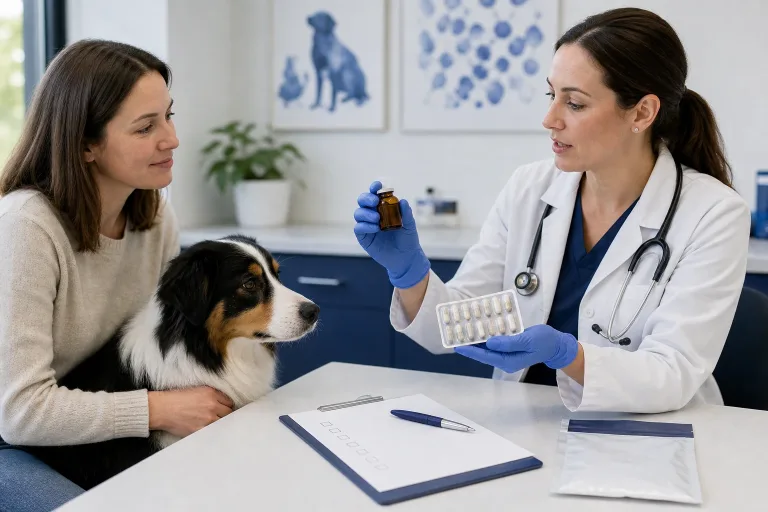
Chlorambucil: Oral Chemotherapy Is Still Hazardous Medicine
Chlorambucil is an oral alkylating chemotherapy used in selected slow-growing blood cancers and other protocols, with cumulative marrow and handling considerations.
Read moreMelphalan in Veterinary Oncology: Cumulative Marrow-Risk Discussion
Melphalan is an alkylating antineoplastic medicine used in selected veterinary cancers and requires individualized blood-count, gastrointestinal, and handling plans.
Read moreMethotrexate in Veterinary Oncology: Interaction and Organ-Safety Review
Methotrexate is a folate-antagonist antimetabolite with selected veterinary uses and clinically important marrow, gastrointestinal, liver, lung, and interaction considerations.
Read moreMetronomic Chemotherapy: Goal, Evidence, and Handling Boundary
Metronomic therapy uses regularly scheduled cytotoxic medication in selected plans; it remains prescription hazardous-drug treatment and is not simply gentle chemotherapy.
Read moreHome Handling of Oral Chemotherapy and Patient Waste
Families need drug-specific written instructions for receiving, storing, administering, cleaning, laundering, and disposing of chemotherapy and contaminated patient waste.
Read more