Treatment, Medication & Supplement Directory
A comprehensive encyclopedia of medicines, chemotherapy protocols, targeted and immune therapies, supplements, Chinese herbal formulas, Traditional Chinese Veterinary Medicine (TCVM) approaches, and supportive-care options used or discussed in canine and feline tumor care. Directory entries explain what each option is, where it may fit, its evidence and safety boundaries, and what to discuss with a veterinarian; they are references, not individualized prescriptions or rankings.

Cancer Surgery: Biopsy, Excision, and Margin Planning
Surgery may obtain a diagnosis, remove a localized tumor, relieve obstruction or pain, or reduce complications. The first operation can determine later options, so biopsy route, intended margins,…
Read more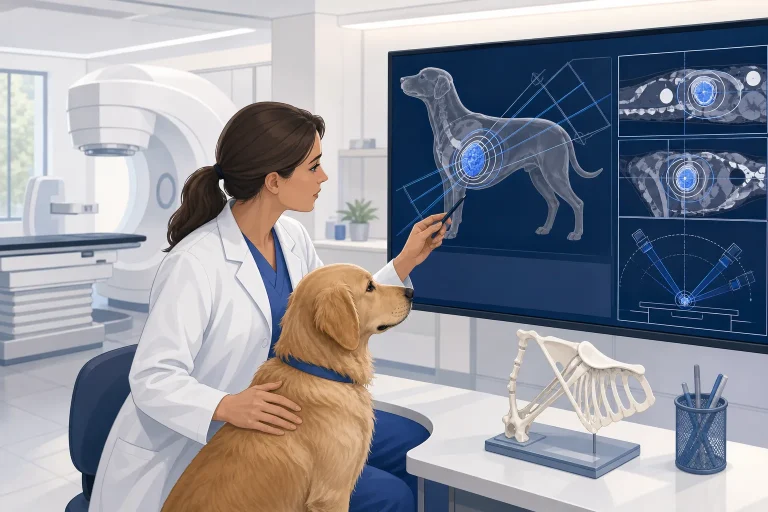
Radiation Therapy: Local Control and Symptom Relief
Radiation therapy uses planned ionizing radiation to damage tumor cells while limiting exposure to surrounding normal tissue. The number of visits, dose per visit, imaging, anesthesia, expected control,…
Read more
Cytology: A Cell-Level First Look at a Mass
Cytology examines individual cells collected from a lump, organ, fluid, or lymph node. It is often minimally invasive and fast and can identify inflammation or a broad tumor…
Read moreHistopathology: Tumor Type, Grade, and Surgical Margins
Histopathology examines fixed tissue architecture and usually provides more specific tumor classification than cytology. Depending on tumor type and specimen, the report may include grade, mitotic activity, invasion,…
Read moreUltrasound in Canine Tumor Care
Ultrasound uses sound waves to show moving cross-sectional images without ionizing radiation. It is widely used for abdominal organs, fluid, some superficial structures, and image-guided sampling, but gas,…
Read moreCT and MRI: Cross-Sectional Imaging for Tumor Decisions
CT and MRI create cross-sectional datasets that can map tumors beyond what is visible or palpable. CT uses x-rays and is fast and strong for many chest, bone,…
Read more
Multimodal Pain Management in Canine Cancer Care
Multimodal pain management combines approaches that act at different points in the pain pathway and addresses both the tumor and its functional consequences. A plan may include prescriptions,…
Read more
Antiemetic Support During Canine Cancer Treatment
Antiemetic therapy aims to prevent or control nausea and vomiting from chemotherapy, radiation fields, anesthesia, medications, the tumor, or another disease. Drug choice and timing depend on the…
Read more
Appetite Support: Find and Treat the Reason a Dog Is Not Eating
Reduced appetite can result from nausea, pain, fever, constipation, oral disease, swallowing difficulty, medication effects, tumor location, stress, or metabolic illness. Appetite support starts by investigating and treating…
Read more
Omega-3 Fatty Acid Support: Product, Dose, and Evidence Questions
Omega-3 products are nutritional supplements, not cancer treatments. EPA and DHA content, total calories, oxidation control, formulation, and quality vary widely, and evidence from one condition or diet…
Read more
Palliative Care Plan: Concurrent Comfort From Diagnosis Onward
Palliative care focuses on comfort and function and can begin at diagnosis while tumor-directed treatment continues. Hospice is a later, more intensive form of comfort-focused care; neither means…
Read more
Veterinary Rehabilitation During and After Cancer Care
Veterinary rehabilitation uses a medically supervised assessment and individualized plan to address pain, weakness, mobility limits, deconditioning, and functional goals. In oncology it must be coordinated with the…
Read more