Treatment, Medication & Supplement Directory
A comprehensive encyclopedia of medicines, chemotherapy protocols, targeted and immune therapies, supplements, Chinese herbal formulas, Traditional Chinese Veterinary Medicine (TCVM) approaches, and supportive-care options used or discussed in canine and feline tumor care. Directory entries explain what each option is, where it may fit, its evidence and safety boundaries, and what to discuss with a veterinarian; they are references, not individualized prescriptions or rankings.

Cancer Surgery: Biopsy, Excision, and Margin Planning
Surgery may obtain a diagnosis, remove a localized tumor, relieve obstruction or pain, or reduce complications. The first operation can determine later options, so biopsy route, intended margins,…
Read more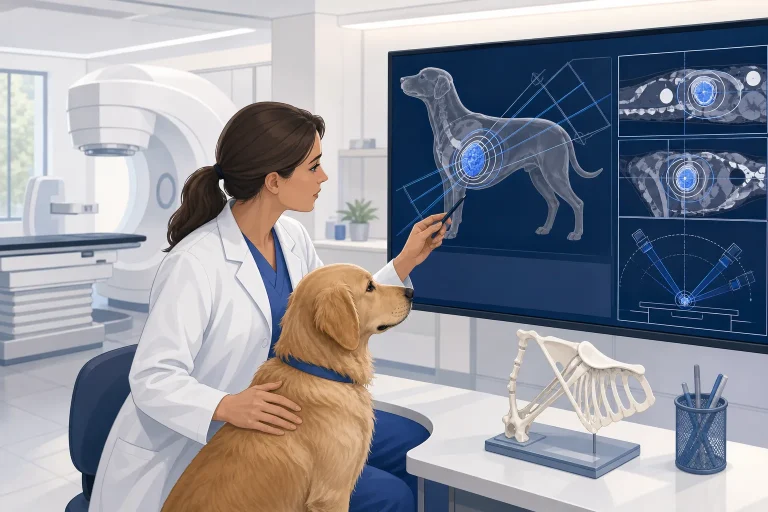
Radiation Therapy: Local Control and Symptom Relief
Radiation therapy uses planned ionizing radiation to damage tumor cells while limiting exposure to surrounding normal tissue. The number of visits, dose per visit, imaging, anesthesia, expected control,…
Read more
Multimodal Pain Management in Canine Cancer Care
Multimodal pain management combines approaches that act at different points in the pain pathway and addresses both the tumor and its functional consequences. A plan may include prescriptions,…
Read more
Palliative Care Plan: Concurrent Comfort From Diagnosis Onward
Palliative care focuses on comfort and function and can begin at diagnosis while tumor-directed treatment continues. Hospice is a later, more intensive form of comfort-focused care; neither means…
Read more
Veterinary Rehabilitation During and After Cancer Care
Veterinary rehabilitation uses a medically supervised assessment and individualized plan to address pain, weakness, mobility limits, deconditioning, and functional goals. In oncology it must be coordinated with the…
Read more
Complete Blood Count Monitoring During Cancer Care
A CBC measures red cells, white cells, and platelets and is used to place symptoms and treatment safety in context; it does not by itself diagnose most tumors.
Read moreSerum Chemistry and Organ-Function Monitoring in Oncology
Chemistry testing helps the veterinary team assess organ function, electrolytes, proteins, and metabolic changes before and during a cancer plan.
Read moreUrinalysis and Urine Culture in the Oncology Patient
Urine testing can assess concentration, blood, protein, sediment, and infection questions that matter before or during cancer treatment.
Read moreCoagulation Testing Before Biopsy, Surgery, or Invasive Care
Coagulation testing is selected when history, examination, disease, medication, or a planned procedure raises a bleeding or clotting question.
Read moreThoracic Radiographs for Tumor Staging and Symptom Review
Chest radiographs can evaluate lungs, pleural space, heart silhouette, and other thoracic structures when the result is relevant to staging or respiratory signs.
Read moreRegional Lymph Node Sampling for Cancer Staging
Lymph node size and feel are unreliable on their own, so selected nodes may be sampled when metastatic status would change a treatment plan.
Read moreBone Marrow Aspiration and Biopsy in Suspected Blood Cancer
Bone marrow sampling is a targeted procedure for selected unexplained blood abnormalities or suspected hematopoietic cancer, not a routine test for every tumor.
Read more