Canine Splenic Hemangiosarcoma: Internal Bleeding, Diagnosis, and Decisions
Overview
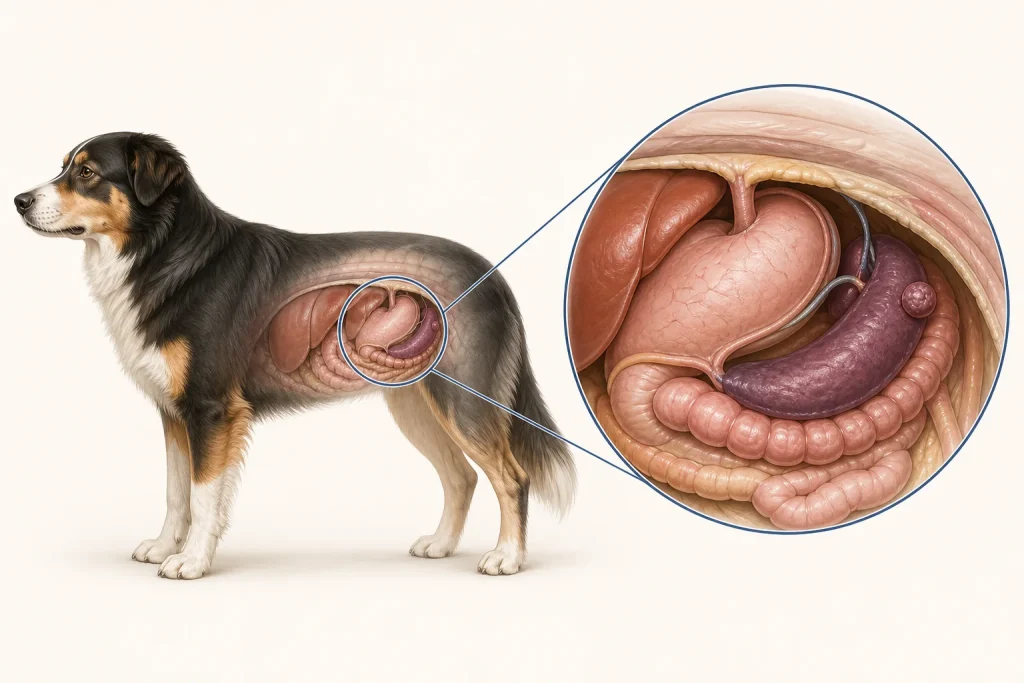
Hemangiosarcoma is a malignant vascular tumor. Splenic disease is often discovered after bleeding into the abdomen, but imaging cannot reliably declare every splenic mass malignant; histopathology is needed for a definitive diagnosis.
Common signs
Intermittent weakness, reduced stamina, poor appetite, pale gums, a distended abdomen or collapse. Internal bleeding may cause rapid breathing and a fast heart rate. Some splenic masses are found incidentally before a crisis.
Common locations
Spleen, right atrium of the heart, liver, skin and subcutaneous or muscular tissue. Behavior and treatment differ by location and depth.
Diagnosis discussion
Emergency assessment may include point-of-care ultrasound, blood count, chemistry, coagulation tests and blood typing or crossmatch. Broader imaging evaluates the abdomen, chest and sometimes heart. Splenic histopathology after surgery provides definitive classification when surgery is pursued.
Urgency and when to contact a veterinarian
Collapse, pale gums, severe weakness, rapid or difficult breathing, a swollen abdomen or unresponsiveness is an emergency. Temporary improvement after an episode does not rule out ongoing or recurrent internal bleeding.
Treatment discussion
Stabilization can include intravenous support and blood products. Splenectomy may control active bleeding and provide a diagnosis. If hemangiosarcoma is confirmed, chemotherapy may be discussed to delay progression; palliative and hospice planning are reasonable alternatives. Prognosis varies by site, stage and patient status.
Home monitoring
After discharge, follow strict activity and incision instructions. Check gum color, breathing at rest, appetite, comfort, abdominal appearance and ability to stand. Use the clinic's emergency thresholds and do not rely on supplements to stabilize internal bleeding.
Questions to ask your veterinarian
- Is my dog currently bleeding, and what stabilization is needed before decisions?
- What can imaging tell us, and what remains uncertain without histopathology?
- What are the goals and risks of surgery in this dog's current condition?
- If hemangiosarcoma is confirmed, what tumor-directed and comfort-focused paths are realistic?